Retaining Wall Height, Engineering and ACT Approvals
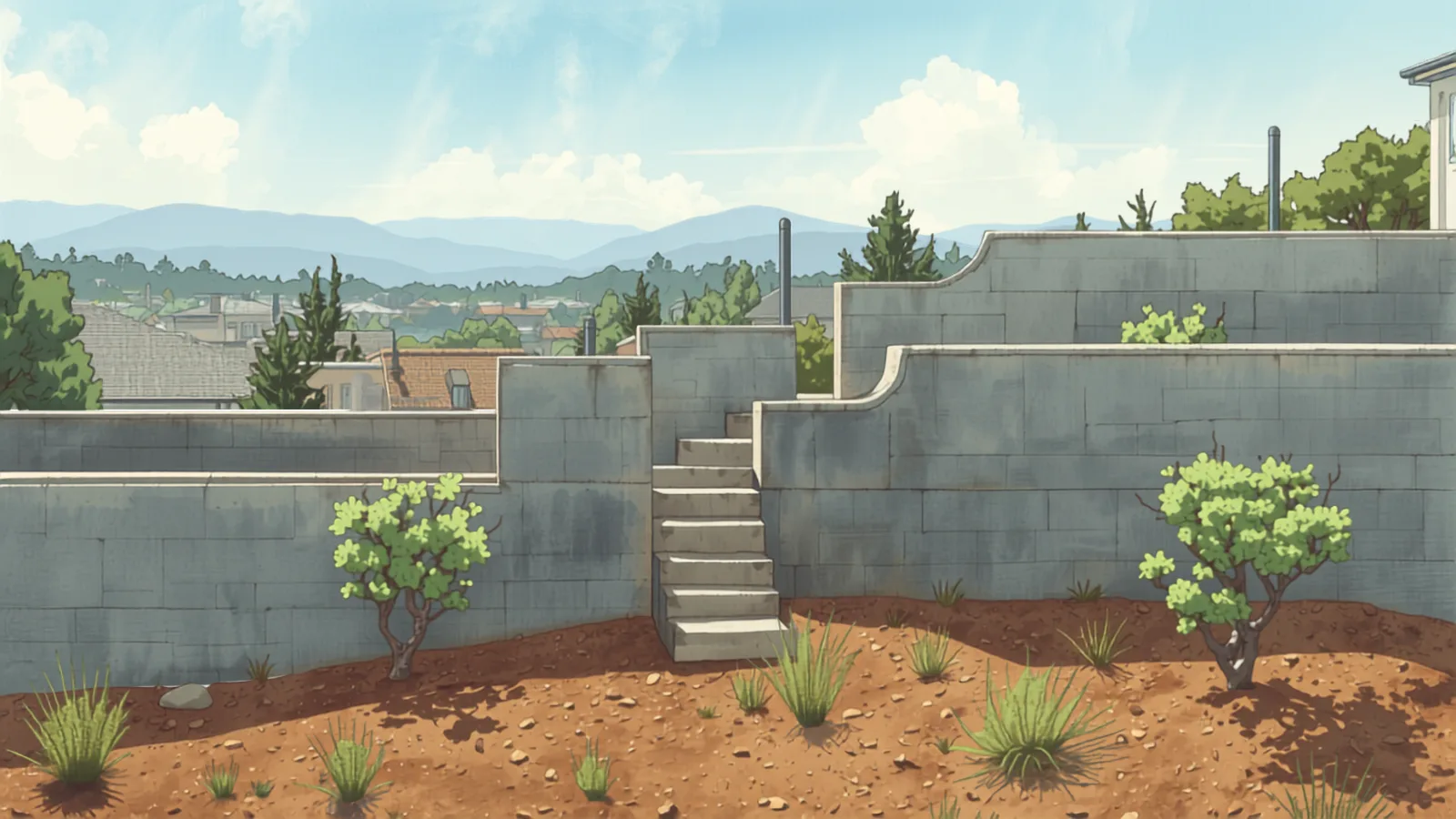
Height is the number that changes everything about a Canberra retaining wall. It sets what the wall is built from, whether an engineer has to sign it off, whether you need approval before anyone digs, and how much of the budget disappears into things you will never see. This guide covers what changes as walls get taller, what engineering and drainage cost, and where to get the ACT rules for your specific wall — from the people who administer them rather than from us.
Height changes the wall, not just the price
A 400mm garden edge and a 1.5m cut are separate products that happen to share a name. As height climbs, four things move together: the posts get bigger and go deeper, the sleepers or blocks get thicker, the pressure the wall has to resist rises faster than the height does, and the consequences of getting it wrong stop being cosmetic.
That last point is why approvals and engineering exist at all. A low garden wall that slumps is a weekend of annoyance. A tall wall that fails takes the ground above it with it, and if that ground belongs to a neighbour or supports something, the failure is not only yours.
Approvals in the ACT: the general rule, and where to get the real answer
The broad shape is the same as most Australian jurisdictions. Low walls that hold a garden bed and support nothing but themselves are generally treated as minor work. As walls get taller, and particularly where a wall supports a structure, supports vehicle access, sits on or near a boundary, or holds up a neighbour’s land, they move into territory where approval and certified structural design are expected before work starts. Surcharge — anything sitting on the soil the wall is retaining — pushes a wall into that territory at a lower height than the same wall would reach on its own.
We are deliberately not printing a threshold height, a clause number or a fee here. Those change, they depend on your specific site, and a wrong number in a cost guide is worse than no number. In the ACT a building approval is issued by the licensed building surveyor you appoint as certifier, with the paperwork lodged through Access Canberra — so a certifier, or Access Canberra, is the authority worth asking. Give them the wall height, what is above and below it, and where it sits relative to the boundary — that is what determines the answer.
Two practical notes while you are asking. A builder who works Canberra walls week in, week out will usually know immediately which side of the line your wall falls on, and a good one will tell you before quoting rather than after. And if a quote is silent on approvals for a wall that is obviously tall, that silence is information about the quote.
What engineering costs and what it buys
Structural design and certification runs $550–$2,200 per job in Canberra. Note the unit: per job, not per metre. A short tall wall carries the full cost over very few metres, which is why engineering can feel disproportionate on a small job and barely register on a long one.
What you get is a design for your actual ground rather than a rule of thumb: post size, embedment depth, spacing and drainage specified against the soil, the slope and whatever sits above the wall. On any wall where the number matters, this is the cheapest part of the job that stops the expensive part from happening.
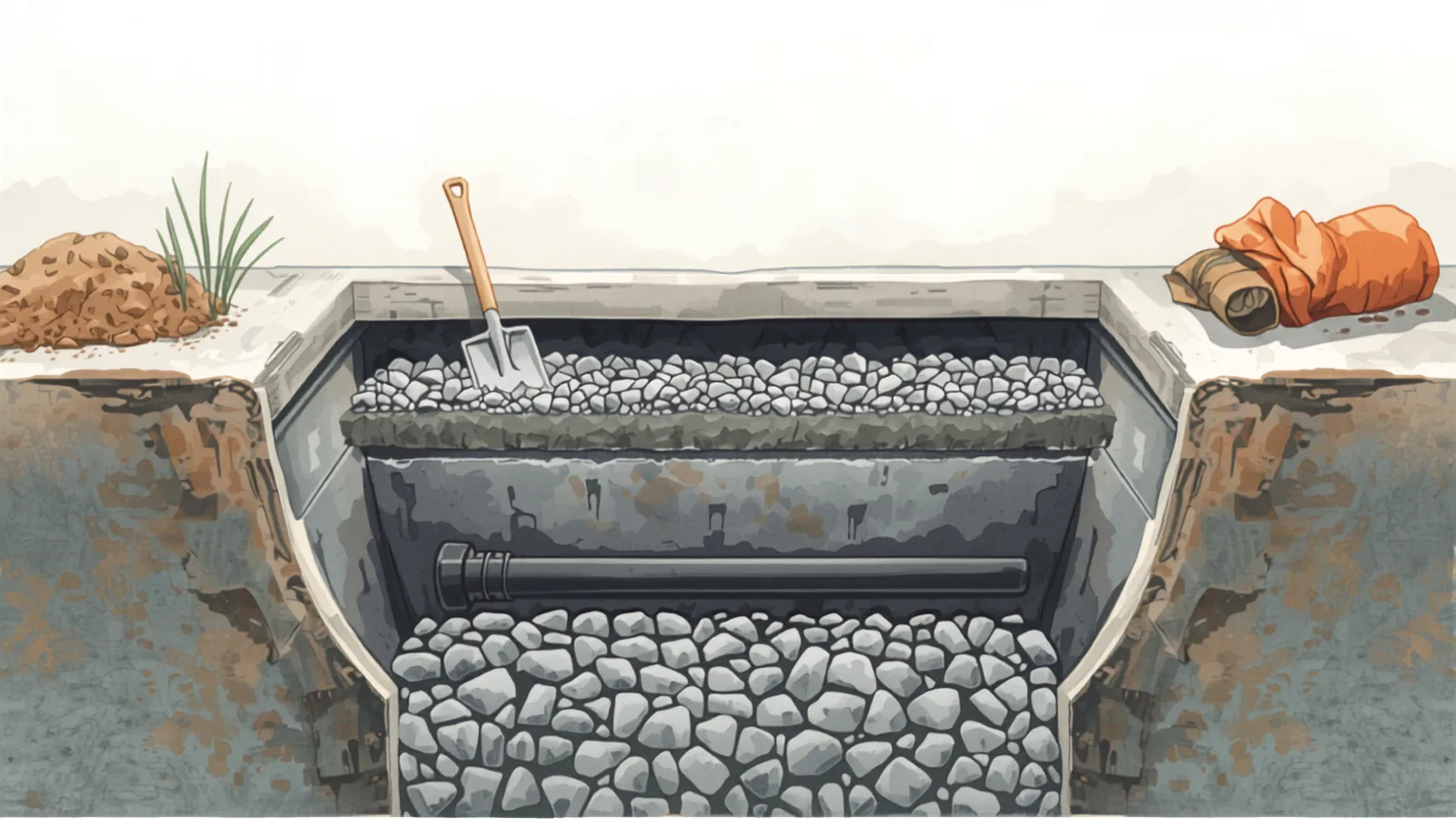
Drainage is not the optional line
Drainage behind the wall costs $33–$88 per lineal metre — aggregate backfill, a drainage line at the base, and somewhere for the water to go. It is routinely the first thing removed to make a quote competitive, and it is the single most common reason retaining walls fail.
The mechanism is simple. Saturated soil is heavier than dry soil and water trapped behind a solid face adds pressure the wall was never designed to hold. The wall does not fail on the day it rains; it fails after enough wet seasons of being pushed. Canberra’s pattern of dry spells broken by heavy rain is exactly the cycle that finds walls with no drainage.
If two quotes differ and one has no drainage line, you have found the difference. Free-draining wall types are the exception — a gabion wall drains through its own face by construction.
Project bands by wall size
| Project | Low | Typical | High |
|---|---|---|---|
| Small garden wall (5 lm × 0.5m) | $1,100 | $1,975 | $3,075 |
| Standard wall (10 lm × 1m) | $2,750 | $4,950 | $7,700 |
| Large wall (15 lm × 1.5m) | $5,500 | $9,900 | $16,500 |
Canberra 2026 whole-job bands, from the retaining wall cost guide.
Read these as their own numbers, not as the per-metre rate multiplied out. They do not reconcile with the lineal rates, and they are not meant to. A whole-job total carries the parts of a build that do not scale with wall length — getting plant to site, setting up, excavation and benching, disposal of spoil, drainage runs, and on the taller walls the engineering. A ten-metre wall is not ten times one metre of wall.
Use the two views for different jobs: the per-metre rates in concrete sleeper cost per metre to compare materials against each other, and the project bands above to sanity-check a whole-job quote you have been handed.
The height decisions worth making early
Two lower walls stepped up a slope are often a better answer than one tall wall — smaller components, frequently no engineering, and a planting terrace between them. It is not automatically cheaper, because you are building two walls, but it is regularly the wall people would rather have.
And decide the height before you get quotes, not during. A wall that grows by 300mm after quoting can cross a line that changes the posts, the certification and the approval — and the second quote will not look like the first.
Frequently asked questions
Does a 1.5m retaining wall in Canberra need engineering?
A wall at that height is well into the range where certified structural design is normally expected, particularly if anything sits above it or it is near a boundary — and $550–$2,200 per job is what that certification costs. Because the exact requirement depends on your site and on current ACT rules, confirm it with a licensed building certifier or Access Canberra rather than relying on a rule of thumb, and get the answer before you commit to a wall height.
Who arranges the engineer, me or the builder?
Either, but it has to be somebody, and the quote should say which. Most established Canberra wall builders will organise structural design as part of the job and pass the $550–$2,200 through. What you want to avoid is both parties assuming the other has it in hand — ask the question directly and get it in writing.
Does a wall on the boundary change what is required?
It commonly does. A wall that retains a neighbour’s ground, or sits on the boundary line, brings the neighbour’s land into the picture and typically raises the bar on approval and certification. It is also the situation where you least want to rebuild later, which is an argument for the longer-lived wall types.
What actually happens if drainage gets left out?
Water builds up behind a solid wall face, saturated soil gets heavier, and the wall carries pressure it was not designed for. It rarely fails during the storm — it fails after several wet seasons of being pushed, by bulging, leaning or dropping a course. At $33–$88 per lineal metre, drainage is the cheapest failure insurance on the job.
Why does a whole-job quote not match the per-metre rate times the length?
Because the project bands include work that does not scale with length: getting plant on site, set-up, excavation and benching, spoil disposal, drainage runs and any engineering. The lineal rate covers the wall itself. Compare materials with the per-metre rates and compare whole quotes with the project bands — mixing them will mislead you in both directions.
← Back to Retaining wall cost Canberra hub