Rockwall, Sandstone and Gabion Retaining Walls (Canberra 2026)
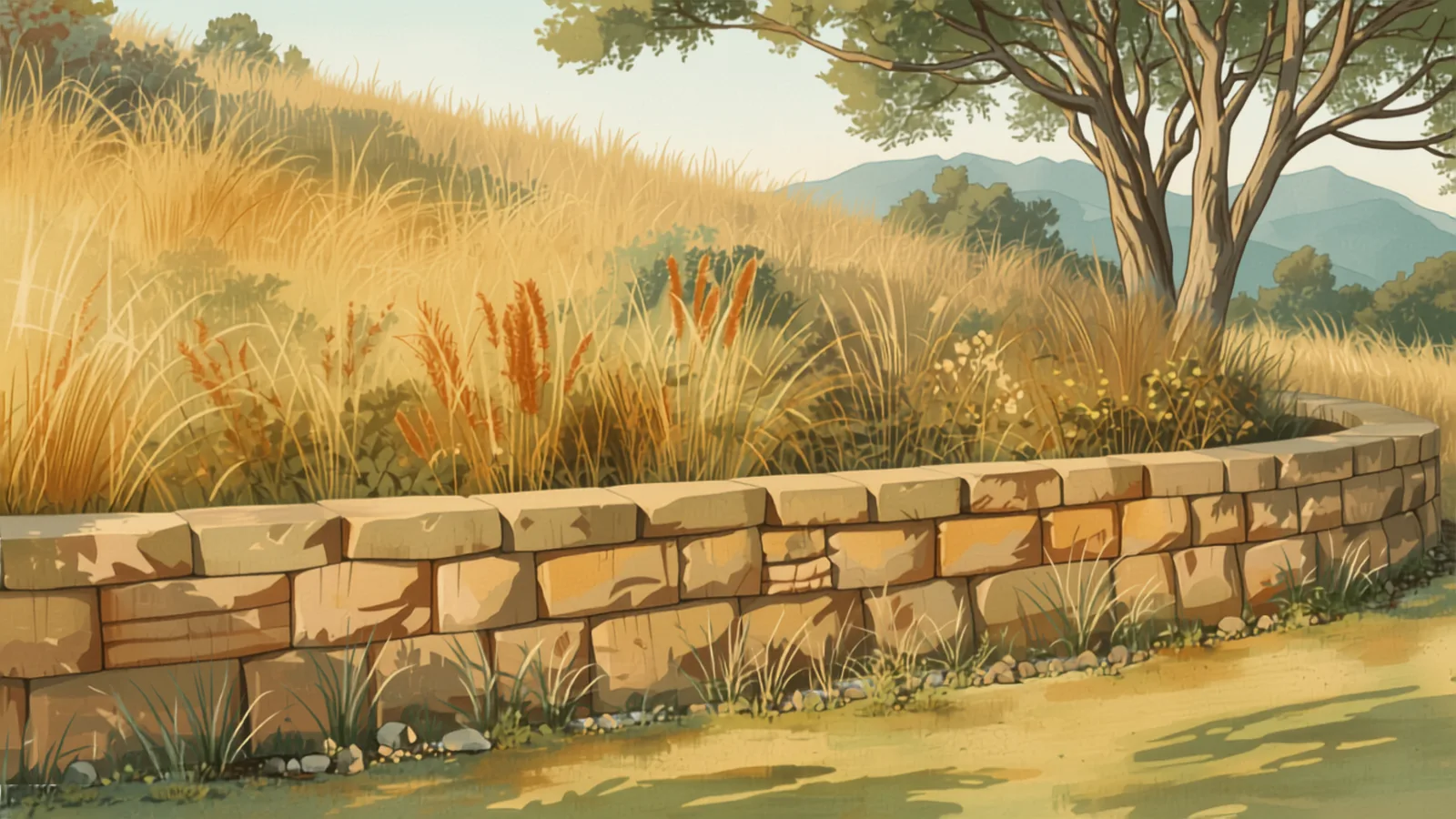
Rockwall, sandstone and gabion retaining walls cost $275–$880 per lineal metre in Canberra in 2026, depending which of the three you build. They are the walls people choose when the wall is going to be looked at, not just relied on — and in Canberra “rockwall” is the term you will hear from builders for the placed-boulder version. Here is what each one costs, what each one is genuinely good at, and where a sleeper wall quietly beats all three.
What the three stone options cost per metre
| Wall type | Low | Typical | High |
|---|---|---|---|
| Boulder wall — the Canberra “rockwall” (per lm) | $275 | $440 | $660 |
| Sandstone wall (per lm) | $385 | $605 | $770 |
| Gabion wall (per lm) | $330 | $550 | $880 |
| Block / besser wall — for comparison (per lm) | $330 | $550 | $825 |
Canberra 2026 bands, from the retaining wall cost guide. All rates per lineal metre.
Rockwall and boulder walls
Ask around Canberra for a rockwall and you will be quoted a boulder wall: individually placed stone, machine-set, battered back into the slope so the mass of the rock and the angle of the face do the retaining. At $275–$660 a lineal metre it starts a little below concrete sleeper, which surprises people who assume stone is automatically the expensive option.
What makes a rockwall cheap or dear is not really the rock. It is access and it is the operator. The wall needs a machine that can reach the wall line with a rock in its grab, and it needs someone who can read a face and place stone that locks rather than merely sits. Where a machine can work freely, a rockwall is fast. Where the stone has to be walked in, the economics collapse and one of the other options wins.
Rockwalls suit long, sloping, informal ground — the batter behind a Canberra backyard, a bank falling away from a house pad. They do not suit tight boundary lines, because the batter eats horizontal space that a vertical sleeper or block wall would give you back.
Sandstone: the one people fall in love with
Sandstone runs $385–$770 a lineal metre, the highest floor of any wall on the Canberra list. You are paying for the material and for the setting — sawn blocks laid to a course line is careful work, and the result is the wall people photograph.
Two honest notes. First, sandstone’s band is narrower than the others at the top: $770 against $880 for gabion and $825 for block. The material is dear to start with but it does not escalate the way the others can. Second, the aesthetic is doing the heavy lifting in the decision. Structurally, at ordinary garden heights, sandstone is not doing anything a $275 boulder wall or a $275 concrete sleeper wall could not do. If the wall is behind a shed where nobody looks at it, sandstone is money spent on nothing.
Gabion: cages, rock, and drainage built in
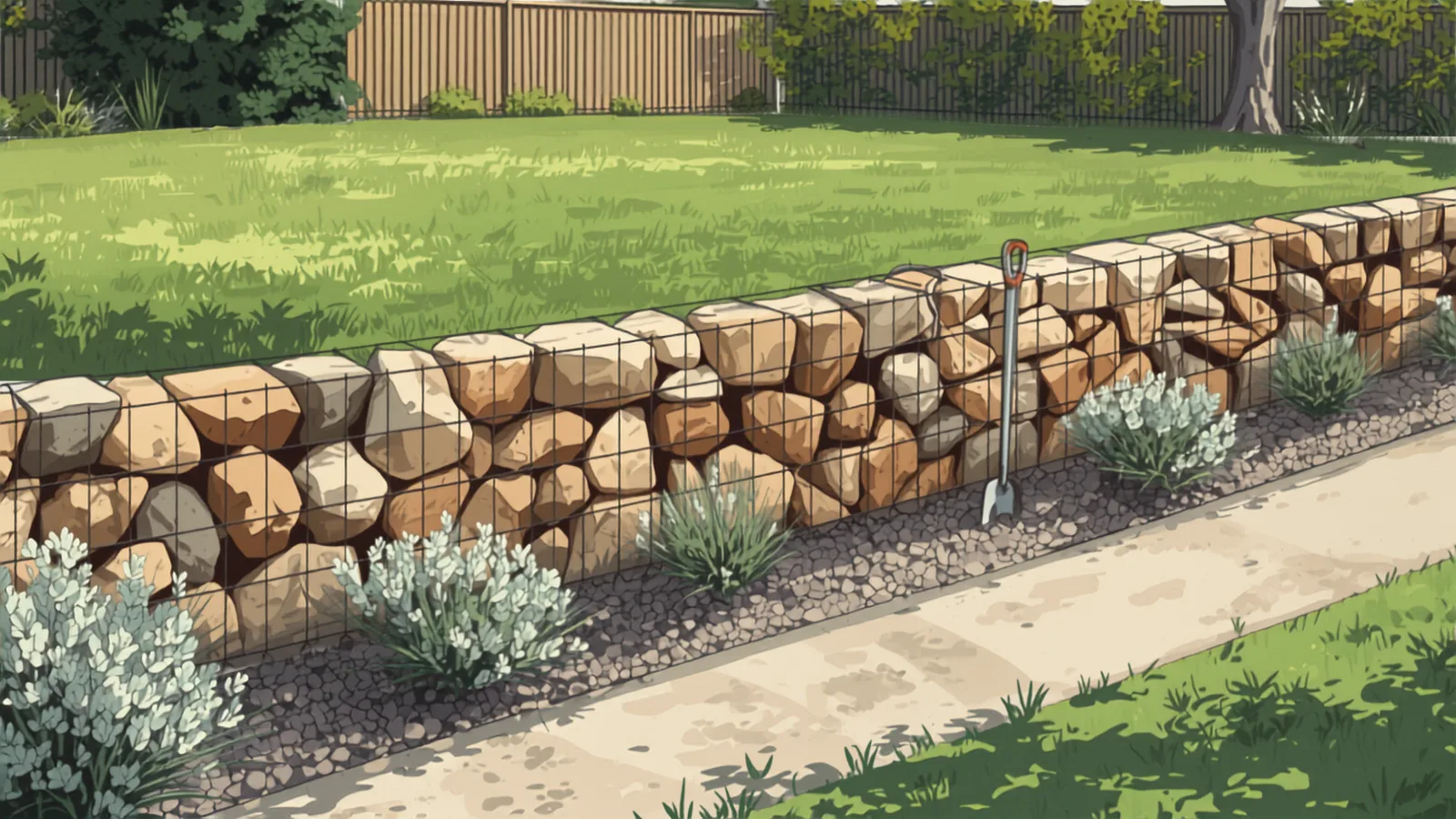
Gabion walls are galvanised wire baskets packed with angular rock, at $330–$880 a lineal metre. They carry the widest band on the whole Canberra list, and the reason is that “gabion” covers everything from a low garden basket run to a properly engineered structure with heavy mesh, tied panels and hand-placed facing stone.
The structural argument for gabion is drainage. A gabion wall is essentially free-draining by construction — water passes through the rock rather than building pressure behind a solid face. On a wet Canberra bank that is a real advantage, and it is why gabion turns up on sites where water is the actual problem.
The arguments against are honest too. Wire has a service life. Hand-packed facing rock is slow, skilled work and it is where the top of that band comes from. And gabion is a look you either want or you do not — it does not blend into a traditional garden the way sandstone does.
Which of the three suits your slope
Long, informal, machine-accessible bank — rockwall. Cheapest of the three at $275 to start, and it looks right on ground that is already rough.
Wet ground, seepage, water coming through the bank — gabion. You are buying drainage as a structural property rather than adding it behind a solid wall.
Feature wall, seen every day, near the house — sandstone, and be honest that you are buying the look.
Tight boundary, straight lines, maximum usable yard — none of the three. A vertical wall gives you the space back; see concrete sleeper cost per metre at $330–$660, which overlaps all three of these bands.
What these quotes need to state
Stone walls are the easiest walls to quote vaguely, because “supply and place rock” hides a lot. Ask for the stone type and nominal size, where it is coming from, the finished wall height and batter angle, what happens to excavated spoil, and — for gabion — the mesh gauge, the galvanising, and whether the facing stone is hand-placed or tipped. On anything tall, ask who is certifying it: engineering runs $550–$2,200 per job and is covered in wall height, engineering and ACT approvals.
Frequently asked questions
What do Canberra builders mean by a “rockwall”?
A boulder wall — individually placed stone, machine-set and battered back into the slope, where the mass of the rock and the angle of the face do the work. It is the local trade term, and it prices at $275–$660 per lineal metre, starting a little below a concrete sleeper wall.
Is a gabion wall cheaper than a sandstone one?
At the bottom of the band, yes — gabion starts at $330 a lineal metre against $385 for sandstone. At the top it goes the other way: gabion reaches $880 where sandstone stops at $770, because a heavy-mesh, hand-faced gabion is slow, skilled work while sandstone pricing stays comparatively predictable.
Why do rockwall quotes vary so much for the same length?
Machine access and stone placement, more than the rock itself. A wall line a machine can reach with a rock in its grab is quick; the same wall with the stone walked in is a different job entirely. The other variable is the operator — placed stone that locks together is a skill, and it is what you are actually buying.
Does a gabion wall still need drainage behind it?
Far less than a solid wall, because the rock-filled baskets drain through the face by construction — that is gabion’s main structural argument on a wet bank. Solid walls need the separate $33–$88 per lineal metre drainage line behind them to avoid water pressure building up.
Is sandstone worth the extra over a boulder wall?
Only for the look, and that is a fair reason. At ordinary garden heights sandstone at $385–$770 a lineal metre is not doing structural work a $275–$660 rockwall could not do. If the wall is visible from the house every day, plenty of Canberra owners think it is worth it. If it is behind a shed, it is not.
← Back to Retaining wall cost Canberra hub