Pool pump and filter replacement cost in Melbourne
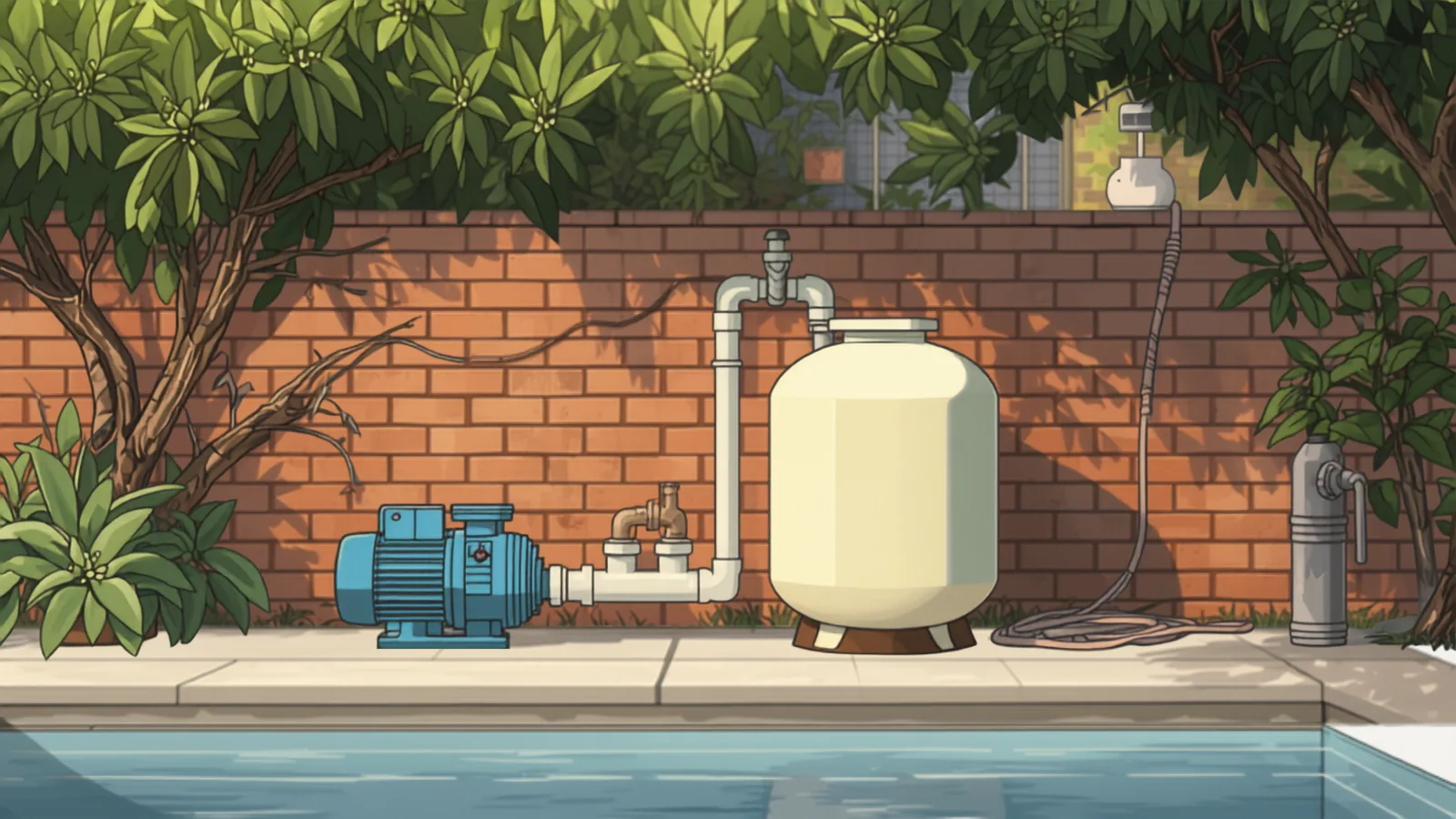
Pool pump replacement in Melbourne runs $630 to $1,250 installed, with most jobs near $945. Filter replacement is $790 to $1,575 installed. Annual equipment servicing, which is what stops both of those arriving unexpectedly, is $160 to $420.
These are the two components that decide whether the rest of your pool spending works. Chemistry cannot fix water that is not being circulated and filtered properly, which is why a pool that goes green while it is being serviced almost always has a mechanical fault rather than a chemical one.
What drives pump price
- $630 to $1,250 — a like-for-like single-speed replacement on an accessible pad with existing plumbing that lines up.
- $1,250 to $2,300 — a variable-speed unit, the standard choice now for anyone keeping the pool more than a couple of years.
- Top of either band — larger or premium units, jobs needing plumbing modification, electrical work for a dedicated circuit, or a new equipment pad.
Electrical work is the most common reason a Melbourne quote lands above expectation. Plenty of pools in the older suburbs run on switchboards and outdoor circuits that were adequate in 1985 and are not now, and that work is legitimately part of the job rather than padding.
The variable-speed argument
This is the clearest money case in domestic pool equipment. A single-speed pump runs flat out whenever it runs — roughly 1,500 watts, eight hours a day, and you pay for every one of those hours at your electricity tariff.
A variable-speed pump runs slowly for longer. Because power draw falls much faster than speed does, the same daily water turnover uses far less electricity.
Against the $905 more it costs than a single-speed pump at our Melbourne table's typicals ($1,850 against $945), a variable-speed pump wins its price back in electricity — how quickly depends on your tariff and run hours — and then keeps returning. It is also substantially quieter, which matters more than people expect on Melbourne's narrower blocks where the equipment pad sits close to a boundary or a bedroom window.
If you are being quoted a single-speed replacement in 2026 without the variable-speed option being raised, ask why.
Filters: media, cartridge or DE
- Sand. The Melbourne default; a new sand or cartridge filter is $790–$1,575 installed in our Melbourne table. Media needs replacing every five to eight years as the grains round off and channel, which is a $260–$630 media change on its own and is frequently the actual fix when a filter is blamed.
- Cartridge. Finer filtration, no backwashing, so no water wasted. Elements need replacing every two to five years, and they need cleaning more often than most owners do it.
- Diatomaceous earth. The finest filtration available domestically, and the most maintenance. Uncommon on Melbourne residential pools, and not priced in our Melbourne table, so get it quoted.
Cartridge filters have quietly become the sensible choice for a lot of Melbourne pools purely because they do not backwash. That avoids both the water loss and the disposal question — backwash water is chlorinated and cannot go to stormwater.
Repair or replace
Worth repairing: a leaking pump seal, a failed capacitor, a cracked lid or basket, a worn multiport valve spider gasket, filter media that has simply reached its life. All of these are well under the cost of a new unit and buy real years.
Worth replacing: a seized or burnt-out motor on a pump over eight years old, a cracked pump or filter housing, or any single-speed pump you intend to keep running for another five years — in that last case the energy saving alone justifies it even though the old unit still works.
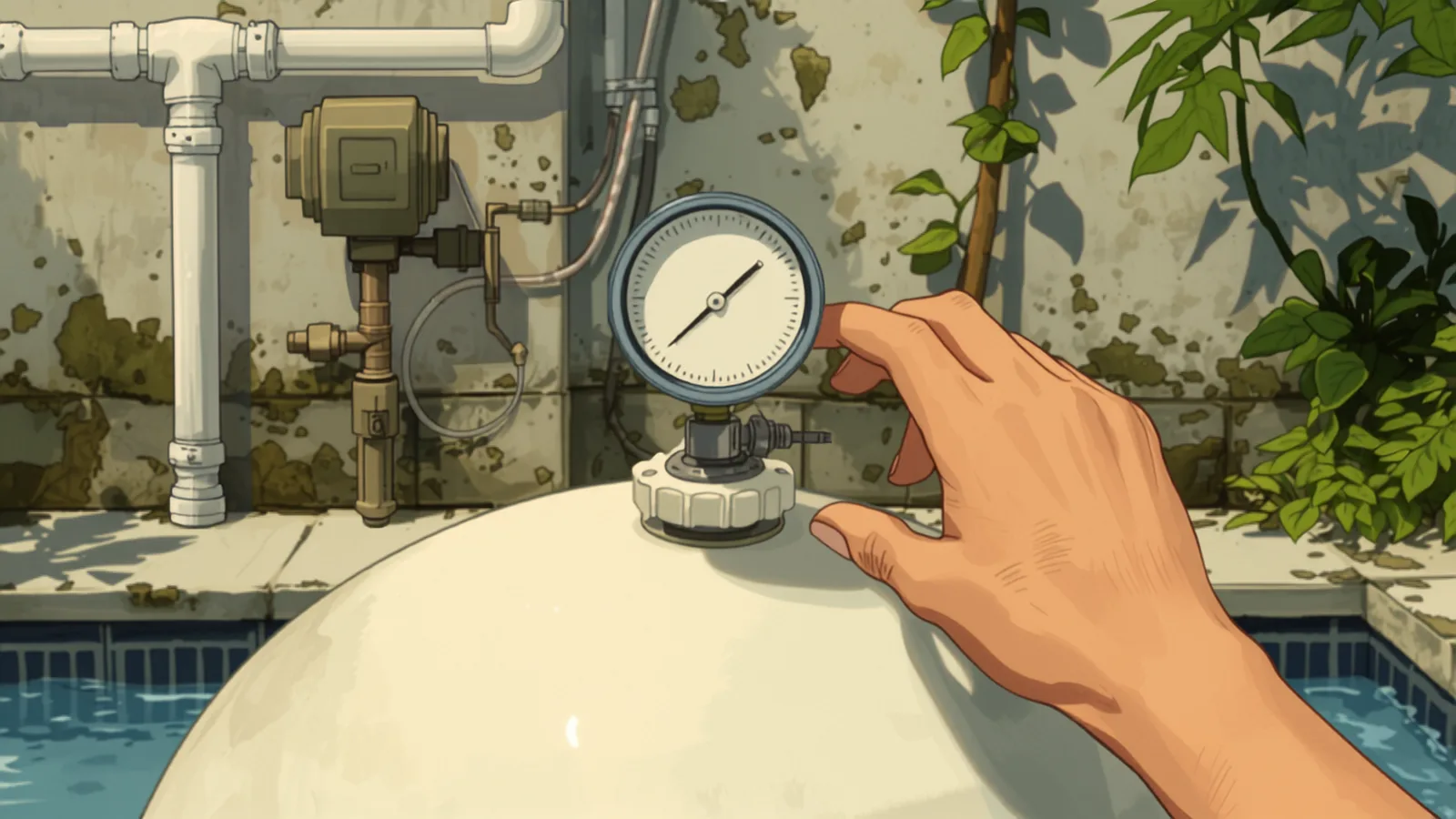
The tell that something is wrong: a rising filter pressure gauge means the filter is loading up and needs backwashing or cleaning; a falling one means restricted flow before the filter, usually a blocked basket, a suction leak, or a pump losing prime. A gauge that has not moved in a year is usually a broken gauge.
What a pump warranty actually covers
Most domestic pool pumps carry two to three years on the motor, sometimes longer on the wet end. Two things void it routinely: running dry, usually after a suction leak nobody chased, and installation by someone unlicensed where electrical work was involved. Keep the invoice and the model number somewhere you will find them — warranty claims fail on paperwork far more often than on eligibility.
Signs you are close to a replacement
- The pump is louder than it was, or has developed a grinding or screeching note
- It struggles to prime, or loses prime overnight
- Visible water at the pump base when running
- The filter needs backwashing far more often than it used to
- Water clarity is poor despite chemistry testing correctly
That last one is the important signal. Water that will not clear when the chemistry is right is a filtration failure, and no amount of chlorine will resolve it — which is how a mechanical fault turns into a green pool recovery bill on top of the equipment bill.
Run hours: how long the pump actually needs
The rule is turnover, not hours. A pool needs its entire volume passed through the filter roughly once a day, and how long that takes depends on the pump's flow rate and the pool's volume — which is why "run it eight hours" is advice that happens to be right for some pools and wrong for many.
On a variable-speed pump the calculation changes shape entirely. Because power draw falls much faster than flow rate does, running at low speed for twelve or sixteen hours costs substantially less than running flat out for six, and it filters better — slower water spends longer in contact with the media. Long and slow beats short and fast on nearly every measure except the one people instinctively optimise for.
Seasonally, Melbourne pools want more turnover through summer when the water is warm and biologically active, and less through the cold months. Halving run time from May to September is normal and saves real money. Stopping altogether is not — water that never moves is water that goes green, and it is a large part of why so many Melbourne pools need recovery in October.
Off-peak tariffs muddy this. On a time-of-use plan without solar, overnight running is cheaper per unit, but it also leaves the pool unfiltered through the warmest part of the day when it needs filtration most. Splitting the schedule usually beats choosing one: a few hours mid-morning and the remainder overnight gets most of both.
Worth checking what yours is actually set to. Timers drift, power outages reset them, and a surprising number of Melbourne pools are running a schedule someone set years ago for a pump that has since been replaced.
Leaks: finding them before they cost you
A leaking pool is expensive twice — the water, and everything the water carries out with it. Chemicals and salt go down the same hole, and a pool quietly losing 5,000 litres a week will never hold chemistry no matter how carefully it is dosed.
Melbourne's clay soils make leaks worse than they are elsewhere. Reactive ground moves seasonally, and that movement works on rigid plumbing and shell joints over years. Older pools in the eastern and south-eastern suburbs see the pattern often enough that it is worth ruling out before anyone chases a chemistry problem.
The bucket test tells you whether you have one. Fill a bucket with pool water, sit it on a step so the levels inside and outside match, mark both, and leave it 24 hours with the pump running normally. Evaporation affects both equally — if the pool has dropped more than the bucket, water is leaving somewhere other than the surface.
Professional leak detection uses pressure testing on the lines and dye or acoustic methods on the shell; it is not priced in our Melbourne table, so get it quoted. That is money well spent before a resurfacing quote, because discovering afterwards that the leak was a return line is an expensive sequence to run in the wrong order.
The usual suspects, roughly in order: light fitting conduits, skimmer box joints, return line fittings, and the pump seals and unions on the pad itself. The last of those is the cheapest to fix and the easiest to spot — a damp patch under the pump that never dries is a union or a shaft seal, and it is a same-visit repair rather than an excavation.
One thing not to do is fit an auto-fill device and stop thinking about it. Automatic top-up hides the symptom perfectly while the water keeps working on whatever it is escaping through, and the first clear signal becomes subsidence or a void under the shell.
Servicing beats replacing
An annual equipment service at $160 to $420 covers pump seal inspection, filter internals, valve gaskets, timer and controller settings, and cell condition on salt systems. Its value is timing — it turns an emergency replacement in January into a planned one in May, when operators are available and not charging peak-season rates.
If you run a heated pool, add the heater to that schedule; equipment running through more of the year wears through more of the year. Sizing and running-cost detail is in the Melbourne pool heating guide.
Frequently asked questions
How much does it cost to replace a pool pump in Melbourne?
Installed, $630–$1,250 for a like-for-like single-speed pump (most around $945) and $1,250–$2,300 for a variable-speed unit (most around $1,850), with jobs needing plumbing or electrical work at the top of each.
Is a variable-speed pool pump worth the extra cost?
Yes on almost any pool you plan to keep. At our Melbourne table's typicals it costs about $905 more than a single-speed pump ($1,850 against $945), and it uses far less electricity for the same water turnover, so it wins that back over time — how fast depends on your tariff and run hours. It is also much quieter.
How much does a pool filter cost to replace?
A new sand or cartridge filter is $790–$1,575 installed in our Melbourne table, typically $1,200. Often the real fix is a media change at $260–$630 rather than the whole filter.
How often does pool filter sand need replacing?
Every five to eight years. The grains round off over time and water begins channelling through rather than filtering, which shows up as poor clarity even when the chemistry tests correctly.
How do I know if my pool pump needs replacing or repairing?
Seal leaks, failed capacitors and worn gaskets are worth repairing. A seized or burnt-out motor on a pump over eight years old, or a cracked housing, is a replacement — as is any single-speed pump you plan to keep, on energy cost alone.
← Back to Melbourne pool maintenance cost guide hub