Green pool recovery cost in Melbourne
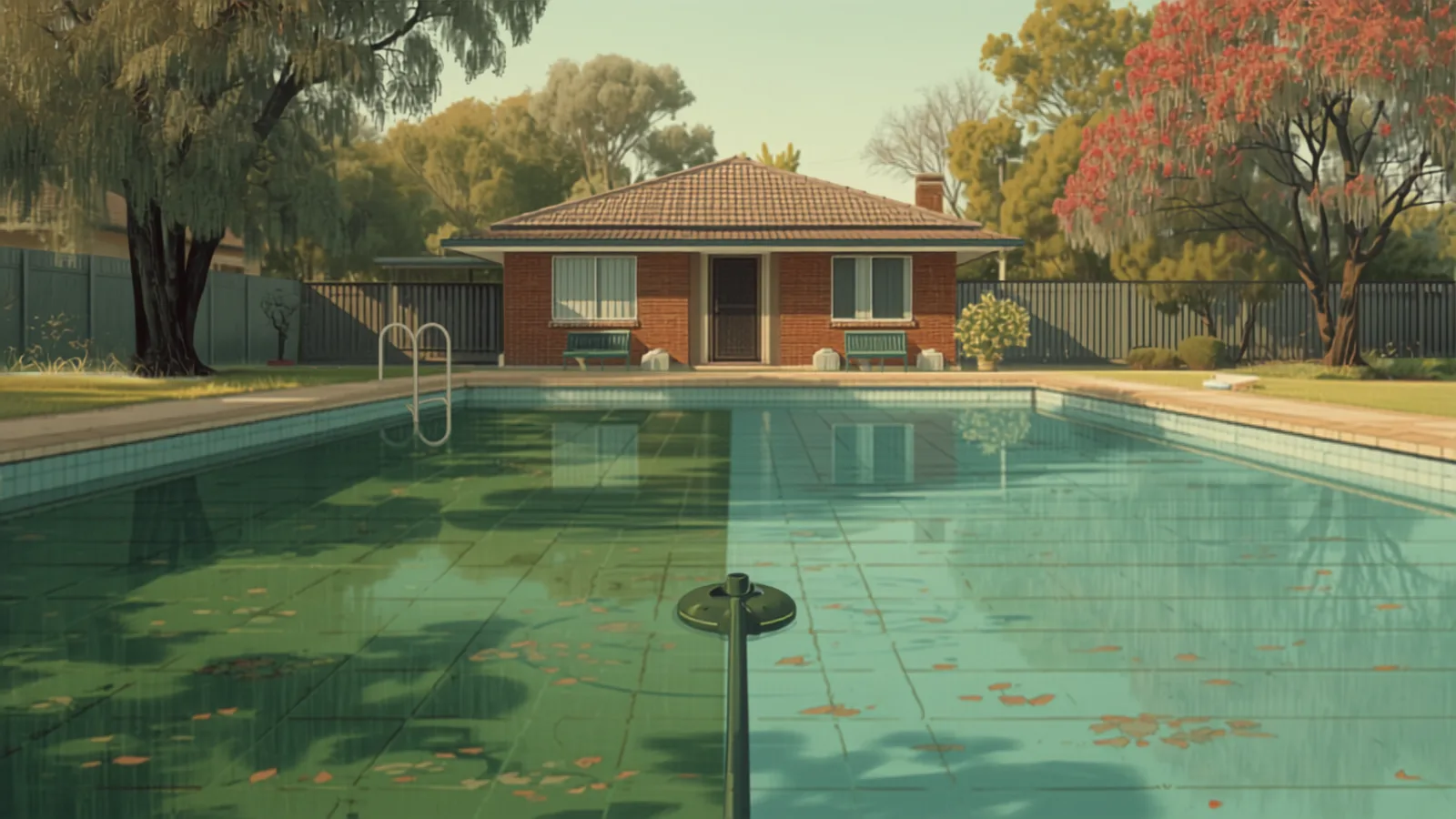
A green pool in Melbourne is almost always a filtration problem wearing a chemistry disguise. Recovery in 2026 runs $315 to $840 per job, with most suburban pools landing near $580. The spread is wide because two very different jobs sit under the same name: a chemical recovery that treats the water in place, and a drain-and-clean that empties the shell and starts again. They cost similar money. Only one of them is usually the right answer here.
What green pool recovery actually costs in Melbourne
Pricing tracks how far gone the water is and how much of the work is chemical versus physical:
- Low end, from $315 — light green, water still clear enough to see the floor. Shock dose, flocculant, one or two return visits to vacuum to waste. Usually 3 to 5 days.
- Around the $580 typical — properly green, floor not visible. Multiple shock treatments, filter media clean or partial replacement, several vacuum passes, water top-up. 5 to 10 days.
- Top end, up to $840 — black-green or swamp, visible organic debris, often a dead or bypassed filter. May include equipment repair, media replacement, and a partial drain. 10 days to three weeks.
Add water. A partial drain and refill of 30 to 40 per cent on a 50,000-litre pool is 15,000 to 20,000 litres, which on Melbourne retail water pricing is a modest line item but not nothing. A full refill is a different conversation entirely, and it is the part of the job most quotes leave vague.
Why Melbourne pools go green when they do
The pattern here is seasonal and it is sharp. Melbourne has the shortest comfortable swim season of the mainland capitals, so pools sit under covers or simply unattended from roughly April to October. Water temperature drops, the owner stops looking, the pump timer gets wound back to save power, and chlorine demand quietly outruns supply. Come the first warm week in October the algae has had a six-month head start.
Two local factors make it worse. The established garden suburbs — Caulfield, Glen Iris, Balwyn North, Kooyong, Carnegie — carry heavy mature-tree canopy, and autumn leaf fall loads the water with phosphates that feed algae all winter. And Melbourne's rainfall pattern dilutes chlorine and salt levels repeatedly rather than in one big event, so a pool can drift out of balance without any single moment where it obviously failed.
The result is a very predictable spring rush. Recovery quotes in Elwood, Middle Park, Murrumbeena, Bulleen, Ringwood and Dingley Village all cluster in the same weeks, and that is exactly when availability tightens and prices sit at the top of the band.
Chemical recovery versus drain-and-clean
Chemical recovery keeps the water in the shell. The pool is shocked with a heavy chlorine dose, algae is killed, a flocculant drops the dead matter to the floor, and it is vacuumed to waste over several passes. Water loss is limited to what the vacuum removes. This is the default approach and it works on the large majority of green pools.
Drain-and-clean empties the shell, pressure-cleans or acid-washes the interior, and refills. It is faster to look at and it is the right call for a pool that has been abandoned for years, has staining bonded into the surface, or has water so far out of balance that chemical correction would cost more than the water. It is also the option that can destroy your pool.
The Melbourne reason not to drain
Much of Melbourne sits on reactive clay, and large parts of the south-east and east carry a high water table through winter and spring. An empty concrete shell is a boat. Groundwater pressure under an emptied pool can lift it, crack it, or float the whole structure out of the ground — and that turns a cleaning job into a structural repair.
Every pool built to standard has a hydrostatic relief valve in the floor to release that pressure, but on older pools it is frequently seized, painted over during a resurface, or gravelled shut. Anyone proposing to fully drain your pool should be able to tell you where your relief valve is and that they have checked it. If they cannot, that quote is not cheaper than the alternative, it is just riskier.
Fibreglass shells are more sensitive again — many manufacturers void warranty on a full drain without their sign-off. Get that in writing before anyone opens a valve.
Where the water goes
Chlorinated pool water must not go to the stormwater drain. Stormwater in Melbourne runs through council and Melbourne Water drains to creeks and the bay, and EPA Victoria requires everyone to prevent waste, including wastewater, from entering stormwater drains so far as reasonably practicable. Vacuum-to-waste and drain water needs to be dechlorinated and dispersed over your own garden, or discharged to sewer with your retailer's permission — Yarra Valley Water, South East Water and Greater Western Water each have their own process and it is worth a phone call before the job, not after.
A competent operator handles this as a matter of course. It is a reasonable thing to ask about when you are comparing quotes, and the answer tells you a lot.
Not all green is the same
Quotes vary because the organism varies, and the three types that turn up in Melbourne pools cost very different money to remove.
- Free-floating green algae — the common case, suspended through the water rather than attached. Responds to a heavy shock dose and flocculant, and clears in days. This is the low end of the band.
- Mustard or yellow algae — clings to shaded walls, steps and behind ladders, and tolerates chlorine levels that kill green algae outright. It needs sustained elevated chlorine held over several days plus hard physical brushing, and every submerged item goes in with the treatment or it simply comes back. Mid band, and disproportionately common on Melbourne pools boxed in by two-storey neighbours where a wall never sees direct sun.
- Black algae — roots into plaster, grout lines and the pores of pebblecrete, protected by a surface layer that shrugs off ordinary dosing. Each spot has to be broken open and treated individually. Top of the band and sometimes past it, because on a surface that has carried it for years the honest answer is that recovery gets you clear water but not a clean-looking pool.
Interior surface is the second cost driver. Pebblecrete and plaster are porous, so algae gets a mechanical grip and brushing is slower and harder. Fibreglass and vinyl are smooth and recover faster and cheaper — but vinyl cannot be acid-washed, so a liner that has stained is stained, and no amount of recovery work changes that.
Pool age compounds both. An older interior that has gone chalky or rough holds algae the way a new one does not, which is why two pools on the same street with the same problem can be quoted very differently. When you are comparing quotes, ask which type has been identified. An operator who has not looked closely enough to answer that is guessing at the price.
The filter is usually the real story
A pool that goes green while it is being serviced has a mechanical fault, not a chemical one. The usual suspects are channelled or calcified sand media, a torn cartridge element, a failed multiport valve seal letting water bypass the filter entirely, or a pump running too few hours to turn the water over once a day.
This matters commercially. If the recovery quote does not include inspecting the filter and pump, you are buying a treatment, not a fix, and the pool will go green again the following season. A media change adds $260–$630 in our Melbourne table, and a new sand or cartridge filter is $790–$1,575 installed if the old one has failed outright. See the detail on pool pump and filter replacement costs in Melbourne.
When you can swim again
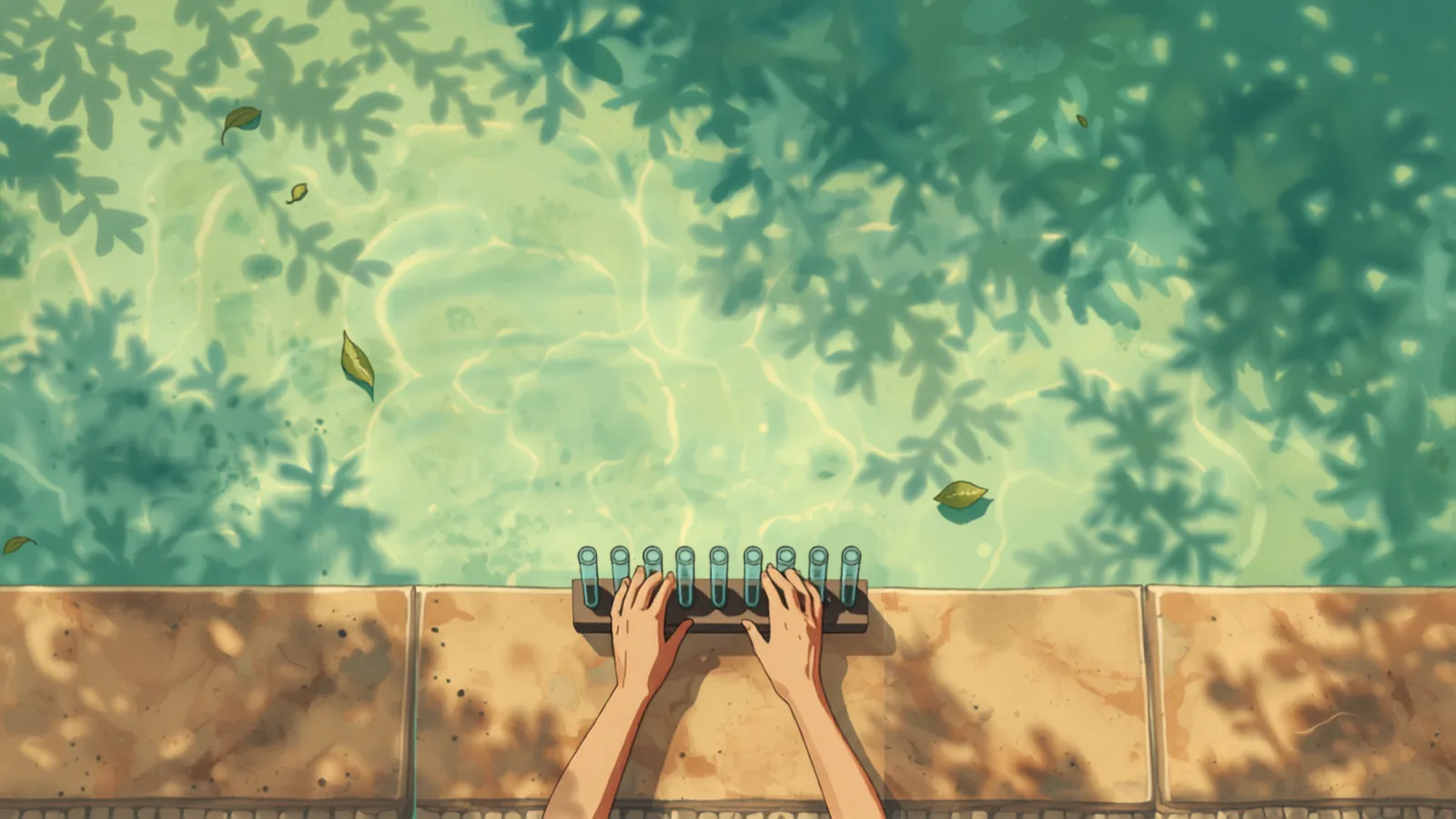
Recovery ends when the water is safe, not when it looks clear, and those are usually a day or two apart. After the final treatment, free chlorine has to fall back below about 5 parts per million before anyone gets in, which on a pool that has been shocked hard takes 24 to 48 hours of filtration and sunlight.
Three things get checked before a pool is signed off: free chlorine back in range, pH between 7.2 and 7.6, and water clear enough to see the main drain sharply from the edge. That last one is not an aesthetic test. If you cannot see the bottom clearly, nobody can see a person in difficulty on it, which is why it is a safety check rather than a presentation one.
Ask for the final readings in writing. It is the difference between a pool that has been recovered and a pool that has been made to look recovered, and it costs nothing to request.
What recovery does not include
Recovery restores water clarity and chemistry. It does not resurface the pool. If algae has been embedded in a pebble or plaster interior for years, killing it can reveal permanent staining or a surface that has gone chalky — that is a resurfacing job, in a different price bracket entirely.
It also does not include the chemistry that stops it recurring. A pool that has just been recovered needs stabiliser, hardness and pH brought properly into range and held there, which is a $84–$190 chemistry visit or the first month of an ongoing service.
Recovery versus prevention, in plain numbers
A single green pool recovery at the $580 typical is about 3 months of fortnightly service at the $220 typical in our Melbourne table. Owners who let the pool go green every spring are paying for a recovery every year, and getting a worse pool for it. If you are choosing between the two, the comparison in our weekly versus monthly pool service cost guide sets out what each frequency actually covers.
Frequently asked questions
How much does it cost to fix a green pool in Melbourne?
Between $315 and $840 per job in 2026, with most suburban pools around $580. Light green water treated chemically sits at the low end; a black-green pool needing filter media replacement and a partial drain sits at the top.
How long does green pool recovery take?
Three to five days for a light green pool, five to ten days for a properly green one, and up to three weeks for a badly neglected pool. Most of that time is filtration running continuously — there is no chemical that clears a pool in an afternoon.
Is it cheaper to drain a green pool and start again?
Rarely, once you count the water and the risk. In Melbourne the bigger issue is that reactive clay and a high winter water table can lift or crack an emptied shell. Full draining should only happen after someone has confirmed the hydrostatic relief valve is clear.
Can I pour green pool water down the stormwater drain?
No. Melbourne stormwater discharges to creeks and the bay, and EPA Victoria requires everyone to prevent waste, including wastewater, from entering stormwater drains so far as reasonably practicable. The water needs to be dechlorinated and dispersed on your own garden, or discharged to sewer with permission from your water retailer.
Why does my pool go green every spring?
Almost always filtration rather than chemistry. Melbourne pools sit unattended through a long cool season with the pump wound back, and heavy autumn leaf fall in the established garden suburbs loads the water with phosphates that feed algae all winter.
← Back to Melbourne pool maintenance cost guide hub