Deck steps and balustrade cost on the Gold Coast
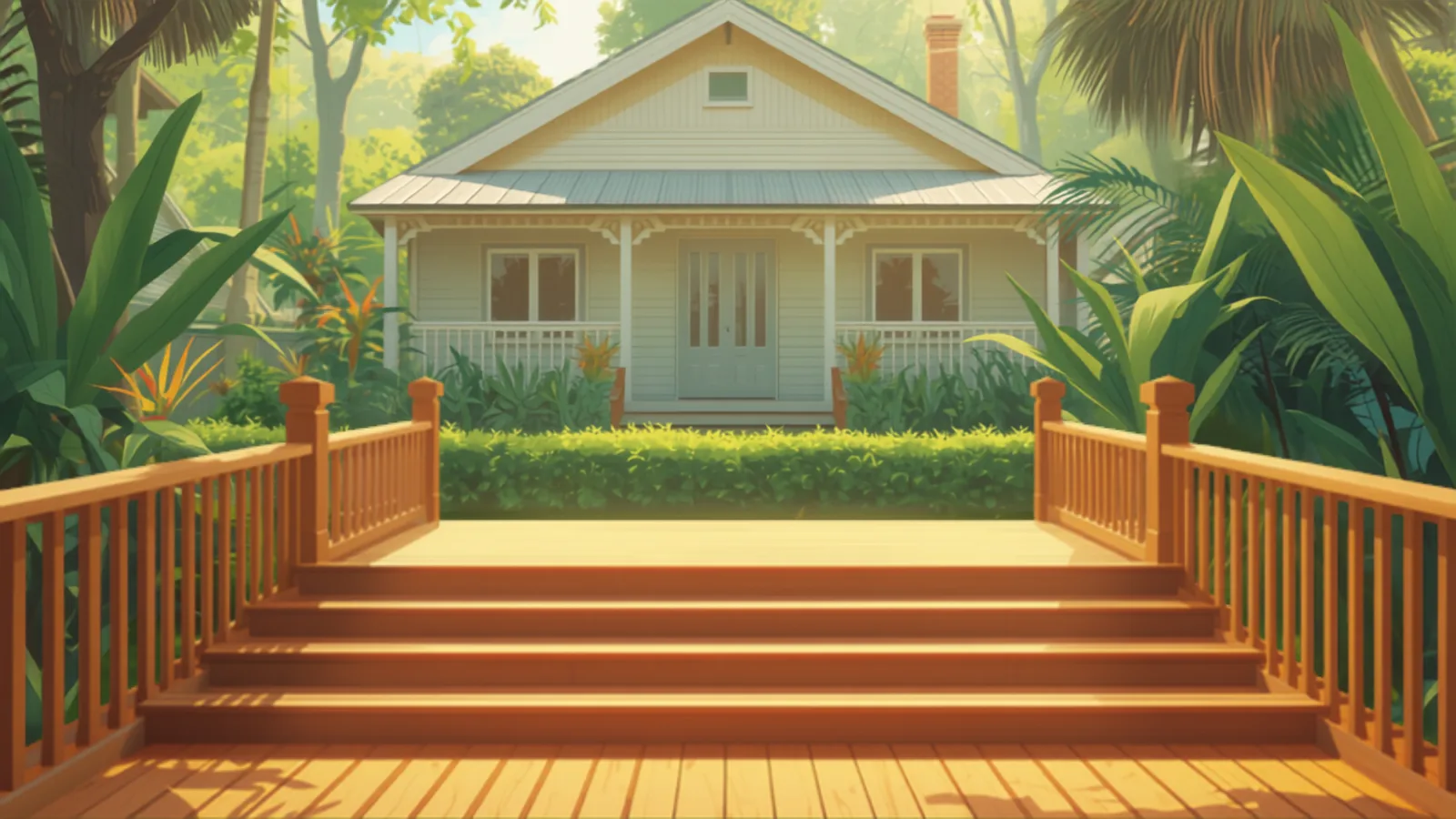
Deck steps cost $145 to $390 each on the Gold Coast, typically $245. Balustrade runs $120 to $345 per linear metre, typically $195. Both are quoted separately from the deck itself, and on a raised deck the balustrade is not optional.
The rates
- Deck steps — $145 to $390 per step, typically $245. Covers stringers, treads and fixing.
- Balustrade or railing — $120 to $345 per linear metre, typically $195. Posts, rails and infill.
Neither is included in a per-square-metre deck rate, which is the most common reason a quote comes in above what someone expected. A 24 square metre deck with three steps and eight metres of balustrade adds roughly $2,300 at typical rates — a quarter again on a $9,800 hardwood deck.
The spread on balustrade is wide because it covers everything from simple timber slats to stainless wire and frameless glass. Steps vary less, though width, rise and whether they turn a corner all move the number.
When balustrade is compulsory
This is the part that decides the budget, and it is not a matter of preference.
Under the National Construction Code, a barrier is required where a deck or landing is more than one metre above the surface beneath. That barrier must be at least one metre high, and any gap in it must not allow a 125mm sphere to pass — which is what determines slat and wire spacing. Where the drop exceeds four metres, there are further restrictions on climbable elements between 150mm and 760mm above the deck, so horizontal rails in that zone become a problem.
Queensland applies the NCC through building approval, and a deck above a metre generally needs a licensed building certifier to sign it off. That means the balustrade is inspected, not just installed — a non-compliant one is a defect you will be required to fix, and it is far cheaper to build right than to rebuild.
Below a metre there is no requirement. Plenty of people still put balustrade on a 600mm deck for young children or simply for the look, and that is a free choice rather than a compliance one.
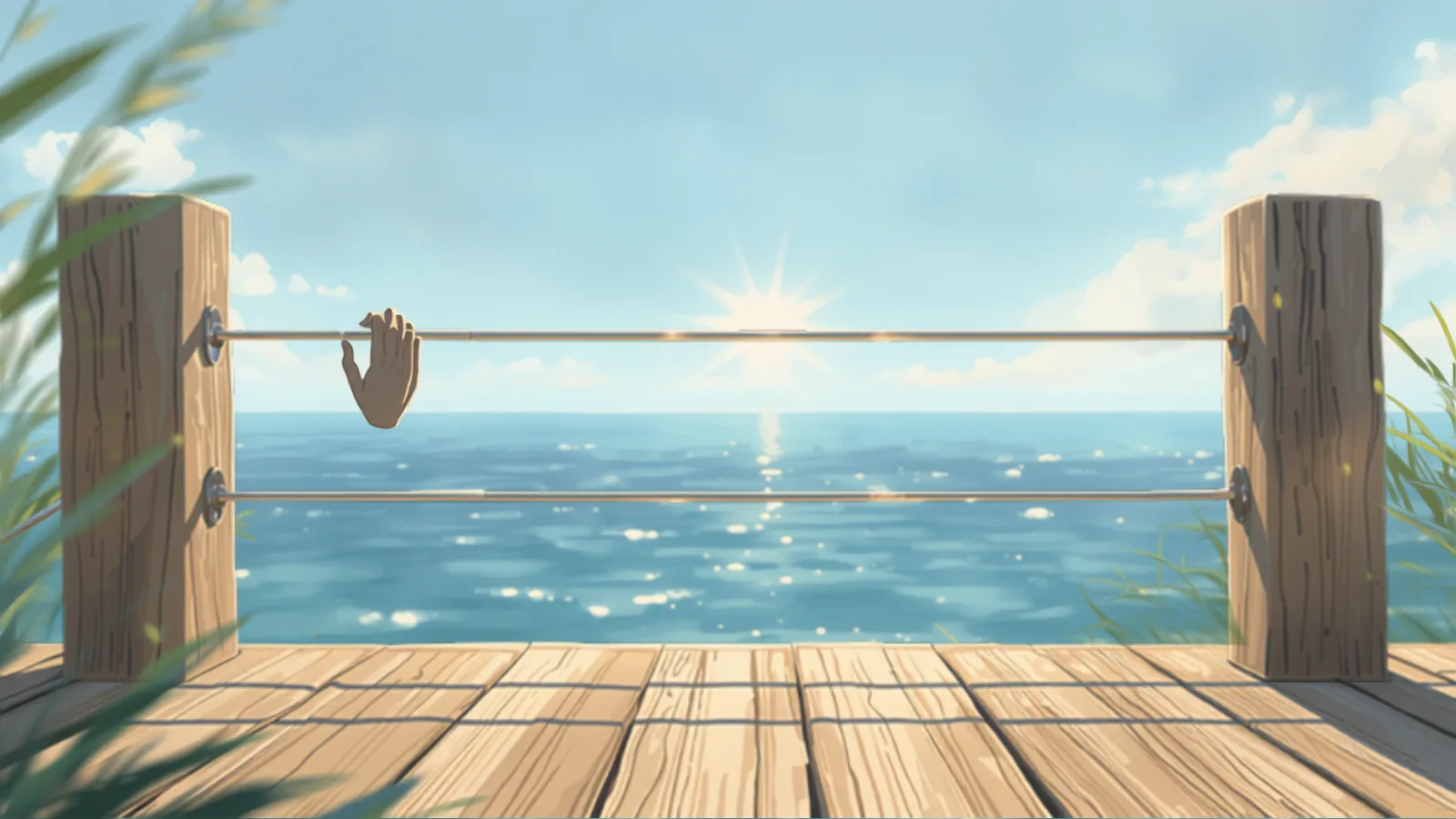
What each balustrade type costs
- Timber slat — the bottom of the band, near $120 to $180/lm. Cheapest, easiest to match to the deck, and the one that needs maintaining alongside it. Vertical slats rather than horizontal, so nothing is climbable.
- Stainless wire — mid to upper band, roughly $200 to $300/lm. Popular on the Gold Coast because it preserves the view. Wire must be tensioned properly to hold the 125mm gap rule, and near the water it wants marine-grade stainless rather than standard.
- Aluminium — mid band. Powder-coated, no maintenance, less warm-looking than timber. A sensible default where the deck is not the feature.
- Glass — top of the band and beyond. Frameless glass on a coastal deck is a genuine premium item and often quotes above $345/lm. It also needs cleaning constantly in salt air, which nobody mentions at quoting stage.
Wire and glass both trade cost for view, which on a Burleigh or Palm Beach deck is often the entire reason for building it. Timber and aluminium trade view for budget.
Steps: geometry, materials and price
A step is more work than it looks. Each one needs stringers cut to the rise, treads fixed, and the whole flight tied back into the deck frame and down to a footing or landing pad at the bottom.
How many steps you actually need is set by the height, not by preference, and people routinely underestimate it. The National Construction Code caps riser height at 190mm and requires a going of at least 240mm for private stairs, with every riser in a flight the same within a few millimetres. A deck 1.2 metres above ground therefore needs seven risers at around 170mm, not the four or five people tend to assume. That difference is roughly $500 at typical rates, and it is the most common reason a steps quote comes back higher than expected.
Consistency matters as much as the numbers. Uneven risers are both a genuine trip hazard — the foot expects the rise it just had — and one of the most reliable certifier pick-ups on a deck inspection. A flight where the bottom step is short because someone worked down from the deck rather than up from the ground is a defect, not a quirk.
What pushes a step toward $390 rather than $145: extra width, a turn or landing partway down, hardwood treads rather than pine, a flight tall enough to need its own handrail, or a bottom step landing on soft ground that needs its own concrete pad rather than sitting on the existing paving.
What keeps a step near $145: two or three straight, standard-width steps down onto an existing hard surface, in the same material as the deck, with no handrail required.
Materials. Treads usually match the deck boards, which keeps the look consistent and the maintenance schedule single. The exception worth considering on the Gold Coast is a stair in full sun with no shade — that is the hardest-worked timber on the property, taking foot traffic and UV together, and some owners go a grade harder on treads than boards for that reason. Stringers are structural and want treating for ground contact wherever they meet soil, the same termite consideration that applies to the deck frame.
Handrails. Where a flight has more than a couple of risers a handrail moves from nicety to requirement, and on a deck already above a metre it will be inspected alongside the balustrade. Budget it as part of the stair rather than as an extra, because a stair quoted without one on a 1.2 metre deck is a stair that will need revisiting.
A worked example: 24 square metres in Hope Island
A merbau deck 1.2 metres above ground — over the threshold, so balustrade and approval both apply. Eight linear metres of balustrade around two open sides, and four steps down to the yard.
- Four steps at $245 typical — about $980.
- Eight metres of stainless wire balustrade at around $250/lm — about $2,000.
- Building approval and certification — allow $700 to $1,500 depending on the certifier and the complexity.
Roughly $3,700 on top of the deck itself, which at 24 sqm of merbau is about $9,840. So the finished job is near $13,500 — against $9,840 for the same deck built at 900mm, where none of it applies.
That gap is worth sitting with before finalising the height. Dropping a deck below a metre, where the site allows, removes the balustrade requirement, the approval, and the certifier — often two and a half to four and a half thousand dollars on a deck this size. Where the ground falls away and you have no choice, budget for it from the start rather than discovering it after the frame is up. The full rebuild arithmetic is in our deck replacement cost guide.
Retrofitting to an existing deck
Adding balustrade to a deck that never had it is more involved than adding it during a build, because the posts have to tie into a frame that was not designed to carry them.
A barrier has to resist a real horizontal load — someone leaning, or a group against it at a party — and that load goes into the substructure. Posts bolted only to the fascia board will eventually work loose. Done properly they are through-bolted to joists or bearers, which sometimes means lifting boards to get at the frame.
Expect a premium over new-build rates for that reason, and expect a competent builder to want to look underneath before quoting. If they do not, they are pricing a rail rather than a barrier.
Retrofit is also the moment to check whether the deck should have had balustrade all along. Decks built above a metre without one are not uncommon on older Gold Coast properties, and it becomes an issue at sale when a building inspector notes it.
What to ask for in the quote
- Deck height above ground at the highest point — this determines everything else
- Balustrade material, infill type and spacing, stated to the 125mm rule
- How posts fix to the frame — through-bolted, or fixed to the fascia
- Fixings: marine-grade stainless if you are near the water
- Number of steps, width, and whether a handrail is included
- Whether approval and certification are in the price or yours to arrange
Get the height confirmed with a tape rather than by eye, measured from the deck surface to the ground directly below at the deck's highest point. A deck someone described as "about a metre" that measures 1.05 is a different job with a different approval pathway, and that is a discovery best made before the quote rather than after the build.
On a sloping block the measurement that matters is the worst case, not the average. A deck that sits 800mm above ground at the house and 1.3 metres at the far corner is a deck above a metre, and the whole barrier requirement follows from that corner alone. It is a common source of disagreement between owner and builder, and it is settled with a tape in about a minute.
The per-square-metre rates these sit on top of are in our deck cost per square metre guide.
Frequently asked questions
How much do deck steps cost on the Gold Coast?
$145 to $390 per step, typically $245. Straight standard-width steps down to a lawn sit at the bottom; extra width, a turn or landing, hardwood treads or a handrail push toward the top.
How much does deck balustrade cost per metre?
$120 to $345 per linear metre, typically $195. Timber slat is cheapest, stainless wire runs roughly $200 to $300, aluminium sits mid-band, and frameless glass often quotes above the top of the range.
When is a deck balustrade required in Queensland?
Where the deck is more than one metre above the surface below. The barrier must be at least a metre high with no gap allowing a 125mm sphere through, and a deck at that height generally needs building approval and certifier sign-off.
Can I add balustrade to an existing deck?
Yes, though it costs more than during a build. Posts must be through-bolted to joists or bearers to resist real horizontal load, which sometimes means lifting boards. Posts fixed only to the fascia will work loose.
How much does the 1m rule add to a deck?
On a 24 sqm deck with four steps and eight metres of balustrade, roughly $3,700 once approval and certification are counted. Building below a metre where the site allows removes all of it.
← Back to Gold Coast decking cost guide hub