Strata Cleaning Cost in Sydney

Cleaning is usually the second or third largest line in a Sydney strata budget after insurance, and it is the one owners query most at the AGM. Common property cleaning runs on the same $2.20 to $4.30 per square metre per month band as commercial work, but the surfaces are different, the buyer is a committee rather than a facilities manager, and the contract runs on an annual cycle tied to the levy. Here is where the money actually goes and how to read a quote before you sign it.
Where a strata cleaning budget actually goes
An office is one tenancy on one floor. A strata scheme is a lobby, a lift car, four corridors, a fire stair nobody looks at, a garbage room, a car park, a bin bay and whatever sits between the front boundary and the building line. Same rate per square metre, very different surfaces, and the ones that cause complaints are rarely the ones an owner pictures.
| Surface | Typical frequency | What drives the time |
|---|---|---|
| Lobby and entry | 2–3x per week | Glass, tiled floor and the mat well. The most visible surface in the building and the one owners judge the whole contract by. |
| Lifts | 2–3x per week | Stainless steel marks constantly. Car floors and door tracks take longer than the area suggests. |
| Corridors and fire stairs | Weekly to fortnightly | Volume, not difficulty. Fire stairs are often descoped to quarterly, which is where a cheap quote usually found its savings. |
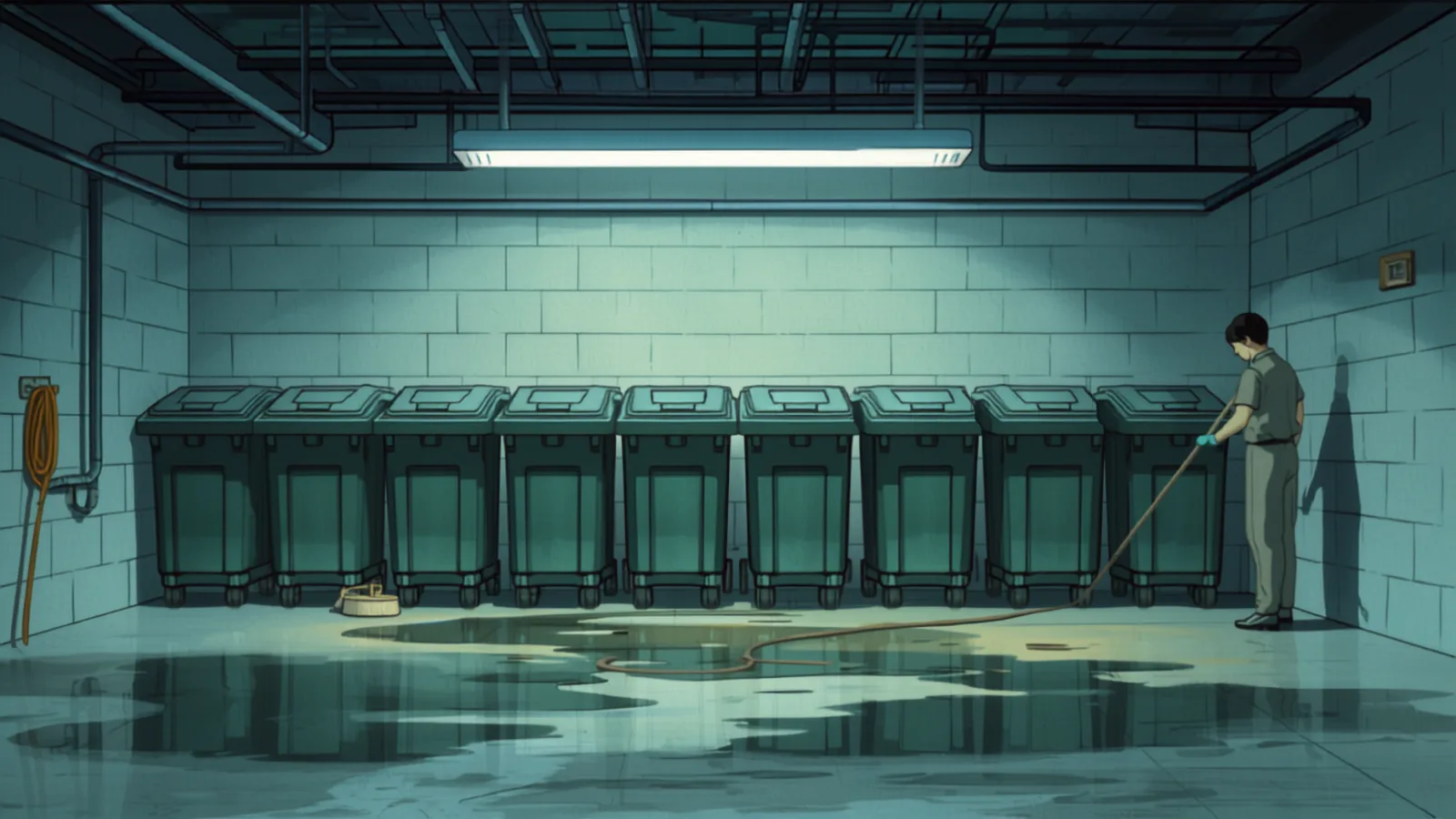
| Garbage room and bin bay | Collection days | Wet work, odour management and bin rotation. The single most common source of complaints and the most common scope gap. |
| Car park | Monthly to quarterly | Sweeping and oil spotting. Usually priced separately or scheduled periodically rather than included. |
Every figure on this page includes GST.
Three things that separate two quotes on the same building
Committees regularly receive quotes that differ by thirty or forty per cent on identical common property. It is almost never the hourly rate. It is one of these three, and all three are recoverable by asking.
1. Bin rotation, in or out
Getting bins to the kerb on collection day and back again is a fixed task with a hard deadline, and whether it sits with the cleaner, the building manager or a resident volunteer changes a quote materially. A scheme that assumes it is included, and does not check, usually discovers the gap the first week it is missed.
2. Fire stairs and the surfaces nobody inspects
Fire stairs, plant room approaches, the back of the bin bay. Descope them and a quote drops without anyone noticing for months, until an inspection or a complaint surfaces it. When comparing two quotes, check they list the same spaces before comparing the numbers at all.
3. Frequency, stated per surface
A quote saying "twice weekly" without saying twice weekly to what is not comparable to anything. Lobbies at three visits and corridors at one is a completely different job from everything at two, and the two can price within a few dollars of each other while delivering visibly different buildings.
| Ask the contractor | Why it moves the price |
|---|---|
| Who takes the bins out on collection day? | A fixed task with a hard deadline. In or out changes a quote materially and is the most common gap. |
| Are fire stairs and plant approaches in scope? | The usual place a cheap quote found its savings. Descoped, nobody notices for months. |
| What is the frequency per surface, not per building? | Lobbies at three and corridors at one prices close to everything at two, and delivers a visibly different building. |
| Is the car park included or periodic? | Commonly assumed included, commonly is not. Sweeping and oil spotting are usually quoted separately. |
| Is common-area carpet in the monthly figure? | It is not. Annual periodic work with its own budget line, and a surprise invoice if unbudgeted. |
The annual cycle, and why it matters at budget time
Strata cleaning is bought on a cycle no other commercial buyer runs. The contract is approved against the administrative fund budget, the budget is set at the AGM, and the levy is struck to fund it. That produces three practical consequences worth knowing before renewal.
Quotes get written to a budget, not to a scope. When a committee says the figure it has, contractors price to reach it, and the scope quietly adjusts to fit. That is not sharp practice; it is a rational answer to the brief given. Ask for the scope first and the price second and you will get a comparable quote.
Mid-year increases are difficult. The levy is already struck, so a scope change during the year has to come from a surplus or a special levy. Scope generously at renewal rather than economising and reopening it in March.
Periodic work needs its own budget line. Common-area carpet steam cleaning runs $3.20–$6.50 per m² and is usually annual. Strip and seal on vinyl or lino in service corridors runs $8.60–$15 per m². Neither belongs in the monthly contract, and a scheme that budgets only the contract will find both landing as unbudgeted invoices.
One lever most committees never use: contractors price adjacent buildings more keenly, because travel and set-up amortise across two sites in a single run. If the scheme next door is tendering at the same time, ask both contractors to quote the pair.
Frequently asked questions
Who decides the cleaning contract in a strata scheme?
The owners corporation, usually acting on a recommendation from the strata manager or building manager. The committee approves the spend within the administrative fund budget, and anything above the delegated limit goes to a general meeting. That is why strata quotes are often written to a budget figure rather than to a scope.
Is the cleaner responsible for putting bins out?
Only if the scope says so, and it is the single most common gap in a strata cleaning contract. Bin rotation on collection day is a fixed, unmissable task with a hard deadline, and a scheme that assumes it is included without checking usually finds out the week it is missed.
What is not covered by a standard common property clean?
Window cleaning above ground level, pressure washing of driveways and paths, carpet steam cleaning in corridors, and anything inside a lot. These are quoted separately, and a scheme that budgets only the monthly contract will be surprised by them.
How often should common areas be cleaned?
Most Sydney schemes run two to three visits a week for lobbies, lifts and corridors, with garbage rooms serviced on collection days. Larger buildings with concierge or gym facilities move to daily. Frequency, not floor area, is what usually separates two quotes on the same building.
Why do two quotes on the same building differ so much?
Almost always because they assume different frequencies or different surface inclusions, not because one contractor is cheaper. Ask both to state visits per week and to list the garbage room, car park and any external hard surfaces explicitly. Once those match, the rates usually converge.
Can the scheme use the same contractor as the building next door?
Often worth asking. Contractors price adjacent buildings more keenly because travel and set-up are shared across two sites in one run. It is one of the few genuine levers a committee has on the rate without cutting frequency.
← Back to commercial cleaning cost hub