How Long Does a Bathroom Renovation Take in Australia?

How long does a bathroom renovation take? What's The Damage's October 2026 re-verification across 90+ sources puts a typical full renovation at three to five weeks on site — and two to three months door to door once design and ordering are counted. Here's the week-by-week sequence, what can't be compressed, and what blows timelines out.
The short answer: three to five weeks on site
A full bathroom renovation — strip-out through to final fit-off — typically takes three to five weeks of on-site work for a standard family bathroom. A cosmetic refresh that keeps the existing layout can wrap up in two to three weeks. A renovation that moves walls, relocates plumbing or waits on custom joinery routinely stretches to six or eight. The biggest driver isn't the size of the room; it's how much of the existing services layout you keep.
On-site time is also only half the calendar. Once design, product selection and ordering lead times are counted, the realistic window from decision to first shower is closer to two to three months. Owners who compress that front end almost always pay for it mid-build, waiting on a vanity that should have been ordered six weeks earlier.
Week by week: where the time actually goes
Bathrooms renovate in a strict sequence. Most stages physically or legally cannot begin until the one before is finished — and in the case of waterproofing, cured. Here is how the on-site weeks break down on a typical full renovation.
| Stage | Typical duration | What's happening |
|---|---|---|
| Demolition and strip-out | 1–2 days | Old fixtures, tiles and sheeting come out; surfaces go back to frame where needed; waste is removed. |
| Plumbing and electrical rough-in | 2–3 days | Licensed trades run new pipework and cabling to the planned fixture positions before the walls close up. |
| Wall sheeting and preparation | 1–2 days | Wet-area board goes in, joints are set, and surfaces are readied for the membrane. |
| Waterproofing | 2–3 days | Membrane applied to the wet-area standard (AS 3740), including curing time between coats and before tiling. |
| Screeding and floor preparation | 1–2 days | Falls to the waste are set in the screed — followed by more curing. |
| Tiling | 4–7 days | Usually the longest single stage: floor and wall tiling, cutting, and adhesive cure before grout. |
| Grouting and silicone | 1–2 days | Grout, movement joints and wet-area sealing. |
| Fit-off | 2–3 days | The plumber and electrician return: toilet, tapware, vanity, lighting, exhaust fan, power points. |
| Shower screen and accessories | 1–2 days on site | Screens are measured after tiling and manufactured to size — the manufacturing wait sits between visits. |
| Painting and final finish | 1–2 days | Ceiling and above-tile walls, trim touch-ups, and the final clean. |
Add those up and you get roughly 16 to 25 working days — but they rarely run back to back. Trades are booked across multiple jobs, curing time can't be negotiated away, and a made-to-measure shower screen alone puts a one-to-two-week pause between tiling and the final fit. Three to five calendar weeks is the honest translation.
Can stages overlap? Rarely, in a single bathroom. The room is too small for two trades to work at once, and the sequence is compliance-driven. Genuine time savings come from tight scheduling between stages, not from compressing the stages themselves.
The stages you cannot compress
Two parts of the sequence are fixed by chemistry and one by manufacturing, and pushing any of them is how renovations fail early.
Waterproofing cure. The membrane needs its full cure time between coats and before tiling starts. A membrane tiled over too early can fail invisibly — and a failed membrane means pulling up a finished bathroom to fix it. No competent renovator trades days here, and you should be suspicious of any schedule that does.
Adhesive and screed cure. Tile adhesive and screed both need set time before the next trade loads them. Grouting over green adhesive telegraphs cracked grout lines within months of handover.
Shower screens and stone tops. Anything made to measure is measured off the finished surface. Frameless screens and stone vanity tops are manufactured after tiling, which builds a natural pause into the last fortnight of the job no matter how organised everything else is.
What pushes a renovation past six weeks
When bathroom timelines blow out, it is almost always one of six causes.
- Layout changes. Moving the toilet, shower or basin means re-running drainage and supply lines — more rough-in time, and sometimes access to the floor from below.
- Structural work. Removing or moving walls, enlarging windows or altering door openings brings additional trades onto the job and, in some cases, engineering sign-off before work can continue.
- Discovery. Strip-out is where surprises live: water-damaged framing, non-compliant old plumbing, or asbestos sheeting in homes built before 1990 — which must be identified, and removed where reasonably practicable, before the renovation proceeds, with larger removals needing a licensed removalist.
- Custom joinery and imported product. Custom vanities commonly carry four-to-eight-week manufacturing lead times, and imported tiles or tapware can run longer. If they're ordered after demolition, the site simply waits.
- Approvals. Like-for-like renovations generally don't need them, but layout changes, structural work and apartment renovations can — and approval clocks run in weeks, not days.
- Trade scheduling. Every handover between trades is a potential idle gap. Metropolitan jobs usually re-book faster; regional jobs can wait longer between stages, particularly for specialist wet-area trades.
The lead time before anyone swings a hammer
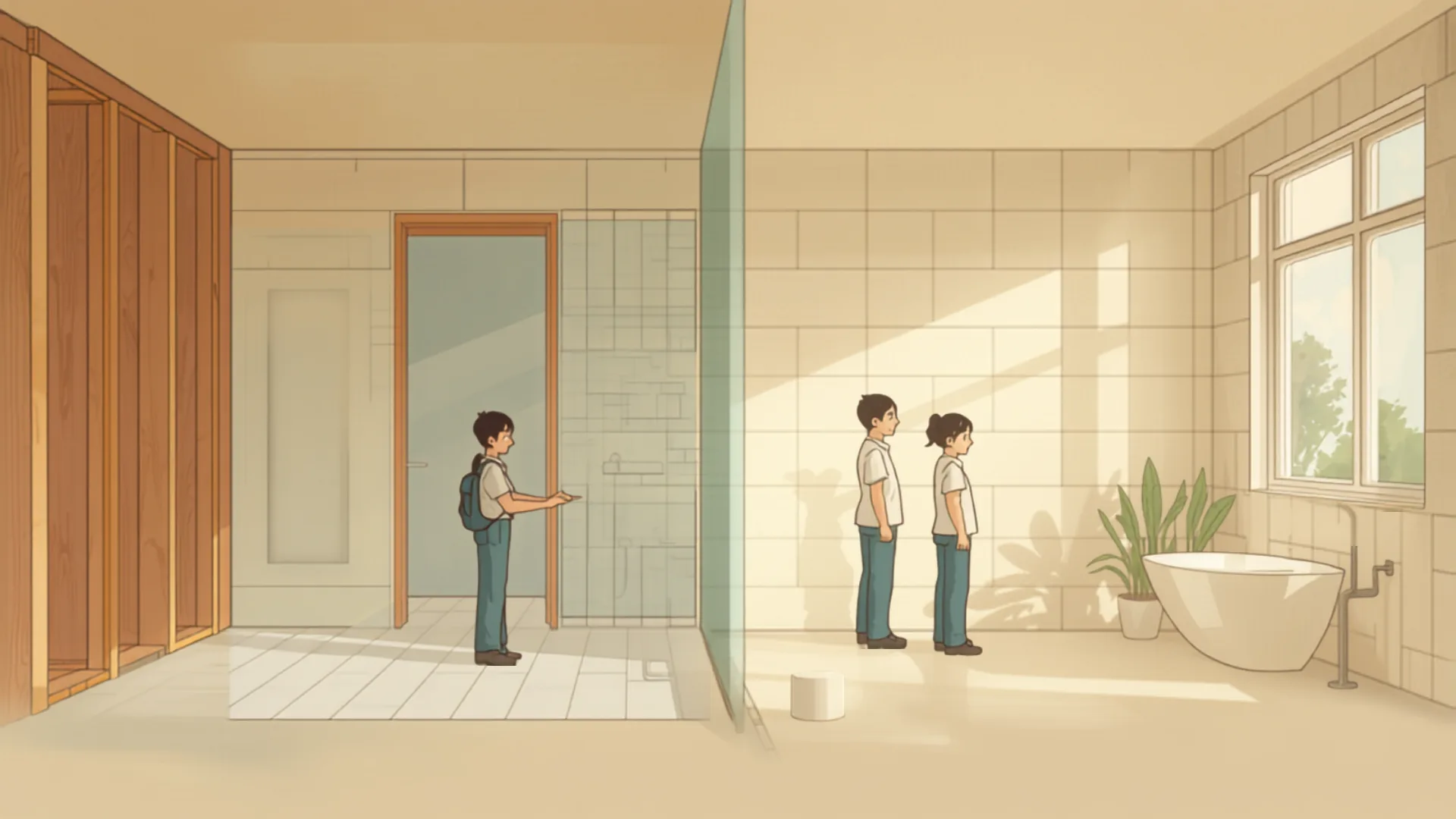
The most reliable renovations spend two to six weeks in preparation before demolition day. That window covers design and layout decisions, fixture and tile selection, quotes and contract — and, critically, ordering. Everything with a lead time should be ordered, confirmed and ideally sitting in the garage before strip-out begins. Tiles should be checked against their batch numbers on delivery, not on the morning the tiler arrives. The cheapest week of the whole project is the planning week that prevents an idle one.
Living through it: planning for the downtime
If it's the household's only bathroom, the timeline stops being abstract. A good renovator will sequence the job so the toilet is out of action for the shortest possible window, and it's worth asking directly: how many days will the toilet be unusable, and how many the shower? The answer tells you a lot about how carefully the schedule has been thought through. Practical fallbacks include a temporary hire unit, an arrangement with neighbours or family, or timing the renovation around travel. A well-planned job keeps the worst of the disruption to under two weeks.
Does a longer renovation cost more?
Not by itself — cost tracks scope, not calendar. What's The Damage's October 2026 re-verification across 90+ sources puts basic renovations at $10,000–$20,000 nationally, mid-range work at $20,000–$35,000 and premium renovations at $35,000–$55,000, and a well-run premium job can hold a similar site duration to a mid-range one. Where time does turn into money is in disruption and re-mobilisation: extra weeks without the bathroom, trades charging return visits because the site wasn't ready, and variations priced mid-stream instead of quoted up front. A blowout is rarely expensive because of the days themselves; it's expensive because of what caused them.
How to keep it on schedule
Four habits separate three-week renovations from eight-week ones. Lock every selection — down to tapware finish and grout colour — before demolition starts. Order long-lead items first and confirm delivery dates in writing. Run the job through one coordinating renovator or builder rather than self-managing five trades on a first attempt; the coordination is where the weeks leak. And tie staged payments to completed milestones, which keeps the schedule everyone's shared interest. The week-by-week table above is genuinely achievable — it's the decisions made outside it that determine whether you hit it.
You're in.
A local installer will be in touch about your job. No spam, no middleman.
Bathroom Renovation cost in your city
Verified October 2026 ranges — tap your city for the full local guide.
Frequently asked questions
How long does a bathroom renovation take in Australia?
A full renovation typically takes three to five weeks on site, and two to three months door to door once design, selections and product ordering are included. Cosmetic like-for-like refreshes can finish in two to three weeks; renovations involving layout changes, structural work or custom joinery commonly run six to eight.
Can I use my bathroom during the renovation?
Not for most of the build — the room is stripped, then progressively sealed under membrane, screed and fresh tiling. Ask your renovator exactly how many days the toilet and the shower will each be unusable; a well-planned job keeps the worst of the disruption to under two weeks, and the answer is a good test of how carefully the schedule has been thought through.
How long does bathroom waterproofing take?
Typically two to three days, most of which is curing time between coats and before tiling can start. It cannot safely be compressed — a membrane tiled over too early can fail invisibly, and fixing a failed membrane means removing the finished bathroom above it.
What is the fastest a bathroom can be renovated?
A cosmetic like-for-like renovation with every product ordered and on site before demolition can be completed in around two to three weeks. Anything faster usually means curing times are being squeezed, which is where early failures come from — treat very short quoted timelines as a red flag rather than a bonus.
Why is there a delay before the shower screen is installed?
Made-to-measure screens are measured off the finished tiled surfaces and then manufactured to size, so a one-to-two-week manufacturing wait between tiling and final installation is normal and built into a realistic schedule. The same applies to stone vanity tops.
Does a longer renovation cost more?
Not by itself — cost tracks scope and finish tier, not calendar weeks. Nationally, verified bands run $10,000–$20,000 for basic work, $20,000–$35,000 mid-range and $35,000–$55,000 premium. Delays cost money indirectly, through disruption, trade re-mobilisation and mid-stream variations.
← Back to bathroom renovation cost guide hub