Small Bathroom Renovation: Costs, Layouts and What to Expect
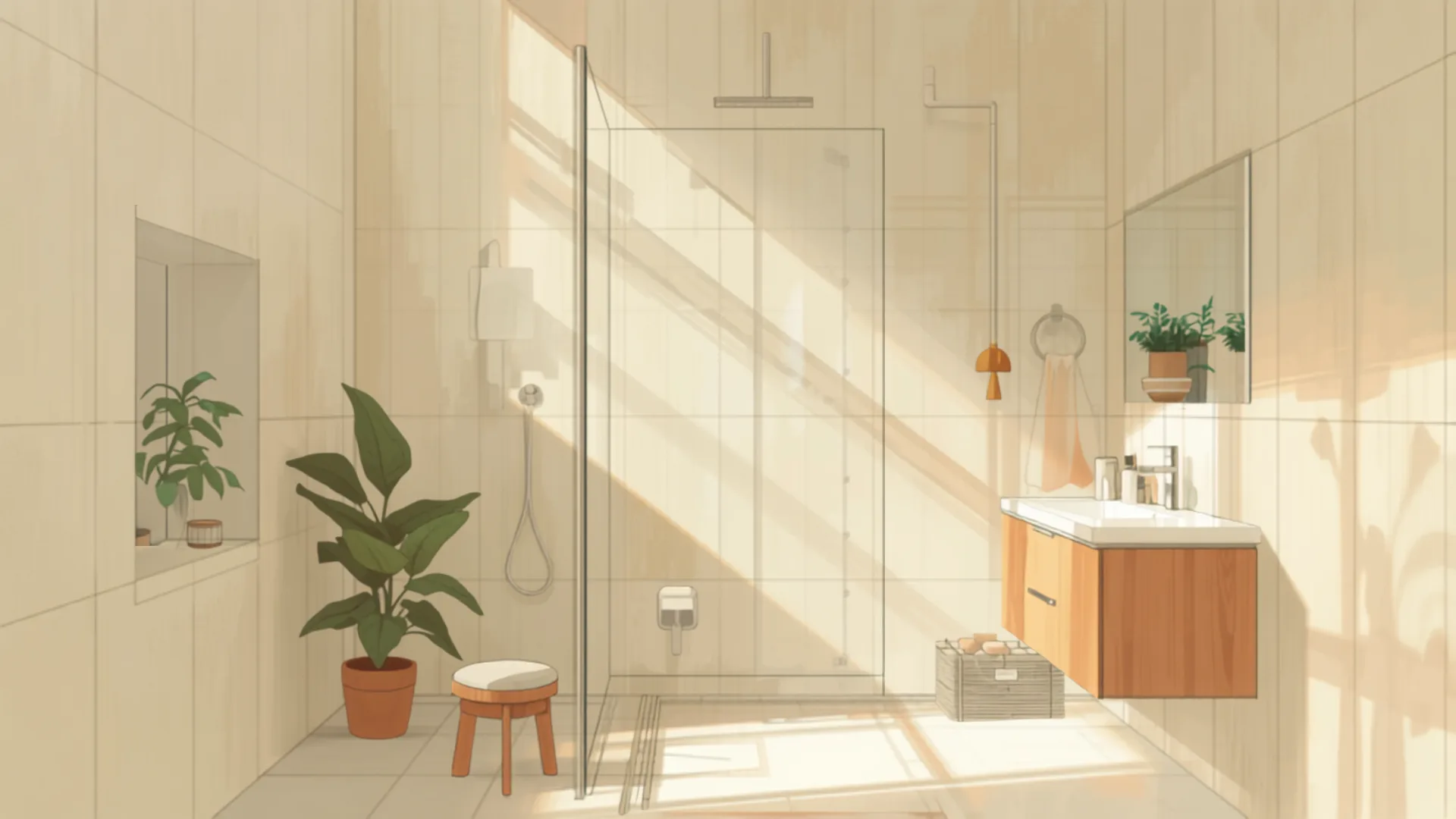
Small bathroom, smaller bill — but not by as much as most owners hope. What's The Damage's October 2026 re-verification across 90+ sources puts bathroom renovations at $10,000–$55,000 nationally, and small rooms land in the lower half of each band rather than on a cheaper scale of their own. Here's why, and where the real savings hide.
What counts as a small bathroom
In Australian homes, a small bathroom is typically four to six square metres — the classic apartment bathroom, the older-home family bathroom, or a three-piece ensuite. Below four square metres you're into powder-room and micro-ensuite territory, where the layout is more constraint than choice. This guide targets that four-to-six-metre band: the size where nearly every full-size fixture still fits, but every centimetre of the plan has to earn its place.
What a small bathroom renovation costs
What's The Damage's October 2026 re-verification across 90+ sources puts bathroom renovations at $10,000–$20,000 for basic work, $20,000–$35,000 for mid-range and $35,000–$55,000 for premium, nationally. Small bathrooms don't get a cheaper scale of their own — they land within those same bands, typically in the lower half of each.
| Tier | National band | Where small bathrooms typically land |
|---|---|---|
| Basic — budget fittings, existing layout | $10,000–$20,000 | Lower half of the band. Savings come mostly from fewer tiling days and less material, not cheaper trades. |
| Mid-range — quality fixtures, minor layout tweaks | $20,000–$35,000 | Toward the lower-middle. The wet-area trade costs barely shrink with the room. |
| Premium — custom joinery, top-end finishes | $35,000–$55,000 | Compact premium builds still reach well into the band — finish level, not floor area, drives the spend. |
The pattern worth internalising: floor area is a weak predictor of renovation cost. Fixture count, layout changes and finish level are the strong predictors — and a small bathroom usually has exactly the same fixture count as a large one.
Why small doesn't mean half price
The intuition that half the floor area should mean half the bill fails for four structural reasons.
Same trades, same visits. A four-square-metre bathroom needs every trade a ten-square-metre one does: demolition, plumbing, electrical, waterproofing, tiling, fit-off. Each trade carries a call-out and setup cost that doesn't scale with the room, and most price a minimum for a bathroom regardless of its size.
Same fixture count. Toilet, basin, shower, tapware, exhaust, lighting — the shopping list is unchanged. Fixtures and their installation are a large share of any renovation, and they cost the same in a small room as a big one.
Waterproofing doesn't miniaturise. The membrane system, its detailing around penetrations, and its certification are effectively a fixed package for a wet area. A smaller floor saves some material; it saves very little of the licensed labour that matters.
Tight rooms work slower. One trade at a time is already the rule in any bathroom; in a small one, materials stage outside the room, cuts happen elsewhere, and awkward corners multiply. Some of the theoretical size saving is handed straight back in reduced working pace.
Where the genuine savings are
Real savings do exist — they're just concentrated in the square-metre-driven line items. Tiles are the clearest: fewer square metres of product and fewer tiling days, and tiling is usually the longest stage on the schedule. Screed, membrane and sheeting material quantities all shrink. Demolition and waste removal run slightly cheaper. Painting takes a day instead of two. And a smaller vanity — provided it's a standard size rather than custom — costs less to buy. Stack those up and the lower half of each national band is exactly where you'd expect a small bathroom to land: meaningfully cheaper than a large bathroom at the same finish level, but nowhere near half.
Layout moves that earn their keep
In a small bathroom the layout is the renovation. A handful of moves consistently return more usable space than they cost.
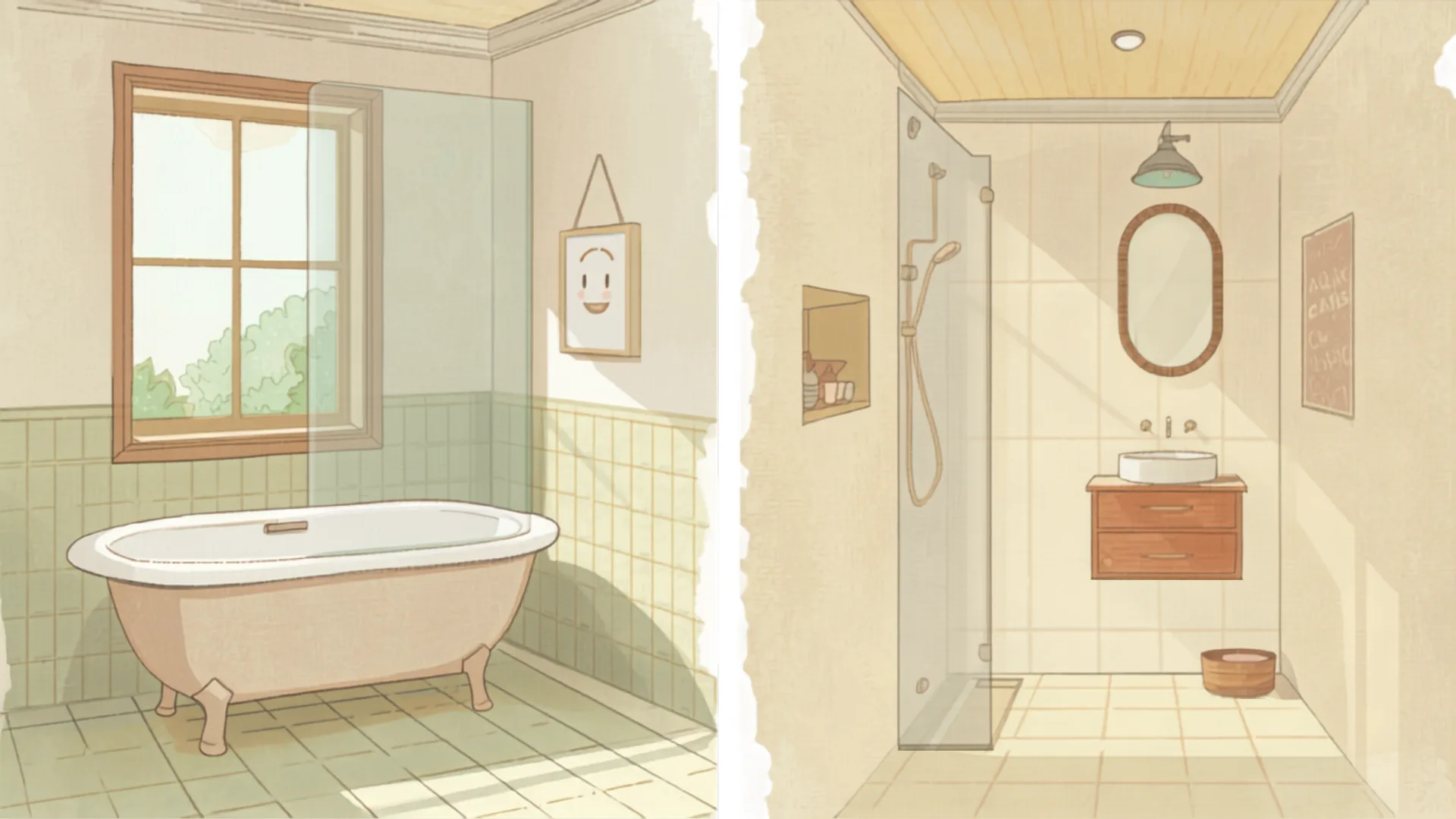
- Wall-hung vanity and concealed cistern. Clearing the floor line makes the room read larger and simplifies cleaning; a concealed cistern buys back real depth in the toilet zone.
- Rethink the bath. If a bath is rarely used and the household doesn't need one for resale reasons, converting to a walk-in shower is the single biggest space unlock available. If the bath stays, a shower-over-bath with a fixed glass panel beats a curtain or framed slider on both space and light.
- Sliding or cavity door. A hinged door can sterilise a third of a small bathroom's floor plan. If the wall allows a cavity slider, it's often the highest-value structural tweak in the room.
- Recessed niches over shelves. Storage inside the wall cavity costs nothing in floor space. Plan niches at rough-in — they can't be added after waterproofing.
- Mirror cabinets. Storage with zero footprint, doubling as the light-bouncing surface a small room needs.
- Keep the services where they are. The most expensive move in any small bathroom is relocating the toilet. If the existing positions can be made to work, the budget goes into finishes instead of drainage.
Do large tiles work in small rooms?
Yes — and usually better than small ones. Fewer grout lines read as a calmer, larger surface, and running the same tile floor-to-wall (or floor into the shower base zone) removes the visual breaks that shrink a room. Large-format tiles can also mean fewer tiling days, though cutting large tiles in a tight room partly offsets that. The classic small-room combination is one large-format field tile, one restrained feature, light grout, and continuity everywhere else.
Spend where it counts, save where it doesn't
Small bathrooms punish false economies harder than big ones, because everything is close enough to touch. Spend on the things that fail expensively or annoy daily: the waterproofing system and the licensed applicator behind it, tapware with quality internals, a properly sized exhaust fan, and layered lighting rather than a single ceiling point. Save on the things the eye forgives: accent tiles used with restraint rather than everywhere, a standard-dimension vanity instead of custom joinery, and big-brand lookalike accessories. And bank the biggest saving of all by leaving the plumbing where it is.
Common small-bathroom mistakes
The same handful of errors turn up in small renovations again and again. An oversized vanity that fits the wall but not the room, leaving no clearance to move. A hinged door retained out of habit when a slider was possible. Three or four competing materials in a space that can only carry one or two. Skipping the exhaust upgrade — small rooms concentrate steam, and ventilation failures show up as mould within the first winter. Bulky framed shower screens where a single fixed panel would do. And the classic: choosing fixtures before measuring clearances, then discovering at fit-off that the basin tap fouls the mirror cabinet door. Every one of these is a planning-stage fix that costs nothing to get right and plenty to get wrong.
You're in.
A local installer will be in touch about your job. No spam, no middleman.
Bathroom Renovation cost in your city
Verified October 2026 ranges — tap your city for the full local guide.
Frequently asked questions
How much does a small bathroom renovation cost in Australia?
Small bathrooms land within the same national bands as any renovation — $10,000–$20,000 basic, $20,000–$35,000 mid-range and $35,000–$55,000 premium per What's The Damage's October 2026 re-verification — typically in the lower half of each band. Fixture count and finish level drive cost far more than floor area does.
Why isn't a small bathroom renovation much cheaper?
Because the shopping list barely changes. A small bathroom needs the same trades, the same fixture count and the same waterproofing system as a large one, and most trades price a minimum for a bathroom regardless of size. The genuine savings sit in the square-metre items — tiles, tiling days and materials.
What size is considered a small bathroom?
Around four to six square metres — the typical apartment bathroom, older-home family bathroom or three-piece ensuite. Below four square metres you're in powder-room territory, where layout options narrow sharply.
What is the best layout for a small bathroom?
Keep the services where they are, hang the vanity off the wall, conceal the cistern, use a walk-in screen or fixed glass panel instead of framed doors, recess storage into wall niches, and swap a hinged door for a slider if the wall allows it. Each of those buys usable space without moving plumbing.
Should I remove the bath in a small bathroom?
If it's rarely used and the household doesn't need a bath elsewhere for family or resale reasons, converting to a walk-in shower is the single biggest space unlock available in a small room. If the bath stays, a shower-over-bath with a fixed glass panel beats curtains and framed sliders on both space and light.
Do large tiles work in a small bathroom?
Yes — usually better than small ones. Fewer grout lines read as a calmer, larger surface, and running the same tile from floor to wall removes the visual breaks that shrink a room. Pair one large-format field tile with a single restrained feature and keep the palette tight.
← Back to bathroom renovation cost guide hub