DIY vs Professional Bathroom Renovation: Where the Legal Line Sits
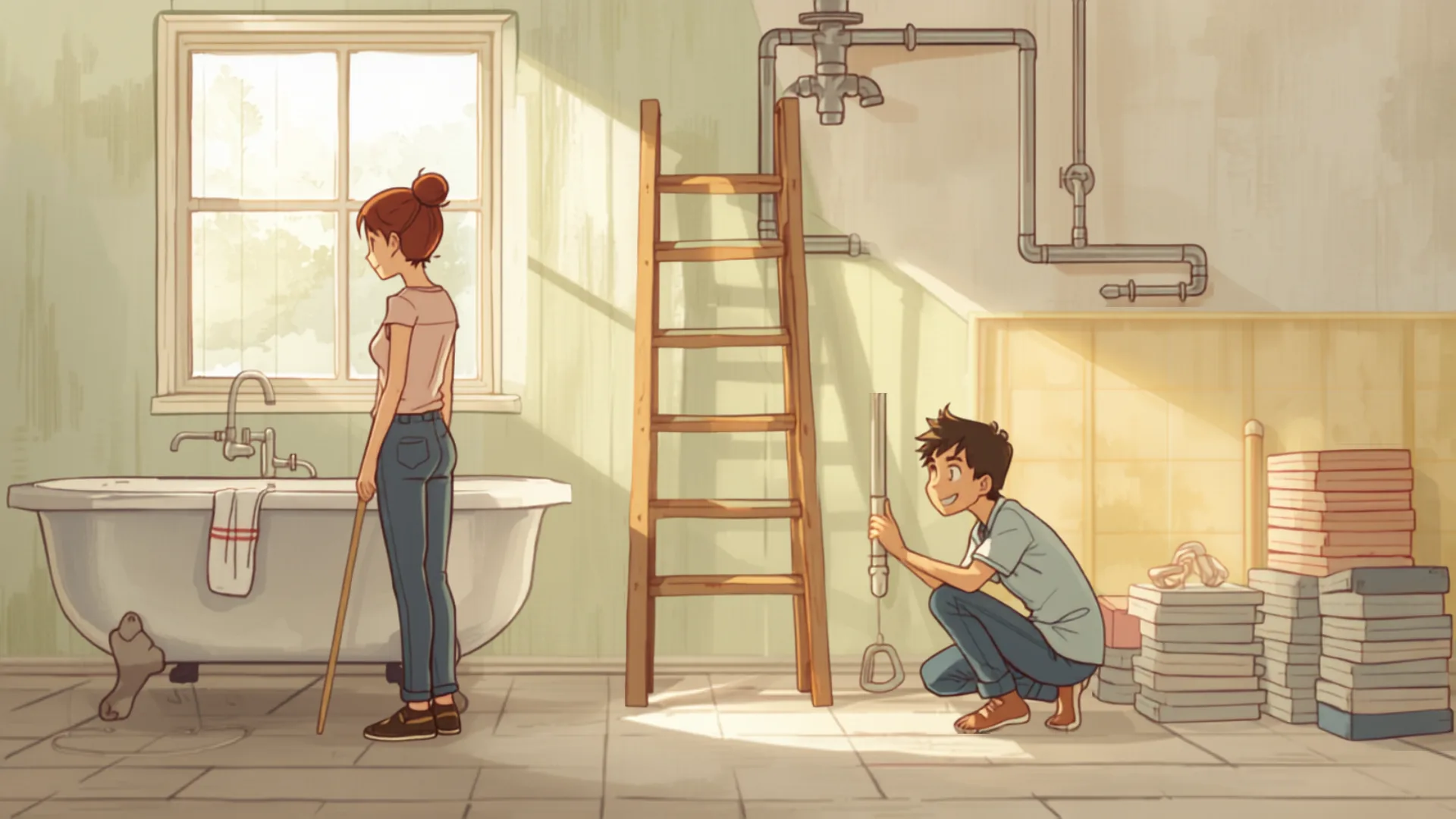
Australia draws a hard legal line through a bathroom renovation: plumbing and electrical are licensed work everywhere, and waterproofing must meet the National Construction Code wet-area rules, with some states (NSW and Queensland among them) licensing waterproofing work above a set job value. Against What's The Damage's October 2026 re-verified national bands of $10,000–$55,000, here's what DIY genuinely saves — and where it turns expensive.
The legal line, before anything else
Australia draws a hard regulatory line through the middle of a bathroom renovation, and it's worth knowing exactly where it sits before a single tile comes off. Plumbing and drainage work is licensed-trade work nationwide. So is electrical work — right down to relocating a power point or swapping a light fitting for an exhaust-fan combo. And waterproofing must meet the National Construction Code wet-area rules (AS 3740 or the ABCB Housing Provisions) everywhere — with NSW and Queensland also licensing waterproofing work above a set job value — because it's the one system in the room whose failure destroys everything built on top of it.
These aren't judgement calls that scale with your skill level. Unlicensed plumbing or electrical work is illegal and risks fines — as does waterproofing done without a licence where your state requires one. Everything else in the room — demolition, painting, assembly, even tiling — is legally open to you, except that more than a small amount of asbestos (or any friable asbestos) must be removed by a licensed removalist. The question for those tasks is not whether you may, but whether you should.
Task by task: what you can and can't do yourself
| Task | DIY status | The reality |
|---|---|---|
| Demolition and strip-out | DIY-possible | Genuine savings for a careful owner. Stop immediately on suspected asbestos — common in wet-area sheeting in homes built before 1990 — and leave the capping of water and power to the licensed trades. |
| Waste removal | DIY | Straightforward with a skip and a strong back. Tile and sheet waste is heavier than it looks. |
| Plumbing — rough-in and fit-off | Licensed only | All of it, including "just moving the tap". Compliance certificates from this work are part of the property's paper trail. |
| Electrical | Licensed only | Lighting, power, exhaust, underfloor heating connections. No exceptions worth the risk. |
| Waterproofing | Licensed in some states above a set job value | The highest-consequence surface in the house. Even where owner application is technically possible, the National Construction Code's wet-area requirements and failure costs make this professional territory. |
| Wall sheeting and preparation | Grey zone | Achievable for experienced DIYers, but the membrane's performance depends on this substrate being right. Most professionals prefer to own it for that reason. |
| Tiling | Legal to DIY — unforgiving | Falls to the waste, level lines, mitres and cuts around penetrations separate weekend work from trade work at a glance. Failed tiling is expensive to unwind because the fix starts with removal. |
| Painting | DIY | One of the best-value owner tasks. Use wet-area-rated paint and respect ventilation and drying times. |
| Vanity and accessory assembly | DIY | Flat-pack assembly, mirrors, towel rails, hooks. The plumber makes the water connections. |
| Shower screen | Professional recommended | Measured, manufactured and installed as one package. Glass, tolerances and warranty argue against splitting it. |
What DIY actually saves
Labour typically accounts for roughly half of a renovation budget — but it isn't evenly priced across the job, and that's the detail most DIY maths misses. The hours you're legally barred from doing are the expensive ones: licensed wet trades sit at the top of the rate card. The hours you're allowed to do — demolition, painting, assembly, cleanup — are the cheapest on the schedule. So a committed, capable owner on a mid-range renovation in the national $20,000–$35,000 band usually shaves a few thousand dollars, not a halving of the budget. Against What's The Damage's October 2026 re-verified bands, honest DIY moves you toward the bottom of your tier's range; it does not move you down a tier.
That saving is real and worth having — provided it's weighed against the time. A weekend-paced strip-out that takes two weekends has just added a week to the licensed trades' start date, and idle-site weeks have costs of their own.
The hidden costs of getting it wrong
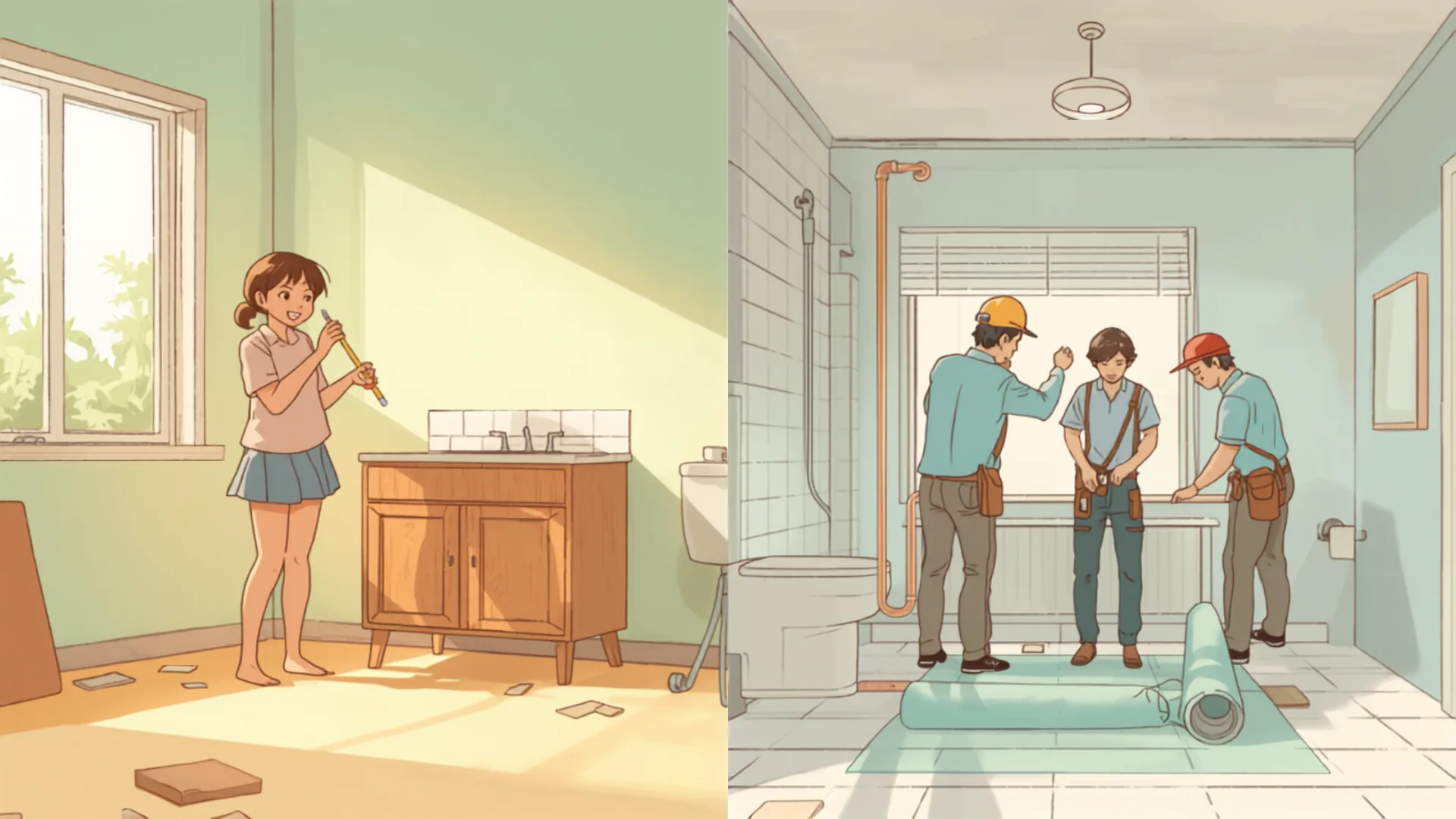
The DIY downside isn't symmetrical with the upside, and it concentrates in a few places. A failed waterproofing membrane is the catastrophic case: the fix begins with demolishing the finished bathroom above it. And warranty is the subtle one — trades generally won't warrant their work over your preparation. Tile over your own sheeting and the tiler's guarantee just acquired an asterisk.
The hybrid model: where owners actually win
The best-value structure for most capable owners isn't full DIY or full hand-over — it's owning the unlicensed ends of the job while one licensed contractor coordinates the middle. In practice: you run demolition, waste, painting and assembly; a renovator or builder coordinates the plumbing, electrical, waterproofing and tiling sequence they do every week. You can also supply fixtures and tiles yourself where the contractor agrees, capturing retail sales without a margin on top.
Two conditions make the hybrid work. First, the split has to be written into the quote — who does what, who supplies what, and who warrants what — because "I thought you were doing that" is how hybrid jobs stall. Second, your tasks have to hit the schedule like a trade's would. The strip-out finishing Sunday night because rough-in starts Monday is the deal you're signing up for.
When to hand over the whole job
Some situations argue for full-professional delivery regardless of skill. If it's the household's only bathroom, schedule certainty is worth more than the DIY saving. If the layout is changing, the coordination burden between trades multiplies and sequencing errors get expensive. If the finish level is premium — the national $35,000–$55,000 band — the cost of redoing a visible surface dwarfs the cost of having it done once, properly. And if this is your first renovation, there's a strong case for watching a professional run one before you try conducting the orchestra yourself.
Before you hire: four checks
Whichever model you choose, the licensed side deserves the same diligence. Check the licence against your state or territory's public register — takes minutes, catches the worst outcomes. Confirm the quote itemises waterproofing and names who does it. Ask what compliance certificates you'll hold at handover: plumbing, electrical and waterproofing paperwork should all be part of the deal, not an extra. And structure payments against completed milestones rather than dates. A professional who welcomes those four questions is usually the kind you want in the house.
You're in.
A local installer will be in touch about your job. No spam, no middleman.
Bathroom Renovation cost in your city
Verified October 2026 ranges — tap your city for the full local guide.
Frequently asked questions
What bathroom renovation work can I legally do myself in Australia?
Demolition and strip-out (stopping immediately on suspected asbestos in pre-1990 homes), waste removal, painting, and assembly of vanities, mirrors and accessories are open to owners. Tiling is legal but unforgiving. Plumbing and electrical work are licensed trades nationwide, and waterproofing must meet the National Construction Code wet-area rules, with some states (NSW and Queensland among them) licensing waterproofing work above a set job value.
Can I do my own bathroom waterproofing?
It depends on your state — waterproofing must meet the National Construction Code wet-area rules wherever you are, and some states (NSW and Queensland among them) require a licence for waterproofing work above a set value, so check your state's rules before you start. It's the highest-consequence surface in the house: a failed membrane means demolishing the finished bathroom above it to fix.
How much does DIY actually save on a bathroom renovation?
Usually a few thousand dollars on a mid-range job, not a halving of the budget. The tasks you're legally barred from are the expensive licensed hours; the tasks open to you — demolition, painting, assembly — are the cheapest hours on the schedule. Honest DIY moves you toward the bottom of your tier's national band; it doesn't move you down a tier.
Can I tile my own bathroom?
Legally, yes. Practically, it's the most unforgiving DIY-able task in the room: falls to the waste, level lines and cuts around penetrations separate weekend work from trade work at a glance, and failed tiling is expensive to unwind because the fix starts with removal. Owners with prior tiling experience can save real money; first-timers rarely do.
Does DIY renovation work affect insurance or resale?
It can: if illegal electrical work causes a fire, your insurer may refuse the claim. Keep every certificate the licensed trades issue — they're part of the property's paper trail.
What is the best hybrid DIY approach for a bathroom renovation?
Own the unlicensed ends — strip-out, waste, painting and assembly — while one licensed contractor coordinates the plumbing, electrical, waterproofing and tiling sequence. Put the split in writing, including who supplies and who warrants what, and hit your task deadlines like a trade would so the licensed schedule never waits on you.
← Back to bathroom renovation cost guide hub