Palm Tree Removal Cost in Melbourne
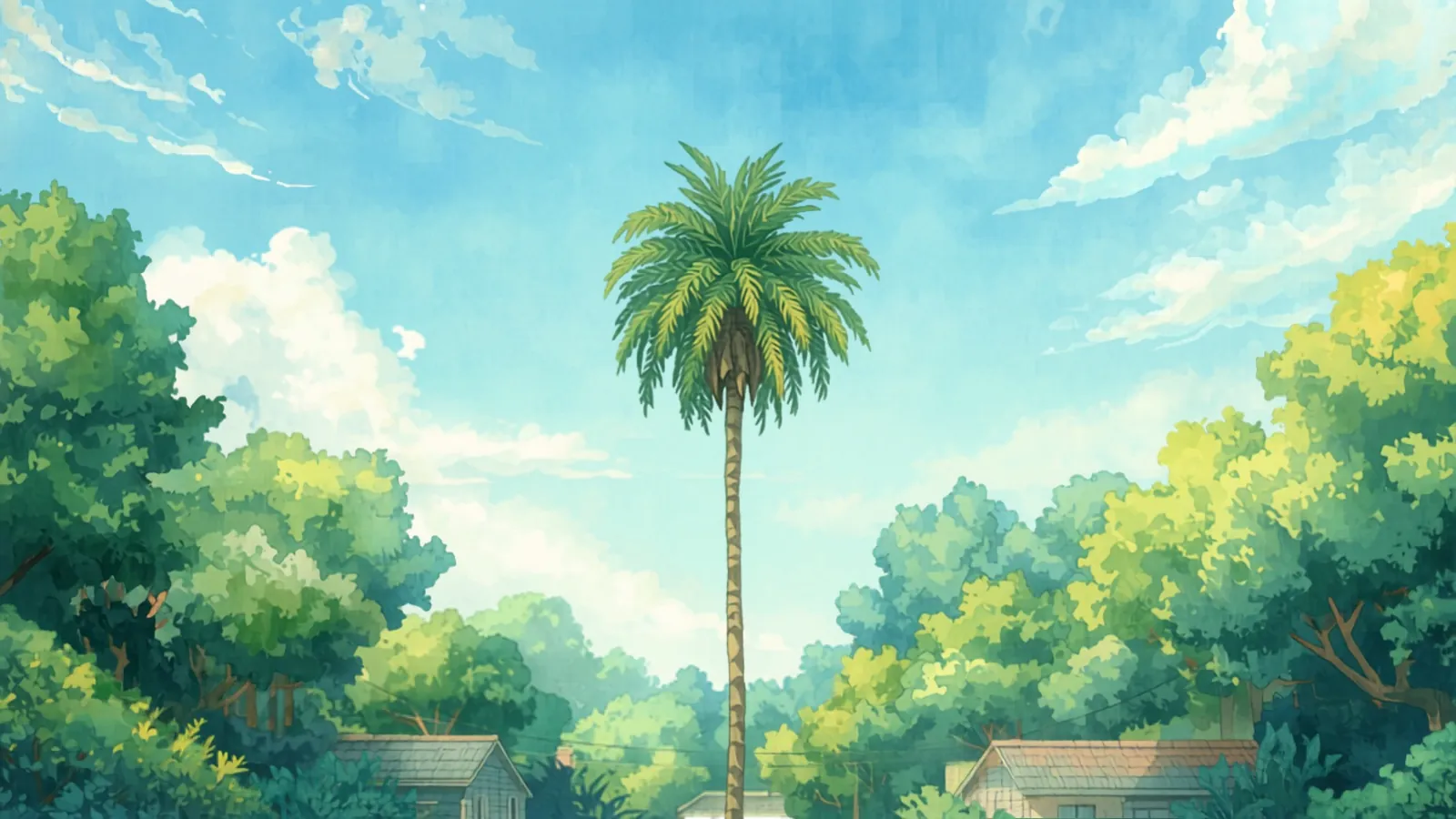
Palm tree removal in Melbourne usually runs $260 to $3,150, and the price is driven almost entirely by the palm's height, its species and how easily a crew can reach it. A small garden palm is quick and cheap; a towering Canary Island date palm wedged beside the house is a different exercise altogether and can run up to $3,150 once a crane is involved.
Quick answer - palm tree removal cost in Melbourne
| Palm size / type | Typical Melbourne cost |
|---|---|
| Small palm (under 4m) | $260 - $420 |
| Medium palm (4-8m) | $420 - $1,250 |
| Tall palm (8-12m) | $1,250 - $1,900 |
| Very tall / heavy (Canary date, 10m+) | $1,900 - $3,150 |
| Stump grinding (per stump) | $160 - $400 |
| Trunk / green-waste disposal | $80 - $250 |
You're in.
A local installer will be in touch about your job. No spam, no middleman.
What drives the price
Two palms of the same height can be quoted hundreds of dollars apart. Height is the single biggest factor: past roughly 8 metres a crew needs an elevated work platform or crane, and that equipment hire flows straight into your quote. Species and weight matter almost as much - feathery cocos palms are light and fast, while Canary Island date palms are dense, spiny and brutally heavy. Then there's access: a palm with clear truck and chipper access on a flat block is cheap, but one in a narrow side yard or over a pool means hand-carrying every section. Anything near the house, a fence or power lines must be dismantled in controlled pieces rather than felled, and palm trunks are fibrous so they can't be chipped into mulch - they're hauled away whole.
Cost by palm type
Melbourne gardens lean on a handful of common palms, and each behaves differently on removal day. The cocos or queen palm is the most common suburban palm - light fronds, manageable trunk, usually the cheapest at a given height. The Canary Island date palm, with its pineapple trunk, is enormously heavy with sharp spines at the frond base, and tall ones almost always need a crane. Mexican fan palms grow very tall and thin so height drives an elevated platform, but the trunk is light. Bangalow and kentia palms are slender and generally straightforward, and cordylines (often lumped in with palms) are usually quick, cheap removals.
What each price band covers
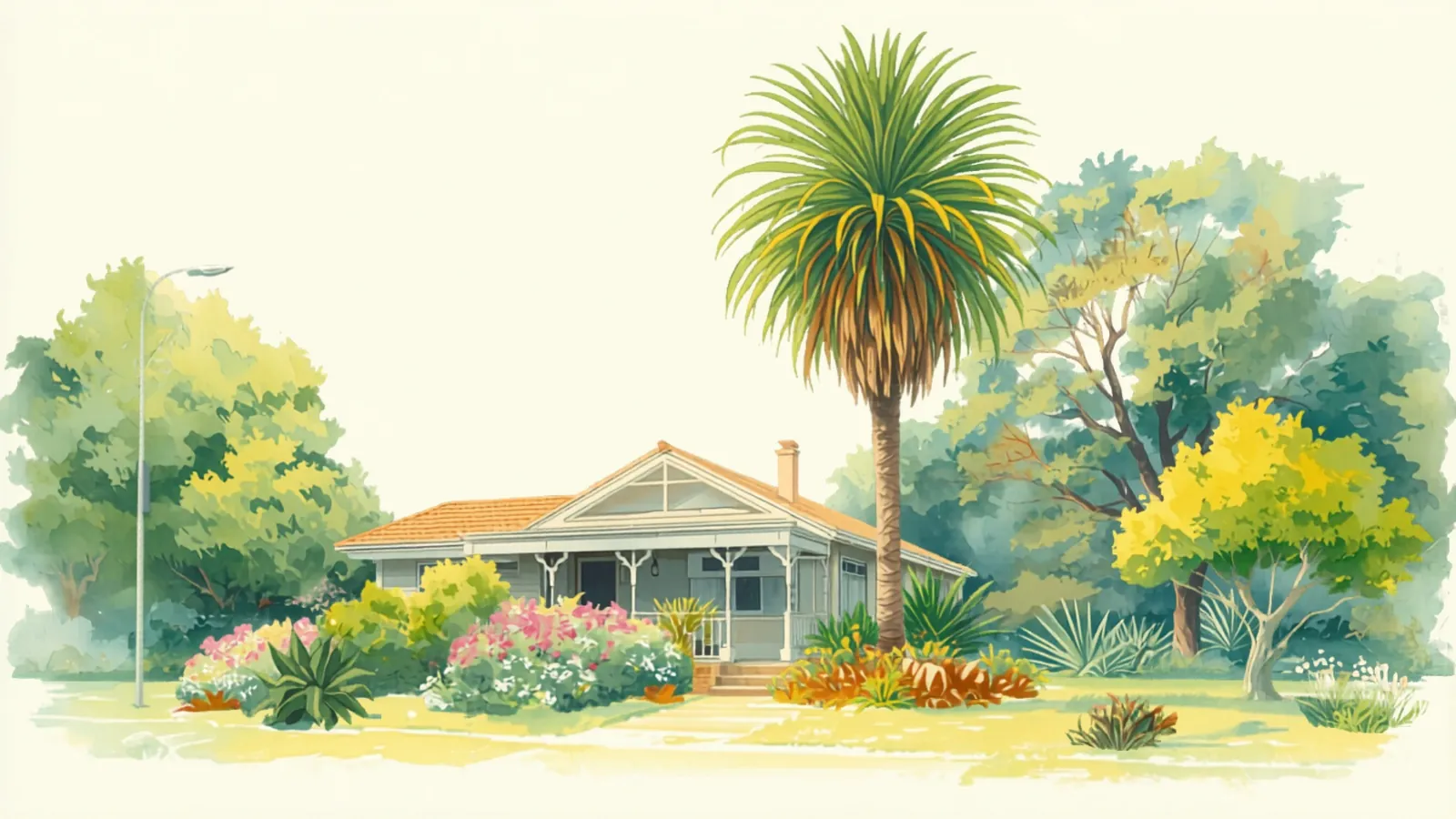
The table above prices the removal itself, and where a job lands inside its band comes down to the same three levers - height, weight and access. A small palm under 4 metres sits near $260 when a crew can fell it whole and walk it straight to the truck, and climbs toward $420 once it has to come down in sections over a fence or a paved courtyard. The 4 to 8 metre band is the widest of the four, $420 to $1,250, because 8 metres is roughly where a ladder-and-climber job becomes a platform job. The $1,250 to $1,900 tall band is really an equipment band - the elevated work platform, not the palm itself, is what most of that money buys. The very tall and heavy row starts at $1,900 and tops out at $3,150 because a mature Canary Island date palm can need a crane, a traffic-management plan and a full day of crew time.
The all-in figure, not just the removal
Most quotes people compare are removal-only, which is why two seemingly identical jobs can land hundreds of dollars apart. Stump grinding runs $160 to $400 per stump, and trunk and green-waste disposal $80 to $250 - palms attract disposal charges more often than other trees because their fibrous trunks cannot be chipped into saleable mulch. Adding those two lines to each removal band gives a more realistic all-in range: about $500 to $1,070 for a small palm, $660 to $1,900 for a medium one, $1,490 to $2,550 for a tall palm, and roughly $2,140 to $3,800 for a very tall or Canary Island date palm. Ask every operator to quote removal, stump grinding and disposal as three separate lines - it is the only way to compare two quotes on equal terms.
Stumps and permits
Cutting a palm to ground level leaves the stump and root mass behind. Many quotes price stump grinding separately, usually $160 to $400 depending on diameter and access, so always ask whether the stump is included. On permits, Melbourne has no single rule - some councils protect trees by height, trunk girth or location within a vegetation or significant-landscape overlay. A palm on an unremarkable suburban block is often exempt, but it's worth checking. Our Melbourne tree removal permit guide walks through how, and the main Melbourne tree removal cost guide covers the wider picture.
Frequently asked questions
How much does it cost to remove a palm tree in Melbourne?
Most Melbourne palm removals fall between $260 and $3,150. Small palms under 4m run $260-$420, medium palms 4-8m run $420-$1,250, and tall palms over 8m run $1,250-$1,900. Very tall, heavy Canary Island date palms that need a crane can reach $3,150.
Why are Canary Island date palms so expensive to remove?
They are extremely heavy, the trunk is dense, and the frond bases carry sharp spines, so they are slow and hazardous to dismantle. Tall specimens often need a crane or elevated work platform, which is the single biggest cost driver.
Is the stump included in palm removal quotes?
Not always. Many quotes cut the palm to ground level and price stump grinding separately, usually $160-$400 depending on size and access. Always ask whether the stump and root removal are included.
Do I need a council permit to remove a palm in Melbourne?
Sometimes. Some Melbourne councils protect trees by height, trunk girth or location within a vegetation or significant landscape overlay. Check your council's local law and planning overlays before booking, or ask the arborist to confirm.
Can I remove a small palm myself?
A small potted or garden palm under about 3m is often a DIY job. Anything taller, near a fence, building or power line, or with a heavy fibrous trunk is best left to an insured arborist, both for safety and for disposal.
← Back to Melbourne tree removal cost hub