Solar cost in Perth: worked quote examples (2026)

Ranges are useful, but worked examples are easier to picture. The scenarios here are priced from the rows in our Perth table - illustrations, not jobs done by any particular installer - so you can sanity-check the quotes you collect.
Quick answer — example Perth solar prices (2026)
| Market example | System spec | Perth range (our table) |
|---|---|---|
| 6.6 kW, single-storey | 6.6 kW panels, 5 kW inverter, single-phase | $4,200–$8,900 |
| 10 kW + 13.5 kWh battery, two-storey | 10 kW panels, hybrid inverter, 13.5 kWh battery (two rows added) | $18,900–$30,450 |
| 13 kW, three-phase family home | 13 kW panels, three-phase inverter | $10,500–$16,800 |
Rows from our Perth solar table; system prices are after the federal STC discount on panels. The battery row isn't labelled before or after the federal battery discount (around 30% of an eligible battery's upfront cost, Clean Energy Regulator), so ask each installer whether their price already has it taken off.
You're in.
A local installer will be in touch about your job. No spam, no call centre.
Ranges are useful, but worked examples are easier to picture. The three scenarios above are priced from the rows in our Perth table — illustrations, not jobs done by any particular installer. Use them to sanity-check the quotes you collect: if a quote sits well outside the row for a comparable system, that is your cue to ask why, not to assume you have found a bargain or been overcharged. The 6.6 kW row, for instance, runs $4,200–$8,900 with a typical of $6,300 — so a quote a little above or below the typical is normal, not a contradiction of the range.
How to read a Perth solar quote
What a complete quote includes
A proper Perth quote should be a fixed installed price that already nets off the federal STC discount and covers the panels and inverter (both named by brand and model), the mounting and racking, the electrical work, a standard single-storey installation, and the Western Power and Synergy connection paperwork. Accreditation of the designer and installer by Solar Accreditation Australia (SAA) should be stated, not implied. If the price is a "from" figure or leaves the rebate as a separate line you have to chase, treat it as an estimate rather than a quote.
What is usually excluded — and where quotes diverge
The gap between two quotes for the "same" system is almost always in the things sitting outside the headline. A switchboard upgrade, a meter change, an upgrade from single- to three-phase supply, difficult or two-storey roof access, tile roofs that need careful loading, long cable runs from roof to switchboard, optimisers to manage shading, or a backup gateway for a battery — any of these can add hundreds to a few thousand dollars. A quote that comes in well under the others by quietly assuming none of them applies is not really a better deal; it is incomplete. Ask each installer to spell out what their price assumes about your roof, your phase supply and your switchboard.
Red flags
The warning signs are consistent: a price far below the market range for the spec, high-pressure "today only" discounts, no panel or inverter brand named, no Solar Accreditation Australia (SAA) accreditation, an oversized deposit, vague wording on who lodges the Western Power application, "free" battery or upgrade bundles that only make sense if the base price is inflated, and warranties quoted in years without saying who honours them. None of these is automatically a scam, but each is a reason to slow down and get the detail in writing.
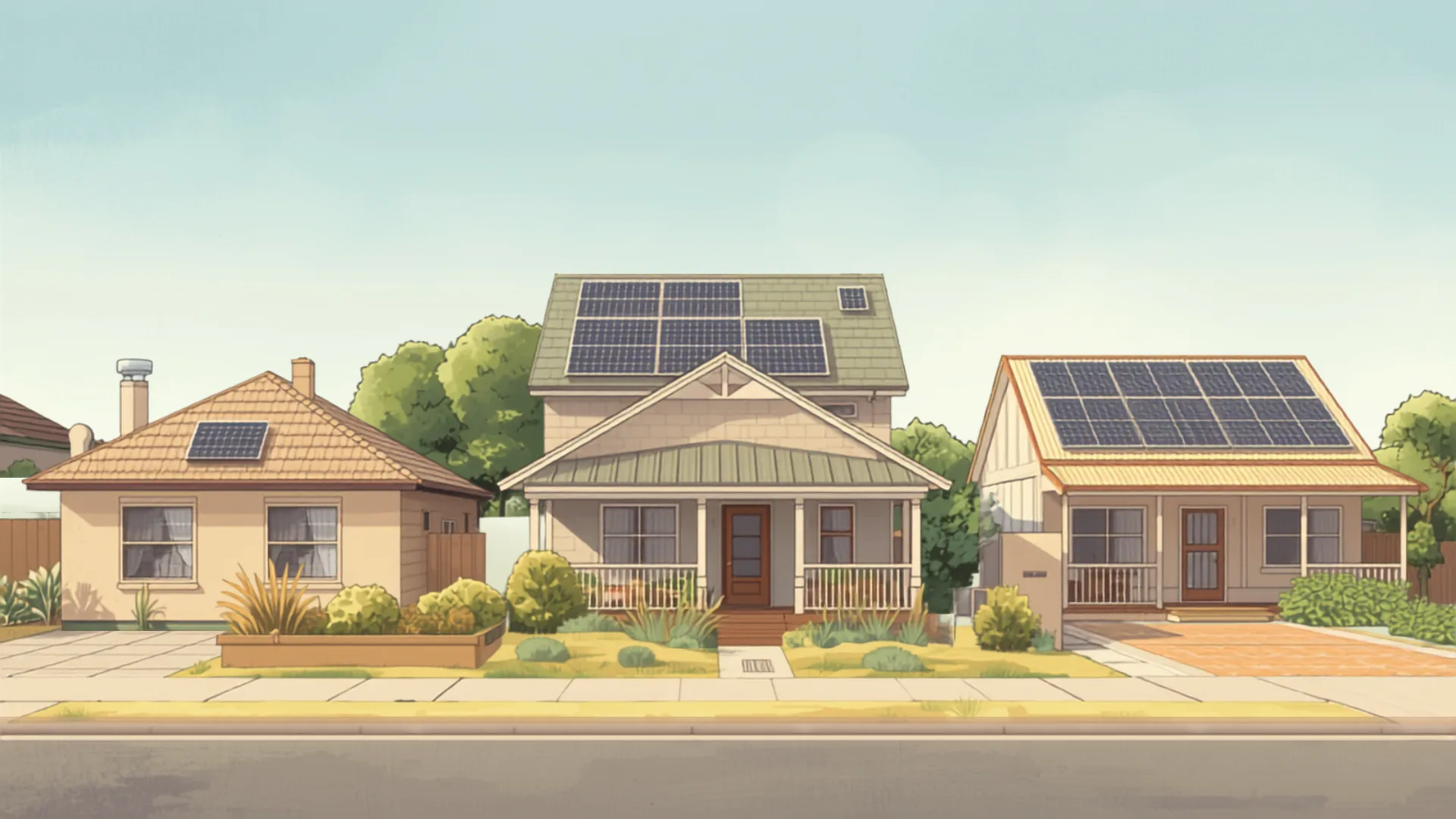
Example 2, line by line — 10 kW + 13.5 kWh battery
This is an illustrative breakdown of the second example — a two-storey Perth home adding storage at the same time as a larger array. It is the two rows from our Perth table added together, not an actual customer's invoice.
| Line item | Perth range (our table) | Typical |
|---|---|---|
| 10 kW solar system, installed (panels + hybrid inverter), after the STC discount on panels | $6,300–$12,600 | $9,450 |
| 13.5 kWh battery (Tesla Powerwall 3), installed | $12,600–$17,850 | $14,700 |
| Panels-plus-battery, the two rows added | $18,900–$30,450 | $24,150 |
| Two-storey access and a backup gateway | Quoted per job | — |
Rows from our Perth solar table, added; the total is the two typicals added. Two-storey access and a backup gateway aren't priced there, so ask whether a quote includes them.
Both lines above are installed prices from our Perth table — the 10 kW array is after the federal STC discount on panels; the battery row isn't labelled before or after the federal battery discount, which the Clean Energy Regulator puts at around 30% of an eligible battery's upfront cost, so ask whether a quote already has it taken off. Add them and the panels-plus-battery system sums to $18,900–$30,450, or $24,150 at the typicals. Strip the battery out and the same 10 kW array sits in the $6,300–$12,600 row the pillar quotes — the battery is the larger of the two line items, which is why adding storage takes the all-up price from $9,450 to $24,150 at the typicals.
Frequently asked questions
What should a Perth solar quote include?
A fixed installed price already net of the STC discount, the panels and inverter named by brand and model, mounting and electrical work, a standard install, and the Western Power and Synergy connection paperwork. Accreditation of the designer and installer by Solar Accreditation Australia (SAA) should be stated, not implied.
Why do solar quotes vary so much?
The gap is almost always in the exclusions - a switchboard upgrade, meter change, single-to-three-phase upgrade, two-storey roof access, long cable runs or a battery backup gateway. A lower quote that has assumed none of these applies is incomplete rather than better value.
How many solar quotes should I get in Perth?
A few, for a comparable specification — enough to spot an outlier high or low without dragging the process out. Compare the net installed price and the named equipment against our Perth table's rows, not the size of the rebate each company claims to give you.
Is a much lower quote a good sign?
Usually not. A price well below the market range for the spec generally means something has been left out - or the panel and inverter brands are not named. Slow down and get the detail in writing before committing.
← Back to perth solar & battery hub