What size solar system do I need on the Gold Coast?
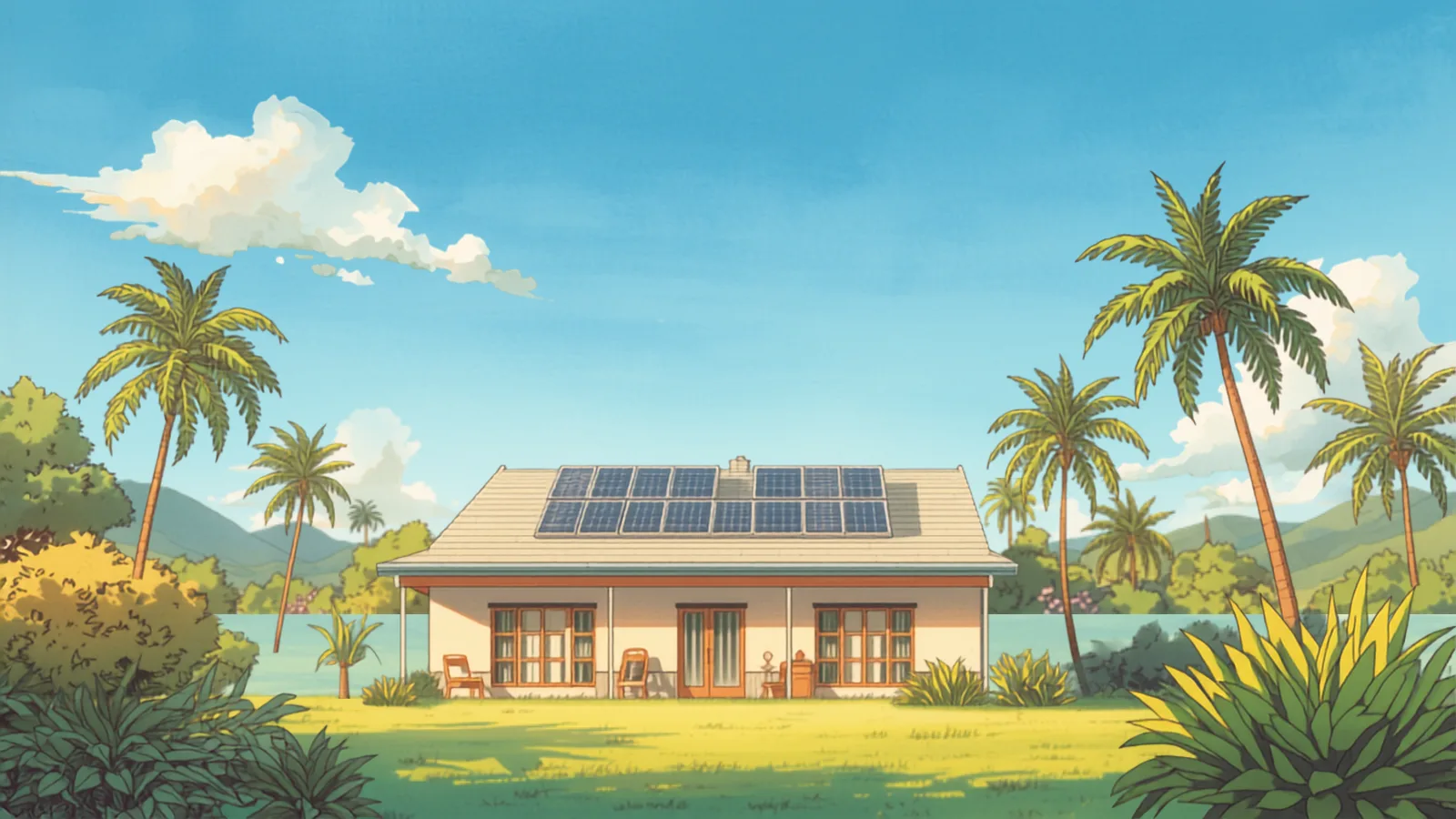
For most Gold Coast homes the sweet spot is a 6.6kW or 10kW system, and the after-rebate price is what tips the decision. As a guide a 6.6kW runs about $4,500-$6,500 fully installed here, a 10kW about $7,000-$10,000, and a 13kW about $8,500-$13,000 - all after the upfront STC discount and including GST.
Gold Coast solar system cost by size (2026)
The first question almost every Gold Coast household asks is how many kilowatts they actually need. The honest answer is that it comes down to how much power you use and, just as importantly, when you use it. Here is what each common size typically costs on the Gold Coast as a guide, after the federal STC rebate has been deducted at the point of sale and with GST included.
| System size | Typical Gold Coast price (after STC, installed, incl GST) | Roughly suits |
|---|---|---|
| 6.6kW | $4,500 - $6,500 | Smaller homes and units, lower daytime use |
| 8kW | $5,500 - $8,000 | Average family home with some daytime load |
| 10kW | $7,000 - $10,000 | 4-bedroom family, pool or ducted air-con |
| 13kW | $8,500 - $13,000 | Large home with pool, air-con and an EV |
You're in.
A local installer will be in touch about your job. No spam, no middleman.
Those are mid-range figures for quality, mainstream gear. Premium hardware - high-efficiency panels or branded inverters such as SunPower, REC or Tindo - typically adds 20-30% on top. Per panel, expect anywhere from about $80 to $300 or more depending on the brand and wattage. Treat every number here as a typical Gold Coast guide: your real price depends on your roof, your switchboard and access, so always get a quote for your exact home and postcode.
What moves the price within each range
Two homes in the same street can be quoted hundreds of dollars apart for the same size system, and it is rarely the panels driving the gap. The biggest swing factors on the Gold Coast are roof complexity and access. A simple single-storey roof with one large, north-facing plane is quick to lay out; a cut-up roof with several orientations, dormers or a steep pitch takes more rail, more labour and more time. A double-storey or highset home needs more elaborate height-safety set-up. And if your switchboard is old or full, an upgrade to safely take the new circuit can add to the job - a common find on older homes around Southport and Surfers Paradise. None of these are reasons to avoid solar; they are simply why a fixed sticker price never quite exists and why an on-site quote beats a phone estimate.
Matching the size to your household
Smaller homes and units
If you are a couple or a small household in a Southport unit or a two-bedroom place around Surfers Paradise, a 6.6kW system is usually plenty. It is the most popular size in Australia for a reason - it pairs neatly with a common 5kW inverter, fits on almost any roof, and on the Gold Coast it generates more than its size suggests thanks to the local sun. Unless your bills are very low, going smaller than 6.6kW rarely pays, because the fixed costs of the inverter, the install and the grid paperwork barely shrink.
The average family home
A typical three or four-bedroom Gold Coast family in Nerang, Pacific Pines or Mudgeeraba will lean towards 8kW to 10kW. Once you add a couple of air-conditioners, a second fridge and the daily laundry-and-dishwasher routine, a 10kW system gives you enough headroom to run those loads off the sun rather than the grid. It also leaves a margin for the future - a heat-pump hot water swap, or an EV down the track - without having to start again.
Big users: pool, ducted air-con and EVs
A pool pump alone can run for hours a day, ducted air-con through a Gold Coast summer is a serious load, and charging an electric car overnight or during the day changes the maths entirely. Larger homes in Hope Island, Helensvale or the canal estates often justify a 13kW system - it costs more up front, but if you genuinely use the output it can pay back just as fast as a smaller one. The trap is installing 13kW on a low-usage home and then exporting most of it for a few cents; size to your actual consumption, not to the roof space you happen to have.
Why a smaller system goes further on the Gold Coast
The Gold Coast sits in one of the sunnier corners of the country. With roughly 7.5 to 7.7 peak sun hours a day on average across the year, a 6.6kW system here generates somewhere around 24 to 28 kWh on a good day - meaningfully more than the same panels would make in Melbourne or Hobart. In practice that means a Gold Coast 6.6kW behaves a bit like a larger system would down south, so you do not always need to jump up a size to cover your usage.
It is worth separating two numbers people often confuse. The kilowatt figure (6.6kW, 10kW) is the system's size - its maximum output in ideal conditions. The kilowatt-hours it makes per day is the actual energy you get, and that is where the Gold Coast's sun does the heavy lifting. The same 6.6kW badge delivers more usable energy here than almost anywhere else in Australia, which is a big part of why local payback periods are so short.
Roof type matters on the Gold Coast
Local roofs are a mix of tile and Colorbond or tin, and both are routine for a good installer - tin is often a little quicker to mount on, tile needs care to avoid cracking and the right roof hooks. Where cost can creep in is access. Canal-front and highset homes around Hope Island and Palm Beach sometimes need extra scaffolding or height-safety gear, which adds to the labour line. By contrast, the newer estates at Coomera, Pimpama and Upper Coomera tend to be straightforward single-storey installs with simple roof lines, which is part of why quotes there often sit at the lower end. Always tell the installer your roof type and how many storeys when you ask for a price.
Oversizing and overclocking the inverter
You will often see a system described as, say, 6.6kW of panels on a 5kW inverter. That is deliberate. The clean-energy rules let you install panel capacity up to about a third more than the inverter rating, and there are good reasons to do it: panels rarely hit their lab rating in the real world, and an oversized array fills out the shoulders of the day - earlier in the morning and later in the afternoon - when a smaller array would be loafing. It also means the STC rebate is calculated on the larger panel capacity. The trade-off is a little clipping at midday in peak summer, which is usually a small price for the extra all-day yield. Ask your installer what panel-to-inverter ratio they are quoting and why.
Replacing or upgrading an older system
Plenty of Gold Coast homes installed a small 1.5kW or 3kW system years ago and have since added air-con, a pool or simply more people. If that is you, upgrading to a modern 6.6kW or 10kW system usually makes sense, because today's panels are far more powerful per square metre and the after-rebate prices above are sharper than they were a decade ago. Be aware that removing and disposing of the old system, and any switchboard work needed to support the new one, can add to the quote - ask for those to be itemised. In many cases the extra generation and the current STC discount make the upgrade pay for itself surprisingly quickly, given how much power Gold Coast roofs produce.
Single-phase vs three-phase on Gold Coast estates
Older Gold Coast homes are typically single-phase, while many newer estates around Coomera, Pimpama and Upper Coomera are built with three-phase power. It matters because your connection type influences how much you are allowed to export to the grid and which inverters are approved for your street. Energex applies export rules that differ between single and three-phase connections, so the largest system you can comfortably install - and how much of it you can sell back - can depend on which one you have. A good installer checks your switchboard and your connection before quoting, rather than after. If you are planning to add a battery or an EV charger later, mention it early, because it can change the inverter they recommend today.
If you are weighing two sizes and cannot decide, the local installer who holds this page can size a system to your actual power bills and roof - it is worth a quick call before you commit.
Frequently asked questions
What is the cheapest solar system worth installing on the Gold Coast?
A 6.6kW system, at roughly $4,500-$6,500 installed after the STC rebate, is the entry point most installers recommend. Going much smaller saves little because the fixed costs of the install, the inverter and the paperwork barely shrink, so a tiny system rarely makes financial sense.
Can I add more panels to my system later?
Sometimes, but it is not always simple. If your inverter has spare capacity you may be able to add a string, but many systems are already sized close to their inverter limit, and adding panels can mean a new inverter or re-doing the grid approval. It is usually cheaper to install the size you will grow into from the start.
Does a bigger system always pay back faster?
Only if you use the extra output. A 13kW system that powers a pool, air-con and an EV can pay back as quickly as a 6.6kW because almost all of it is self-consumed. The same system on a low-usage home just exports the surplus for a few cents, which pays back slowly.
What size solar do I need for an electric car?
As a rough guide, charging an EV adds the equivalent of a small household to your usage, so many Gold Coast owners step up to 10kW or 13kW. The best return comes from charging during the day off your own solar rather than exporting it and buying it back at night.
← Back to Gold Coast solar cost hub