Solar cost on the Gold Coast: three worked examples
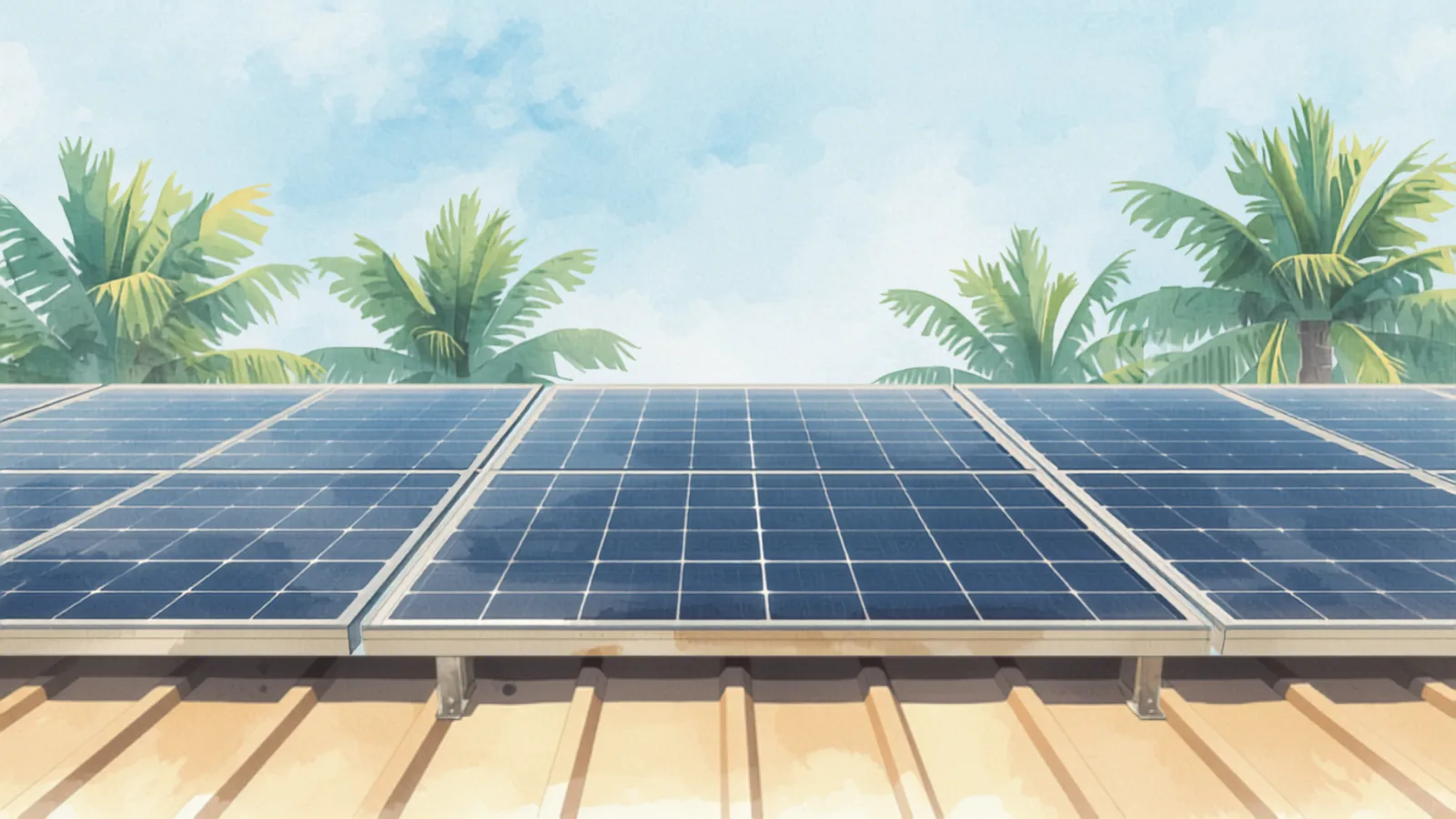
Ranges are useful, but worked examples make them concrete. Below are three illustrative Gold Coast scenarios priced from the rows in our Gold Coast table - not actual jobs - followed by exactly what a fair quote should spell out and the red flags that should make you walk away.
Three worked Gold Coast quote examples
The figures below are the rows in our Gold Coast table. They are illustrations to show how the numbers come together - not actual customer jobs. System prices are installed and already after the federal STC discount on panels; battery prices are installed, and the Clean Energy Regulator puts the federal battery discount at around 30% of an eligible battery's upfront cost, so ask whether a battery price already has it taken off. Your own quote will vary with your roof, switchboard, access and the gear you choose.
Example 1 - 6.6kW on a single-storey tile roof
A standard family home, straightforward single-storey tile roof, quality mainstream panels and a reputable string inverter. This is the most common job on the Gold Coast and a good baseline to measure other quotes against.
| Item | Gold Coast range (our table) | Typical |
|---|---|---|
| 6.6 kW system (standard), installed, after the STC discount on panels | $3,925–$8,350 | $5,900 |
| 6.6 kW system (premium panels), installed, after the STC discount | $6,350–$10,300 | $7,850 |
Rows from our Gold Coast solar table; system prices are after the federal STC discount on panels, GST included.
You're in.
A local installer will be in touch about your job. No spam, no middleman.
At roughly 24 to 28 kWh on a good Gold Coast day, this is the most common system on the coast. SolarQuotes (January 2026) puts payback at 4–7 years for most systems and Solar Choice (March 2026) at 2–5 years for a 6.6kW system depending on the state; how fast yours pays back depends most on how much of that power you use yourself.
Example 2 - 10kW plus a 10–13 kWh battery on a newer estate home
A newer estate home wanting to cover bigger daytime loads and store power for the evening. Newer builds are usually easy installs, which keeps labour reasonable.
| Item | Gold Coast range (our table) | Typical |
|---|---|---|
| 10 kW system (standard), installed, after the STC discount on panels | $5,900–$11,750 | $8,800 |
| Battery 10–13 kWh (mid-range), installed | $7,850–$14,700 | $10,800 |
| Panels + battery, the two rows added | $13,750–$26,450 | $19,600 |
Rows from our Gold Coast solar table, added. The federal discount is around 30% of an eligible battery's upfront cost (Clean Energy Regulator); the battery row isn't labelled before or after it, so ask each installer whether their price already has it taken off.
This is the kind of combined system that suits a household with evening loads it wants to cover from stored solar rather than the grid, given how little exported solar earns in SEQ compared with what grid power costs.
Example 3 - 13kW on a large home
A big household with a pool, ducted air-con and an EV - a case where a large system is genuinely used rather than mostly exported.
| Item | Gold Coast range (our table) | Typical |
|---|---|---|
| 13 kW system (large home), around 30 panels + inverter, installed, after the STC discount on panels | $9,800–$15,700 | $12,750 |
Row from our Gold Coast solar table; after the federal STC discount on panels, GST included.
A system this size only makes sense if the home actually consumes most of it; on a high-usage household with a pool and an EV, it can pay back as fast as a much smaller system on a low-usage home.
How to read a solar quote
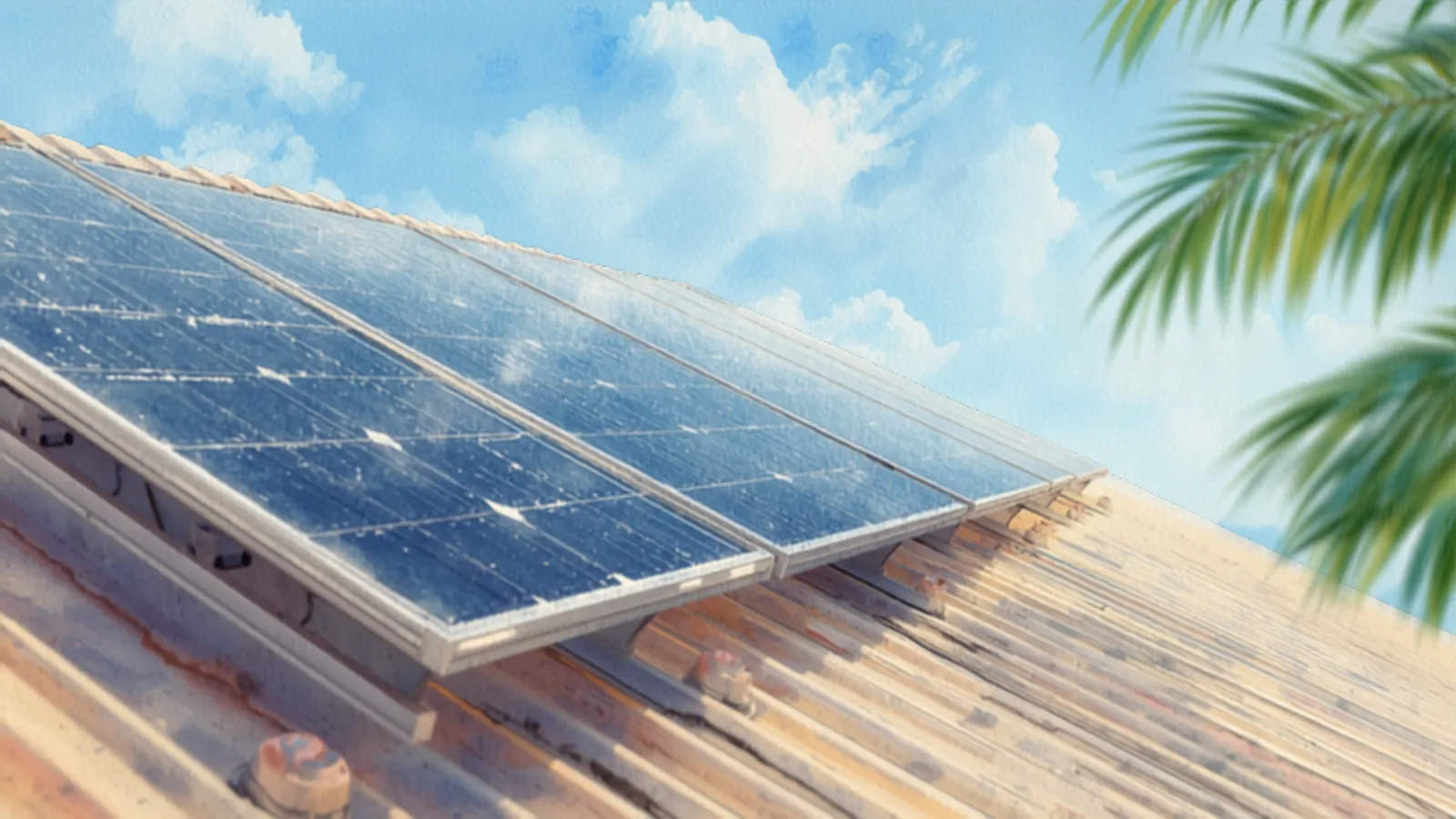
A good Gold Coast quote tells you exactly what you are buying. Look for the panel brand and model and the total kW, the inverter brand and model, and the battery make and usable capacity if there is one. It should state the warranties clearly - product and performance on the panels, and separately on the inverter and battery, since they differ. It should confirm the price is after the STC rebate (and after the battery rebate if applicable), and it should say who is doing the install. Two quotes that look similar on price can be very different once you compare the gear and the warranties behind them.
What should be included - and what to watch for excluded
A complete quote covers the panels and mounting, the inverter, the labour and electrical work, the grid-connection paperwork with your network, and any switchboard upgrade if your board needs it. The last one is a frequent surprise: an older switchboard may need work to safely take the new circuit, and a quote that stays silent on it can balloon on install day. Ask whether scaffolding or extra height-safety is included for a double-storey or highset home, and whether removing an old system is part of the price if you are replacing one. The aim is a quote with no asterisks waiting to appear later.
Red flags that should make you pause
- "Free solar." Solar is not free. These offers usually bundle you into finance or inflate the price elsewhere - read what you are actually signing.
- Inflated feed-in promises. Anyone implying you will earn big money exporting to the grid is glossing over reality - SEQ feed-in rates are low, and the savings come from self-consumption.
- Sub-contracted installs you cannot identify. If the quote will not name who actually fits the system, you have no idea who is on your roof or who honours the workmanship warranty.
- Prices that look too cheap. A quote well below the local range is usually missing something - lower-grade gear, a price not actually net of rebates, or corners cut on the install.
- A "Queensland state battery rebate". There isn't one in 2026; the state scheme closed to new applications in 2024. Anyone quoting a state battery grant is either mistaken or using it to close a sale.
What the three examples tell you
Read together, the examples make one point clear: the right system is the one matched to how you use power, not the biggest or the cheapest. The 6.6kW ($3,925–$8,350 in our Gold Coast table) is the value sweet spot for an average home. The 10kW-plus-battery suits a household that wants to cover evening use given SEQ's low feed-in. The 13kW ($9,800–$15,700) only makes sense because that home genuinely consumes most of it. For a sense of a full solar-and-battery combination, a 6.6kW system plus a mid-range 10–13 kWh battery ($7,850–$14,700) adds up to $11,775–$23,050 in the table. Use these as yardsticks when your own quotes come in.
Warranties - what to actually expect
Warranties are where two similar-looking quotes often diverge. Solar panels usually carry two separate warranties: a product warranty covering defects and a performance warranty guaranteeing they still produce a set percentage of their rating after many years, often out past 25 years. Inverters and batteries carry their own, typically shorter, warranties, so do not assume one figure covers the whole system. Just as important is who stands behind the workmanship of the install, and whether that installer is likely to still be around to honour it. On the Gold Coast, where summer heat and coastal conditions test hardware, a clear, written set of warranties from a local, accredited installer is worth more than a marginally cheaper price from an operator you cannot identify.
Questions to ask before you sign
- Is this price after the STC rebate, and after the battery rebate if there is a battery?
- Exactly which panels, inverter and battery - brand, model and usable capacity?
- What are the separate warranties on the panels, the inverter and the battery?
- Who physically installs it, and are they accredited?
- Does the price include any switchboard upgrade, scaffolding, or removal of an old system?
- Is the system battery-ready if I want to add storage later?
Why get quotes, and how to check the installer
Get a few quotes. That is enough to spot an outlier that is suspiciously high or alarmingly low without dragging the process out, and it lets you compare gear and warranties like for like rather than chasing the lowest headline number. Make sure each one confirms it is net of the STC rebate so you are comparing on the same basis. Before you sign, confirm the installer is accredited - accreditation is what makes your rebate valid and signals the work meets the standard - and check that the panels, inverter and any battery are on the approved product lists. A reputable Gold Coast installer will happily show you all of this. If you would like one of your quotes to come from the local installer who holds this page, a quick call is the easiest way to start.
Frequently asked questions
What should a fair solar quote cost on the Gold Coast?
As a guide, our Gold Coast table has a 6.6kW system at $3,925–$8,350, a 10kW at $5,900–$11,750 and a 13kW at $9,800–$15,700, all installed, after the STC discount on panels and including GST. Premium panels take a 6.6kW to $6,350–$10,300. A mid-range 10–13 kWh battery is $7,850–$14,700 installed and a Tesla Powerwall 3 $11,750–$16,650; the Clean Energy Regulator puts the federal battery discount at around 30%, so ask whether a battery price already has it taken off.
How many solar quotes should I get?
A few — enough to spot a quote that is suspiciously high or worryingly low, and to compare the panel and inverter brands and the warranties side by side rather than just the headline price. Make sure each one confirms it is net of the STC rebate.
What makes a solar quote dodgy?
Watch for "free solar" offers, promises of big feed-in earnings (SEQ feed-in rates are low), refusal to name who does the install, prices well below the local range that usually hide lower-grade gear, and any mention of a Queensland state battery rebate, which no longer exists.
How do I check a Gold Coast solar installer?
Confirm the installer is accredited - that is what makes your rebate valid and signals the work meets the required standard - and check the panels, inverter and any battery are on the approved product lists. A reputable installer will show you their accreditation and the product details without being pushed.
← Back to Gold Coast solar cost hub