Solar payback period on the Gold Coast: how long until it pays for itself
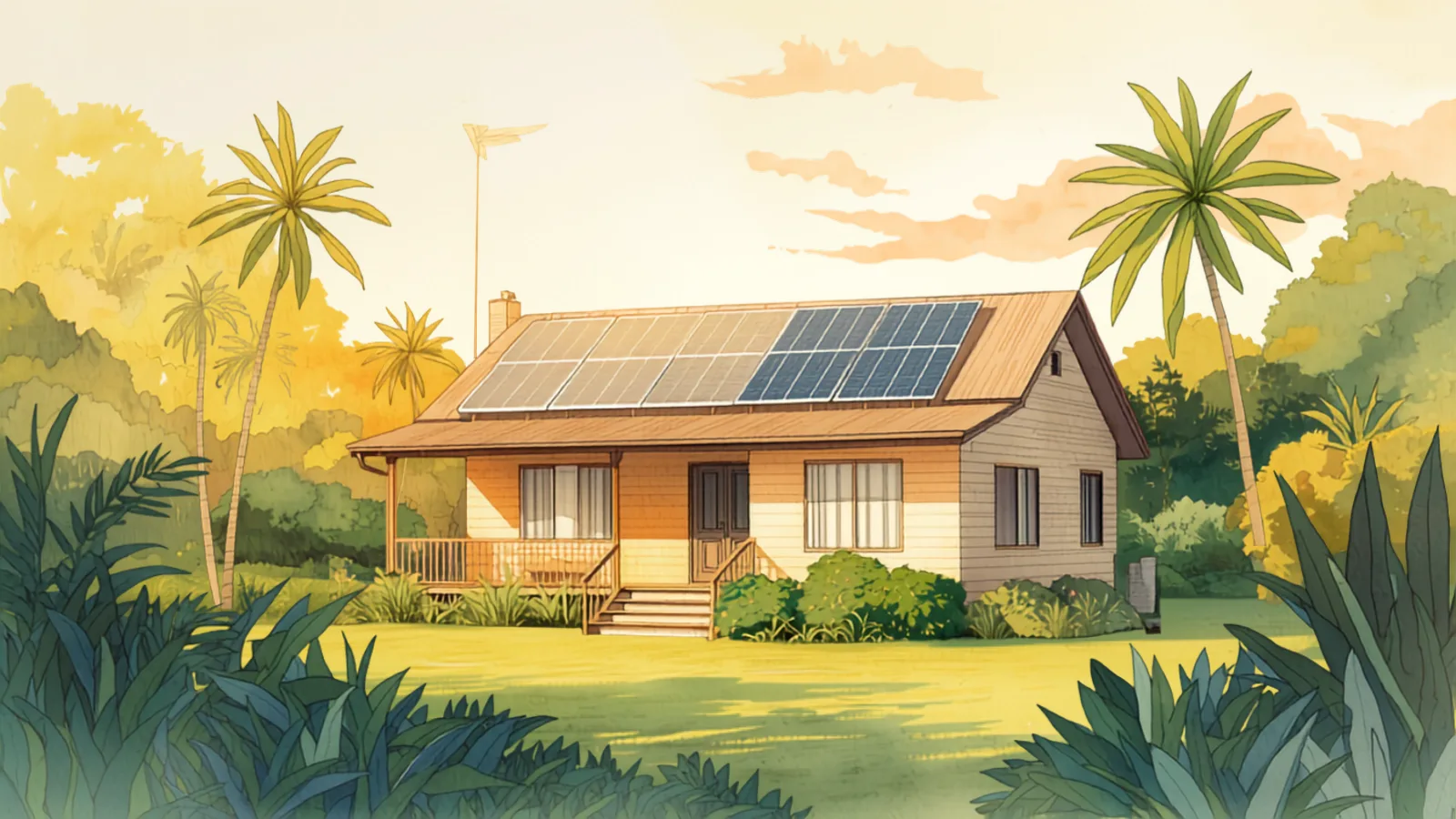
Solar pays back faster on the Gold Coast than almost anywhere in the country - typically three to five years on a well-used system. A 6.6kW system here generates around 24 to 28 kWh on a good day and saves a typical household somewhere around $1,500 to $2,500 a year off the power bill.
How fast does solar pay back on the Gold Coast?
The combination that makes the Gold Coast special is high sun and high power prices. With around 7.5 to 7.7 peak sun hours a day and grid electricity near 30 cents a kilowatt-hour, the money you stop sending to your retailer adds up quickly. A typical 6.6kW system saves in the order of $1,500 to $2,500 a year, which on a $4,500-$6,500 install puts the payback in the three to five year range - among the fastest in Australia. After that, the system keeps generating for many years as effectively free power.
| 6.6kW system on the Gold Coast | Typical figure (guide) |
|---|---|
| Price after STC rebate, installed, incl GST | $4,500 - $6,500 |
| Generation on a good day | 24 - 28 kWh |
| Annual bill saving | $1,500 - $2,500 |
| Typical payback period | 3 - 5 years |
You're in.
A local installer will be in touch about your job. No spam, no middleman.
Two homes with the same system can still see different paybacks, and the difference is almost always how much of the solar they use themselves versus export. That single behaviour - using your own power in daylight - is the biggest lever you control, and it is worth understanding why before you spend a dollar.
Why self-consumption beats exporting in SEQ
Here is the single most important thing to understand about solar savings on the Gold Coast. There is no mandated minimum feed-in tariff in South East Queensland - retailers set their own, and in 2026 a standard rate is typically only around 5 to 8 cents a kilowatt-hour, with the most competitive plans nearer 8 to 10 cents. Some tiered plans pay more for the first chunk you export each day and then drop to a few cents. Meanwhile you are buying grid power back at around 30 cents. So every unit of solar you use yourself - running the dishwasher, the pool pump, the air-con during daylight - is worth roughly four to five times one you export. The savings come from using your own power, not from selling it.
A quick word on what to rely on: the Gold Coast sits on the Energex network in South East Queensland, where feed-in tariffs are set by the market rather than by a regulated rate. So do not assume a single fixed figure applies to your street - compare retailer plans on their feed-in offer, and more importantly on how well they let you use your own power during the day.
A worked example - a typical Gold Coast family home
Take a four-bedroom family in Pacific Pines with a 6.6kW system that cost $5,500 after the STC rebate. On the Gold Coast that array generates around 24 to 28 kWh a day. Suppose the household uses a bit over half of that directly - running appliances, the pool pump and some daytime cooling - and exports the rest. The self-used power, displacing electricity they would have bought at around 30 cents, is where most of the saving sits; the exported surplus adds a smaller top-up at the SEQ feed-in rate. Add it up across a year and you land in that $1,500 to $2,500 band, which is why a system like this typically clears its cost in well under five years.
Now change one habit. If the same family shifts the dishwasher, washing machine and pool pump to run in the middle of the day, their self-consumption climbs, more of their generation offsets 30-cent power instead of earning a few cents on export, and the annual saving moves towards the top of the range. Nothing about the system changed - only when they used it. That is the lever, and it costs nothing.
What shortens or lengthens your payback
- Shortens it: using more power in daylight, a competitive plan with a higher feed-in, the Gold Coast's strong sun, and rising grid prices that make your self-used solar worth even more.
- Lengthens it: a system much bigger than you use (so most of it is exported cheaply), heavy shading, a low-usage household, and paying a premium for top-tier gear you do not need.
The takeaway is that payback is as much about your usage pattern as it is about the price you pay. A modestly priced system used well beats an expensive one that mostly exports.
How a battery changes the payback
A battery is a different calculation. Because SEQ feed-in tariffs are so low, storing your daytime surplus and using it at night - instead of exporting it for a few cents and buying it back at 30 - is where a battery earns its return. After the federal rebate brings a 10 to 13.5 kWh battery down to roughly $5,500-$12,000 net, it adds to the system payback rather than shortening the panels' own. Most Gold Coast owners treat the panels as the fast-payback core and the battery as a longer-term play that also buys evening independence and storm-season backup. The VPP bonus and rising grid prices both help that case.
Seasonal generation on the Gold Coast
Your system will not make the same amount every day. The Gold Coast's strong average of around 7.5 to 7.7 peak sun hours masks a seasonal swing - long, bright summer days push a 6.6kW system to the top of its 24 to 28 kWh range and beyond, while shorter, cloudier winter days pull it down. The good news is that the Gold Coast winter is mild and sunny by national standards, so the dip is gentler here than down south. Annual savings figures already account for this swing, which is why the $1,500 to $2,500 a year guide is a yearly average rather than a best-day number. It also means a system sized for your winter needs will run in healthy surplus through summer.
Solar and battery combined - the bigger picture
If you add a battery to chase evening savings, treat it as a separate, longer payback layered on top of the panels. As a Gold Coast guide, a 6.6kW system with a 10kWh battery comes to roughly $13,000 to $22,000 after the federal rebates and before VPP. The panels still pay back fast on their own; the battery's return comes from storing power worth around 30 cents to use at night instead of exporting it for a handful of cents. Add the VPP bonus and steadily rising grid prices and the combined case improves over time, even if the battery alone takes longer to clear its cost than the panels do.
Do the savings hold up as prices change?
One of the quieter strengths of solar on the Gold Coast is that its value tends to grow rather than shrink. The savings come mostly from avoiding grid power at around 30 cents a kilowatt-hour, and grid prices have trended upward over time. So a system that saves you $1,500 to $2,500 a year today is likely to save a little more in real terms as power gets dearer - the opposite of most things you buy. Feed-in rates may stay low, but because the real return is in self-consumption, that low feed-in does little to dent the case. It is why locking in today's prices and today's rebates is the stronger move for most households.
A note on the old 44 cent feed-in
One exception to the low-feed-in story: homes still on the original 44 cent Solar Bonus Scheme, for systems connected before mid-2012, keep that rate until it expires on 30 June 2028. If that is you, be careful, because altering the old system can end the entitlement early. For every system installed today, feed-in is set by your retailer at the market rates described above, and self-consumption is where the real money is.
The 20-year view
Payback is only the first chapter. Quality panels are generally warranted to still produce strongly after 25 years, and a good inverter will run for a decade or more. Once a Gold Coast system has paid for itself in its first three to five years, everything it generates after that is essentially free power against a grid price that has trended up over time. Looked at over the full life of the system, the lifetime saving on a typical Gold Coast home runs well into the tens of thousands of dollars - and that is before you count the value of the power you store and use rather than export. For a payback estimate built on your own bills and roof, the installer holding this page can model it for you.
Frequently asked questions
How long does solar take to pay off on the Gold Coast?
Typically three to five years for a well-used 6.6kW system, which is among the fastest payback in Australia. The high local sun (around 7.5-7.7 peak hours a day) and grid power near 30 cents a kilowatt-hour are what drive it. Using more of your power in daylight shortens it further.
What is the feed-in tariff on the Gold Coast?
There is no mandated minimum in South East Queensland - retailers set their own. In 2026 a standard feed-in rate is typically around 5 to 8 cents a kilowatt-hour, with the best competitive plans nearer 8 to 10 cents. Some plans pay more for the first few kilowatt-hours exported each day, then drop.
Is solar still worth it on the Gold Coast with low feed-in tariffs?
Yes, very much - but the savings come from using your own power, not exporting it. Because grid power costs around four to five times what you are paid to export, the value is in self-consumption, which is also why batteries and shifting usage into daylight make so much sense here.
What is the lifetime saving from a Gold Coast solar system?
After a three to five year payback, a quality system keeps generating for 25 years or more, so the lifetime saving on a typical home runs well into the tens of thousands of dollars. The exact figure depends on your usage, your plan and where grid prices go over time.
← Back to Gold Coast solar cost hub