Rendering over brick vs besser block in Sydney

What your walls are made of decides how hard — and how expensive — they are to render. In Sydney the two most common substrates are clay brick and besser (concrete) block, and they behave differently enough to move your quote by a real margin. Newer homes add a third: lightweight sheet and Hebel.
What it costs to render each substrate in Sydney
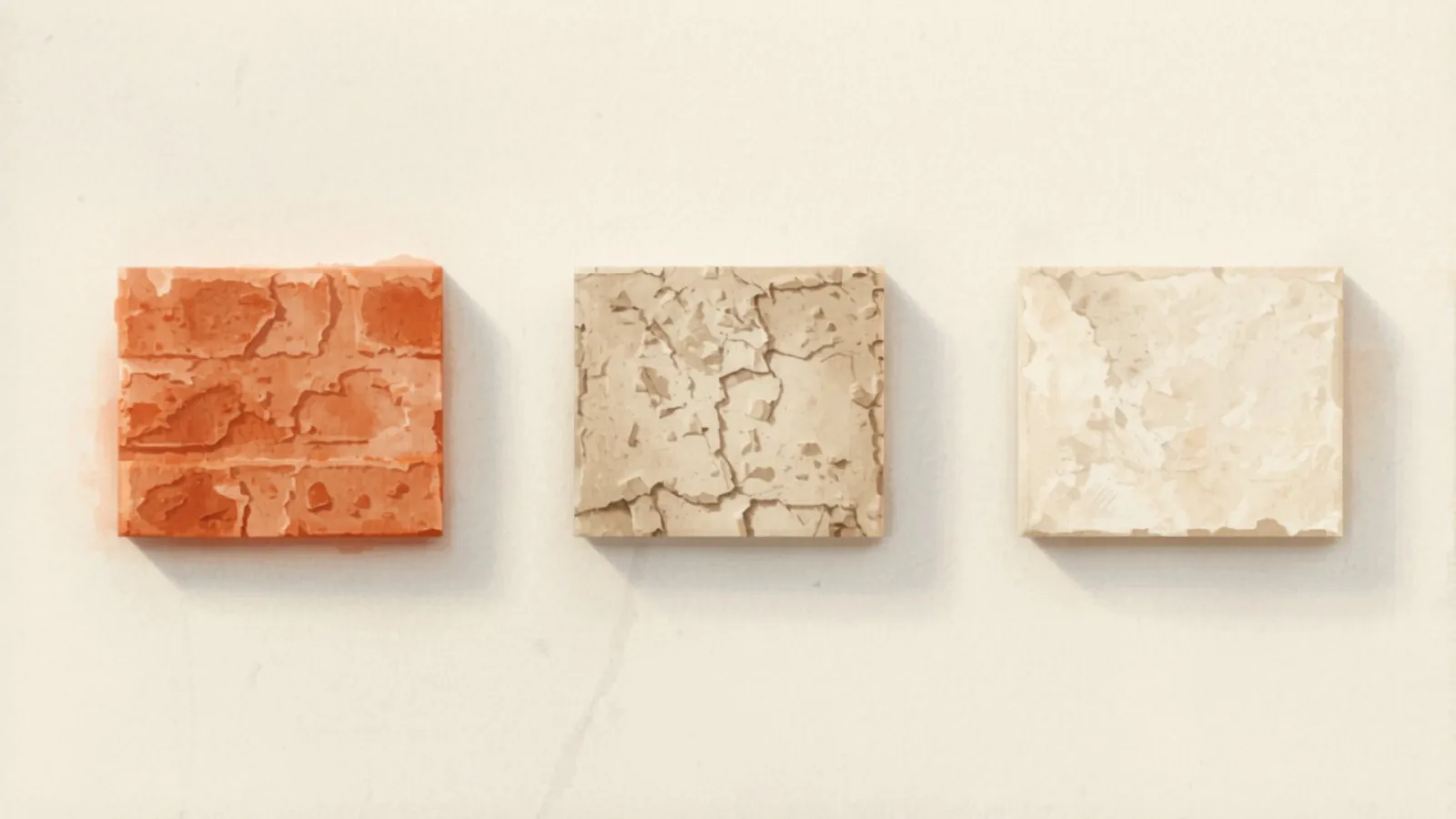
Rendering sound clay brick is the baseline most Sydney quotes are built on: $30-$50/sqm for cement render. Besser block is usually a touch cheaper to render per square metre — its flatter, more uniform face needs less material to true up — but it more often needs a sealing or bonding coat first, which can erase the saving. Lightweight sheet and Hebel sit higher because they require a flexible acrylic system, landing in the $45-$70/sqm range.
The practical takeaway: don't assume "block is cheaper" or "brick is dearer" in isolation. The substrate sets the system, the system sets the rate, and prep can swing either one.
How substrate changes the job
Clay brick
Clay brick has a porous, slightly irregular face that cement render keys to well — it's the substrate the traditional sand-and-cement method was built for. The main cost variables are how flat the brickwork is (wavy old brickwork needs a thicker levelling coat) and whether it's been painted. Painted brick is the classic Sydney trap: cement render won't bond to paint, so you either strip it or move to an acrylic-with-primer system.
Besser / concrete block
Besser block is flat and regular, so less material is needed to get a true surface — a genuine saving on big walls. But concrete block can be dense and low-suction, meaning render struggles to grip; many Sydney renderers apply a bonding agent or a scratch coat first. Block walls also telegraph their mortar joints if rendered too thin, so a quality job uses enough build to hide them, which adds back some material cost.
Sheet, blueboard and Hebel
Common on Sydney's newer builds and extensions, these lightweight substrates flex, so they demand a polymer-modified acrylic render that flexes with them. Pure cement render will crack on them. This is non-negotiable and is the main reason a modern-build render quote comes in higher than an old double-brick cottage of the same size.
What drives the price up or down
Substrate condition trumps substrate type: a cracked, damp or painted wall of any material costs more to prepare than a sound one. Flatness matters — irregular old brickwork eats levelling material. Suction matters — dense block or sealed surfaces need bonding coats. And height and access apply on top of all of it, exactly as they do for any render job. Mixed-substrate homes (rendered brick ground floor, sheet-clad upper storey) are common in Sydney renovations and need two systems on one house, which is a frequent reason quotes diverge.
You're in.
A local installer will be in touch about your job. No spam, no middleman.
Can you render over painted or old brick?
Painted brick is the classic Sydney render trap. Traditional sand-and-cement render won't bond to a painted surface — it grips through the brick's natural suction, and paint seals that off. There's a quick test: flick water at the wall. If it soaks in, the brick is porous and cement render will key to it; if it beads and runs off, it's sealed or painted and cement render will eventually let go. Your two options are to strip the paint back to raw brick (labour-heavy, and messy on old lime-mortar walls) or move to a polymer-modified acrylic system over a bonding primer, which is engineered to stick to low-suction surfaces. The acrylic route is usually the cheaper path once you count the stripping labour, and it's why a painted-brick job often quotes higher per square metre than bare brick — you're paying for a different, more flexible render system, not just more coats.
How besser block is rendered, step by step
Concrete block is flat and regular, so it needs less material to true up than wavy old brick — but it's dense and low-suction, which means render can struggle to grip. The sequence that works: dampen the wall first so it doesn't suck moisture out of the mix too fast, then apply a bonding agent or a thin scratch coat to give the render something to key into. The base coat goes on thick enough to bury the mortar joints — skimp here and the joints telegraph through as visible grid lines once it dries. The finish coat (a float-and-set, or a texture/acrylic topcoat) goes on last. The bonding step is the one people skip to save money, and it's the one that causes render to drum and fall off block walls a couple of years later.
Worked example — rendering a besser-block granny-flat wall, single storey, ~40 m²:
| Line item | Cost |
|---|---|
| Bonding coat over block | $6/m² |
| Cement base coat (joint-hiding build) | $28/m² |
| Float-and-set finish | $9/m² |
| Rate | ~$43/m² |
| Wall total (40 m²) | ~$1,720 |
That lands just above the bare-brick baseline of $30–$50/m² — the bonding coat is the block premium, and it's not optional on a dense low-suction wall.
Frequently asked questions
Is it cheaper to render brick or besser block? Block can use slightly less material because it's flatter, but it often needs a bonding coat that brick doesn't. In practice the two are close; condition and access usually matter more than which one you have.
Can you render over painted brick? Not with cement render — it won't key to paint. You strip the paint back, or use an acrylic system with a bonding primer made for painted surfaces. Either way it costs more than rendering bare brick.
Why does my newer home cost more to render than an old brick one? Newer Sydney homes are often clad in sheet or Hebel, which flex and require a more expensive flexible acrylic render. Old double-brick takes cheaper cement render.
What if my house is part brick, part sheet? It needs two render systems — cement on the masonry, acrylic on the sheet — matched at the finish so they look like one wall. That's normal on Sydney renos but it lifts the price versus a single-substrate home.
Do you need to seal besser block before rendering? Not seal exactly — you want the opposite of a sealed surface — but a bonding agent or scratch coat is strongly recommended, because dense block is low-suction and render won't grip raw. Skipping it is the main cause of render drumming and detaching from block walls.
Can you render over an existing rendered wall? Often yes, if the old render is sound — well-adhered, not drummy, not powdery. Tap it: a hollow sound means it's letting go and needs to come off first. A sound old surface just needs cleaning and a bonding coat before the new render goes on.
← Back to Sydney rendering cost hub