Two-Storey House Painting and the Access Premium

What's The Damage's October 2026 re-verification across 90+ sources puts a single-storey exterior repaint at $4,000–$10,000 and a two-storey at $7,500–$18,000. The paint is the same. The gap is access — and understanding it is the difference between a fair quote and an inflated one.
The access premium in numbers
Two houses with the same wall area, the same substrate and the same paint can quote thousands of dollars apart for one reason: how hard it is to safely get a painter in front of every square metre. The national figures make the premium plain.
| Job | Low | Typical | High |
|---|---|---|---|
| Exterior repaint — single-storey | $4,000 | $6,500 | $10,000 |
| Exterior repaint — two-storey | $7,500 | $13,000 | $18,000 |
| Painter — hourly rate | $40/hr | $60/hr | $100/hr |
At the typical mark, that's a $4,500 gap between single and two-storey — and at the top of the ranges the gap widens to $8,000. The hourly rate doesn't change with height. What changes is how many hours the same wall takes, and what has to be set up before the first brush touches it.
Where the extra money goes
The premium isn't padding — it maps to real work. Setup and pack-down time. Every day on a two-storey job starts and ends with moving, securing and repositioning access equipment. Those hours bill at the same $40–$100 rate as painting hours, but no paint goes on the wall while they happen. Safety rules slow the pace. Work above two metres brings genuine fall-protection obligations: harness points, platform rails, spotters on some tasks. A painter who can free-flow along a ground-floor wall works methodically and slower at height, and often can't work alone — two-person minimums are common on upper-level days. The equipment itself. Towers, platforms and long-reach gear are either owned (and amortised into the rate) or hired for the job and built into the quote. Either way, you're paying for machinery a single-storey job never needs. The hard-to-reach details. Gable ends, dormer surrounds, high window trim and second-floor eaves are the slowest metres on the whole house — small areas that consume disproportionate time precisely because they sit where access is worst.
Ladders, towers and platforms: how access shapes the quote
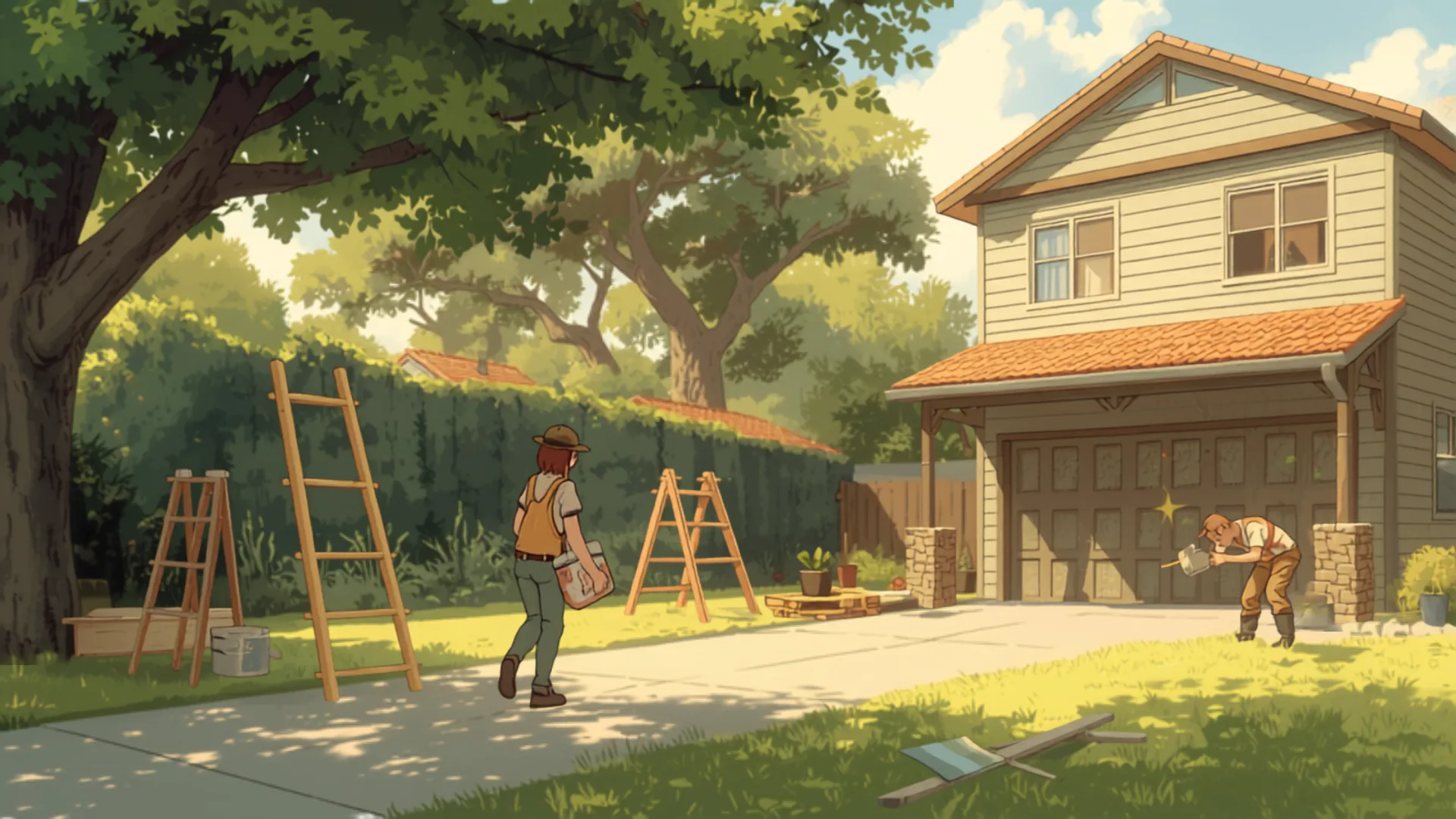
Painters choose the lightest access solution the job safely allows, and the choice moves the price. Extension ladders cover modest heights and short-duration tasks but are slow for whole walls, since the painter constantly climbs down to reposition. Mobile towers put a stable surface under the painter's feet and speed up long runs of wall, at the cost of assembly time and hire. Fixed scaffold suits complex or long-duration jobs where crews need weeks of reliable access at multiple levels. Elevated work platforms solve awkward spots — over garages, beside slopes — where nothing else reaches safely.
Here's the practical point: access equipment is the painter's line to carry, not yours to price. A professional quote should state what access method is allowed for and include it in the total. You don't need to research hire rates — you need to confirm the quote has genuinely accounted for access, because a suspiciously cheap two-storey quote usually means the painter is planning to stretch ladders past their sensible limit, and the job either slows, gets unsafe, or comes back for a variation.
What makes your two-storey cheaper — or dearer
Within the $7,500–$18,000 spread, your specific site does most of the deciding.
- Ground conditions. Flat, firm, clear ground around the house makes tower and platform work fast. Sloping blocks, garden beds against walls, narrow side setbacks and paved-over soft spots all complicate footing and add setup hours.
- Eaves height and wall breaks. A low-slung two-storey with continuous walls paints faster than a tall one broken up by balconies, bay windows and gable ends — every break means repositioning.
- Trim and window count. Upper-level windows are painted almost entirely from access equipment. A facade with many small windows carries far more slow metres than one with a few large ones.
- Substrate condition. Flaking, chalking or weather-damaged upper walls need washing, sanding and priming at height — prep hours are the expensive kind when every one of them happens on a platform. Timber repairs discovered at height add labour at the worst possible location.
- Colour strategy. A like-for-like recoat in a similar colour can save a full coat compared with a dramatic colour change — and on a two-storey, one saved coat is a serious number of platform hours.
Stairwells and voids: the indoor version
The access premium isn't only an exterior story. Stairwell walls and void ceilings are the interior equivalents — surfaces that rise beyond ladder-comfortable height and need platforms or specialised setups to reach safely. A standard ceiling runs $200–$500 per room; void and stairwell ceilings sit firmly at the top of that range and beyond into hourly territory, because the setup can take longer than the painting. If your home has a double-height entry, expect that single space to be quoted separately, and treat that as a sign of an experienced painter rather than an inflated one.
How painters actually build a two-storey quote
Understanding the quoting process tells you which numbers to trust. A painter pricing a two-storey properly walks the site, not just the front elevation. They're measuring wall area, yes — but they're also reading the things that set the access plan: where equipment can stand, which sections a tower reaches and which need something taller, how far gear has to be carried from the street, and whether any elevation is effectively unworkable without special setup. Elevation by elevation, they're tallying the slow metres — high trim, upper windows, gable detail — separately from the fast open walls, because the two are priced differently even at the same height.
Then comes the condition assessment that ground-level owners rarely see: binoculars or a quick ladder inspection of the upper surfaces for flaking, chalking, cracked timber and failed sealant, since every defect found up there is labour performed from a platform. Finally the weather maths — exterior height work needs longer stable-weather windows than ground work, because half-finished upper sections can't be left exposed the way a ground-floor wall can, and pack-down/re-setup on rain-interrupted days burns paid hours.
That's why a thorough two-storey quote takes longer to arrive and reads longer than a single-storey one — and why a same-day figure quoted from the kerb deserves suspicion in both directions. It might be padded to cover the unknowns, or stripped of them entirely and destined to grow. When quotes arrive far apart, the difference is almost always in the access plan and the prep allowance, not the paint. Ask each painter to walk you through where their hours are going; the one who can answer elevation by elevation is the one who has genuinely priced your house.
Keeping the premium contained
You can't remove the access premium, but you can stop paying it twice. Bundle every high task into one visit. While platforms are up, have the eaves, fascias, high trim and upper windows all done — sending anyone back up later means paying the setup cost again. Stay close to your existing colour if the budget is tight; fewer coats at height is the single biggest lever you control. Prepare the ground, not the walls. Clearing pathways, trimming plantings away from walls and giving crews clean side access shortens setup on every single day of the job. Ask each quote the same question: what access method is included, and what happens to the price if conditions change? The painter with a specific answer has actually walked your site; the one with a shrug is the one whose quote grows later. Get two or three itemised quotes, compare them against the table above, and let the access line — not just the total — tell you who has planned the job properly.
You're in.
A local installer will be in touch about your job. No spam, no middleman.
Painter cost in your city
Verified October 2026 ranges — tap your city for the full local guide.
Frequently asked questions
Why does a two-storey house cost so much more to paint?
A two-storey exterior runs $7,500–$18,000 against $4,000–$10,000 for a single-storey — a $4,500 gap at the typical mark. The paint is the same; the difference is access. Equipment setup, fall-protection rules, slower work at height and two-person crew requirements all add hours, and hours at $40–$100 each are what the premium is made of.
Does painting a two-storey house always need scaffold?
No. Painters use the lightest safe option for the site — extension ladders for short tasks, mobile towers for long wall runs, platforms for awkward spots — and reserve fixed scaffold for complex, longer jobs. Whatever the method, it should be named in the quote and included in the total rather than left as a surprise.
Should I get a separate price for the access equipment?
No — access is the painter's line to carry. A professional quote states the access method and builds it into the job price. Your role is simply to confirm it's genuinely accounted for: a two-storey quote that's far cheaper than the rest usually means access has been underestimated, and that gap tends to come back as a variation or a slower, riskier job.
What site factors push a two-storey quote up or down?
Ground conditions do the most work: flat, clear, firm access around the house keeps setup fast, while slopes, garden beds against walls and tight side access add hours. After that it's eaves height, the number of upper-level windows and trim breaks, the condition of the high surfaces, and how far your new colour departs from the old one.
How can I keep the height premium down?
Bundle every high task into the one visit so the equipment only goes up once, stay close to your existing colour to save a full coat at height, and clear pathways and plantings before the crew arrives. Then ask each quote what access method is included — comparing that line tells you who has actually planned your site.
Do stairwells and void ceilings cost extra inside?
Yes — they're the interior version of the same premium. A standard ceiling runs $200–$500 per room, and double-height voids and stair walls sit at the top of that range or get quoted separately, because reaching them safely takes platform setups that can outlast the painting itself. A separate line for the void is a sign of an experienced painter.
← Back to painter cost guide hub