Lead Paint and Older Home Repaint Costs

What's The Damage's October 2026 re-verification across 90+ sources puts a whole three-bedroom interior repaint at $4,000–$9,500 and a single-storey exterior at $4,000–$10,000 — and homes built before 1970 reliably land in the top half of both ranges. The reason is lead, and the premium buys something real.
Why pre-1970 homes quote higher
Paint on Australian houses built before 1970 may contain very high levels of lead — in the oldest coatings, a substantial share of the paint itself. The allowable amount was wound back over the decades that followed and has sat at a tiny fraction of one per cent since the late 1990s, which means the standard advice is simple: treat any home built before 1970 as containing lead paint somewhere until testing says otherwise. Many homes built through the 1970s carry it too, especially on trim.
That single fact reshapes a repaint. Sound modern paint gets washed, lightly abraded and recoated. Old lead-bearing paint can't be dry-sanded, blasted or heat-stripped without turning a manageable surface into hazardous dust that settles into carpets, garden beds and window tracks — everywhere your household lives. So the preparation, which is already the biggest share of any painting job, becomes slower, more careful and more expensive. Painters who quote older homes properly are pricing that discipline in, and it's why these jobs reliably land in the top half of the national ranges.
What the premium actually buys
| Job | Low | Typical | High |
|---|---|---|---|
| Whole interior — 3-bed | $3,000 | $5,000 | $8,000 |
| Whole interior — 4-bed | $4,500 | $8,000 | $12,000 |
| Exterior repaint — single-storey | $4,000 | $6,500 | $10,000 |
| Exterior repaint — two-storey | $7,500 | $13,000 | $18,000 |
| Painter — hourly rate | $40/hr | $60/hr | $100/hr |
On a lead-managed job, expect quotes toward the upper half of each range — a three-bed interior closer to $8,000 than $3,000, an exterior tracking the same way. The extra money buys a specific set of practices: full containment of the work area with taped sheeting so dust can't migrate; wet methods — misted scraping and wet abrasion — instead of dry sanding; protective equipment and hygiene routines for the crew; careful bagging and disposal of paint waste and sheeting rather than a shovel into the general skip; and a thorough clean-down of the work zone before the household moves back through it. Every one of those steps is hours, and hours at $40–$100 each are what the top half of the range is made of.
Test before anyone quotes
Guessing helps nobody — including your budget, because a painter who has to assume lead will price for it. Testing is cheap and settles the question. Hardware-store swab kits give a fast indication on the spot: rub the swab on an exposed edge of the suspect coating and it changes colour if lead is present. For a definitive answer — or where results will guide a big spend — a professional assessor can take samples for laboratory analysis and map exactly which surfaces carry lead and which are safe modern overcoats.
Focus the testing where lead paint does its damage: friction and impact surfaces. Window sashes and frames, door edges and jambs, skirting boards and handrails shed microscopic dust every time they rub or slam, which is why they matter far more than a stable wall that hasn't been disturbed in decades. Test the outside too — older exterior timber and eaves linings are frequent carriers, and exterior stripping without containment contaminates the soil your garden and kids live in.
Seal or strip: the decision that moves the quote
Not all lead paint has to come off, and this is the fork that decides whether your job lands mid-range or at the top of it. Encapsulation — sealing over sound lead paint — is the standard play. Where the old coating is stable, well-adhered and not flaking, the safest and cheapest path is careful cleaning, spot-priming and repainting over the top with modern coatings. The lead stays locked beneath an intact film, undisturbed. Removal is reserved for surfaces that have failed or that rub. Flaking, blistered or chalking paint can't be reliably sealed, and friction surfaces like sashes and door edges will keep generating dust through an overcoat. Those areas get wet-stripped under containment — the slow, expensive, genuinely necessary work.
A good quote for an older home reflects exactly this split: strip-and-treat on the failed and friction surfaces, encapsulate everywhere sound. Be wary of both extremes — a painter proposing to strip the whole house is quoting you the maximum job, and one proposing to simply paint over everything hasn't looked at your window sashes.
Exterior lead jobs: soil, neighbours and weather
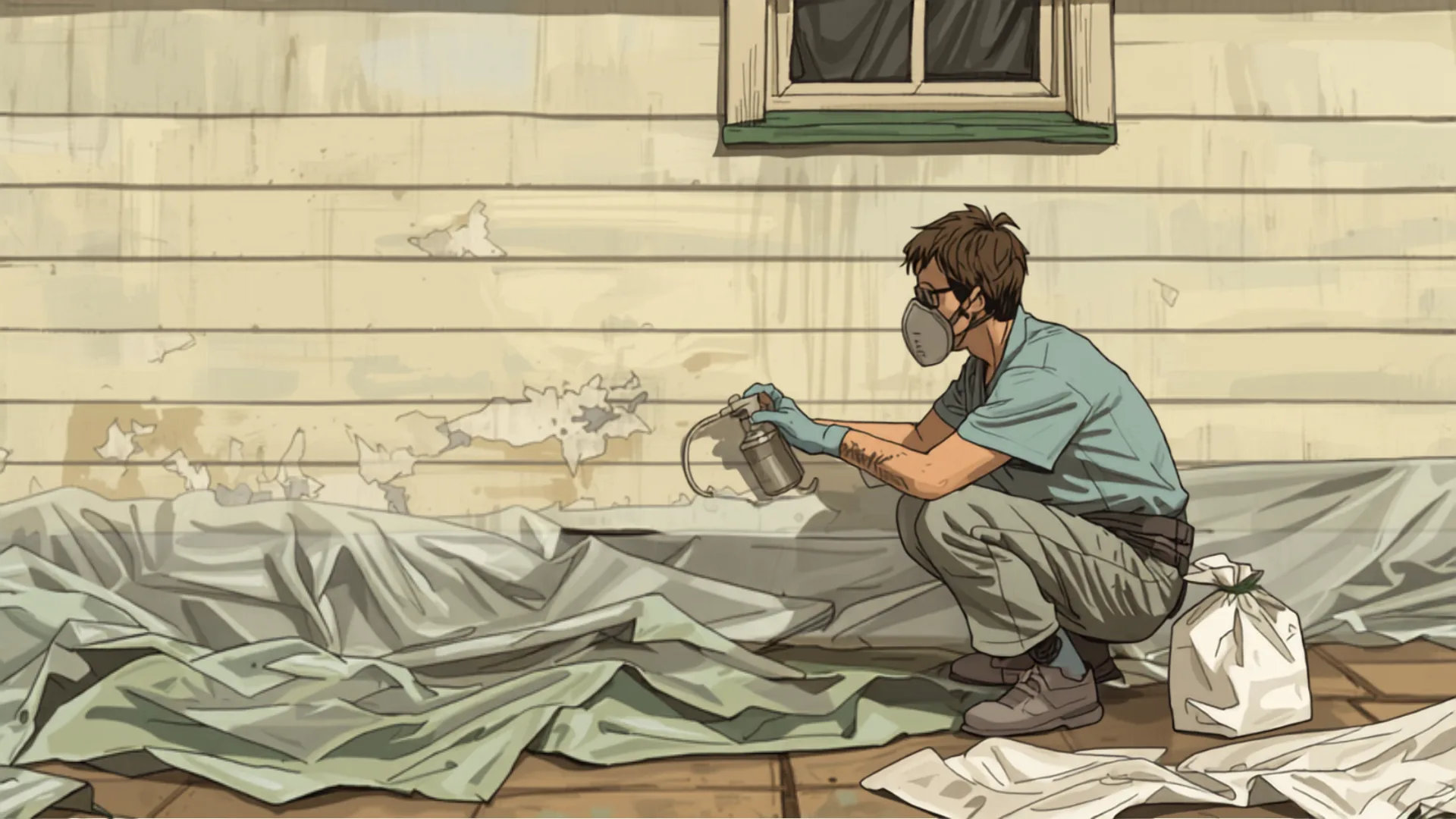
Outside work raises the stakes, because the dust and paint flakes that containment exists to capture would otherwise land in the one place they're hardest to recover: the ground. Lead settles into soil and stays there, and the garden beds along the wall line — often exactly where vegetables get grown and kids dig — are the highest-risk strip on the property. Proper exterior practice looks like this: ground sheeting laid out from the wall and sealed at the base before any preparation starts, lifted and bagged carefully at day's end rather than shaken out; wet scraping and misting so material falls as damp flakes instead of drifting as dust; and work paused in serious wind, because containment that blows sideways isn't containment.
Boundaries matter too. On close-set homes, preparation on a side wall can shed material across the boundary, and the courteous, professional move is notice before work starts and sheeting placed to protect both sides. Washing down equipment and disposing of rinse water thoughtfully — not hosed into the stormwater path — rounds out the discipline. None of these steps is exotic, but each one is time, and together they explain why an exterior repaint on a pre-1970 home tracks toward the top of the $4,000–$10,000 single-storey range even when much of the old coating is sound enough to seal.
One more exterior-specific decision: timing. If the job includes stripping on window frames or eaves linings, schedule it for a stretch when windows can stay closed on the work side and washing isn't on the line. It costs nothing and removes the main pathway for dust to migrate indoors while the messy stage runs.
Choosing a painter for lead work
Ask every candidate the same five questions and the field sorts itself quickly. How will you contain the work area, inside and out? What's your method on friction surfaces — and do you dry-sand old coatings? (The only right answer to the second half is no.) How is paint waste and sheeting disposed of? Are you insured for this class of work, and have you repainted homes of this era before — can I speak to one of those owners? Painters who handle older homes routinely answer these without hesitation and often raise lead before you do. A quote that's meaningfully cheaper than the others on a pre-1970 house usually isn't a bargain; it's a containment plan that doesn't exist.
Living through it: kids, pets and timing
The risk from lead paint work is dust, and the people most vulnerable to it are small children, pregnant household members and pets — all of whom live low to the ground where dust settles. Plan around that. Schedule interior work room-by-room with the family out of the active zone, or time whole-interior jobs for a week away if you can. Keep windows on the work side closed during exterior preparation, move outdoor pet bowls and play equipment well clear, and don't let anyone back into a finished area until the clean-down is done. None of this adds meaningfully to the cost — it's sequencing, not extra labour — and a painter experienced with older homes will suggest it before you ask. The result at the end is the same fresh finish as any repaint, with the old problem sealed safely underneath it for another few decades.
You're in.
A local installer will be in touch about your job. No spam, no middleman.
Painter cost in your city
Verified October 2026 ranges — tap your city for the full local guide.
Frequently asked questions
How do I know if my home has lead paint?
Age is the first test: paint on homes built before 1970 may contain high levels of lead, so any home of that era should be assumed to carry it somewhere until tested — and homes painted between 1970 and 1997 may still have lead paint, though the risk is lower. Hardware-store swab kits give a quick on-the-spot indication; a professional assessor with laboratory analysis gives a definitive map of which surfaces are affected.
How much extra does lead-safe repainting cost?
Expect the top half of the normal ranges rather than a separate bill: a three-bed interior tracking toward $8,000 rather than $3,000, a single-storey exterior toward $10,000. The premium is hours — containment, wet preparation methods, protective routines and careful waste disposal all take time, and painter time runs $40–$100 an hour.
Is it dangerous to live in a house with lead paint?
Stable, well-adhered lead paint under sound modern coats is generally low risk — the hazard is dust from paint that's flaking, chalking or being rubbed on friction surfaces like window sashes and door edges, and from anyone disturbing it with dry sanding. If old paint is deteriorating, especially in a home with young children, that's the signal to act.
Can I just sand back the old paint myself?
Not on a pre-1970 home. Dry sanding, blasting or heat-stripping lead paint releases hazardous dust that settles through the house and garden and is very hard to clean up properly. Lead-safe removal uses containment and wet methods, which is precisely the professional discipline the higher quote is paying for.
Does all the lead paint have to be removed?
No — and this is the biggest lever on the quote. Sound, stable lead paint is best encapsulated: cleaned, primed and sealed under modern coatings, undisturbed. Removal is reserved for failed surfaces and friction points that keep shedding dust through an overcoat. A good quote strips the problem areas and seals the rest; stripping everything is the maximum job, not the standard one.
What should I ask a painter quoting an older home?
Four things sort the field: how they'll contain the work area, their method on friction surfaces (dry sanding old coatings is the wrong answer), how paint waste is disposed of, and whether they're insured and experienced with homes of this era. Painters who do this work routinely will raise lead before you do — the quote that never mentions it is the one to worry about.
← Back to painter cost guide hub