Pool decking cost on the Byron Bay coast
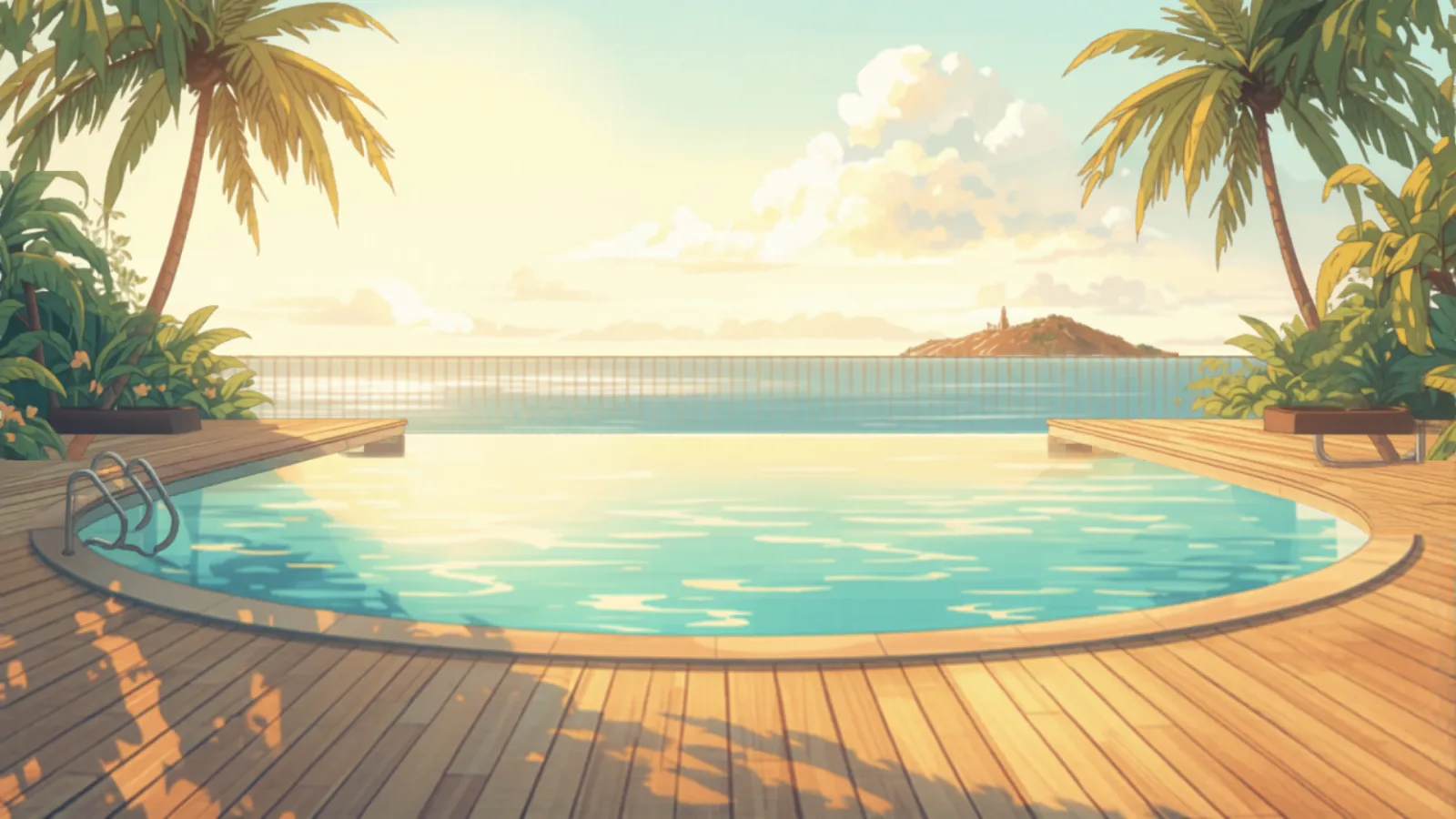
Pool decking sits in its own pricing band — above standard decking, below paving — because everything about the spec changes when water sits beside it. Slip resistance, drainage, chemical exposure, fixings, and pool-fence interaction all push the rate. In Byron Bay 2026 expect $400–$800/sqm depending on material and complexity.
Quick answer — pool decking cost in Byron Bay
| Material | Standard deck | Pool deck | Increase |
|---|---|---|---|
| Treated pine | $205–$400/sqm | Not recommended | — |
| Merbau hardwood | $345–$630/sqm | $420–$720/sqm | +15–20% |
| Spotted gum / blackbutt | $420–$700/sqm | $520–$800/sqm | +15–20% |
| Composite (Modwood, Trex) | $320–$630/sqm | $450–$750/sqm | +25–40% |
You're in.
A local installer will be in touch about your job. No spam, no middleman.
Why pool decking costs more than standard decking
A standard backyard deck has one main job: hold weight and look good. A pool deck has six. It has to be slip-resistant when wet, drain quickly so puddles don't form, tolerate chlorinated or salt-water splashes, sit at the correct height relative to coping and pool fencing, integrate with the pool's structural surround, and look coherent with the pool itself.
That pushes the per-sqm rate 30–60% above a flat backyard deck in the same material. Treated pine simply isn't a pool deck material in 2026 — the cost of properly treating and replacing it as it absorbs chlorine and salt-water splash makes it false economy. Every reputable Byron Bay decking builder will steer you away from pine for pool surrounds.
Slip resistance — grooved vs smooth boards
The single biggest spec decision after material is profile: smooth boards or grooved? Grooved (reeded) boards have parallel grooves milled into the wear face that channel water and improve grip when wet. Smooth boards read more elegant and clean more easily but are notably slipperier with surface water.
For pool surrounds in Byron specifically, grooved is standard. The council slip-resistance rating most pool-fencing certifiers look for is R10 or better; smooth-board installations rarely hit that out of the box without a separate non-slip coating that needs re-application every 2–3 years. Grooved hardwood hits R11 inherently.
Composite has its own slip story. Most modern composites (Modwood Natural Grain, Trex Transcend, NewTechWood UltraShield) have a textured surface that hits R10 inherently and stays slip-resistant through the product's lifetime — no re-coating, no degradation.
Drainage and the coping gap
Water pooling on a deck is the fastest way to destroy boards regardless of material. For pool surrounds the volume is much higher than a normal deck, so drainage design becomes critical. Three standard approaches:
Fall to drain
Most common. The deck is built with 1–2% fall away from the pool toward perimeter strip drains that connect to stormwater. Adds $40–$80/sqm to the build cost for trenches and grates.
Coping gap (5–10mm)
Deliberate gap between deck boards and pool coping that lets splash-water drain back into the pool. Cheaper but requires the pool to have an overflow / skimmer system that can handle the extra inflow.
Permeable composite system
For composite decks, some systems use elevated joist hardware that lets water drain through gaps between boards directly to the substrate below. Cleanest aesthetic but only works on a properly graded concrete substrate.
Pool fencing rules in Byron Shire
The deck design has to keep the pool compliant with NSW pool barrier law (the Swimming Pools Act 1992, enforced by Byron Shire Council, with AS 1926.1-2012 applying if the barrier is altered) — a child-resistant barrier at least 1.2m high that separates the pool from the house and any adjoining property. The deck itself doesn't need its own fencing if it sits inside the pool barrier; if it sits outside, the child-resistant barrier must still separate the pool from the house and any adjoining property, and the owner can decide where that barrier runs.
Two practical implications: chairs, planters, BBQs and other climbable objects must be kept out of the 900mm non-climbable zone, which is measured in an arc from the top of the pool fence (the deck itself must not intrude into it either), and the fence must still be at least 1.2m high measured from the finished ground level. If the deck is being built up over old paving, the fence may need raising at the same time — budget $1,500–$3,500 for fence modifications if so. Ballina and Tweed Shires have functionally identical rules.
Itemised example — 30sqm Byron Bay pool deck
| Line item | Cost |
|---|---|
| Demolition / prep existing surface (if needed) | $800–$2,500 |
| Treated hardwood subframe + bearer connections | $3,800–$5,500 |
| 30sqm grooved merbau decking, supplied & installed | $12,600–$21,600 |
| 316 stainless steel fixings (pool / salt zone) | $800–$1,400 |
| Perimeter strip drains + stormwater connection | $1,200–$2,400 |
| Pool fence height verification & mods if required | $0–$3,500 |
| End-grain sealing + first oil coat | $400–$700 |
| Council certification & final inspection | $350–$650 |
| TOTAL (30sqm merbau pool deck) | $19,950–$38,250 |
Frequently asked questions
Can I build a pool deck over existing concrete around the pool?
Yes — a common Byron job. The existing concrete becomes the substrate for an elevated timber-or-composite subframe. Adds 80–120mm to the deck height which needs checking against pool fence compliance, but otherwise straightforward. Saves $2,000–$5,000 over removing the concrete first.
Do I need a permit for a pool deck in Byron Shire?
Yes, if the deck floor is more than 1m above existing ground level or the deck is larger than 25sqm — being attached to the house does not by itself rule out exempt development. A pool deck that doesn't meet every exempt development standard needs a Complying Development Certificate (CDC) or Development Application (DA), so check the standards before assuming no approval is needed. Check whether the decking quote includes lodging the CDC or DA application ($350–$800).
How long does a hardwood pool deck last in Byron Bay?
With annual oiling and weekly freshwater hosedown during swim season: 25–35 years for merbau, 30–45 for spotted gum. Without consistent maintenance the lifespan halves — chlorine and salt exposure accelerates board degradation significantly versus a backyard deck.
Is composite better than hardwood for pool decks specifically?
For pure maintenance and slip safety, yes. For look against a high-end home, hardwood usually wins. The split in Byron quotes is roughly 60% hardwood, 40% composite for new pool surrounds in 2026, with composite gaining share each year as products mature.
How wide should the coping gap be between deck and pool?
5–10mm is standard — wide enough for water to drain through, narrow enough to be safe. Some installs use a flush profile with the gap covered by an L-shaped trim; others leave it open. Either is compliant. Coping itself is usually a separate scope from the deck, priced by the pool tiler.
Will the deck affect pool water temperature?
Marginal effect on water; noticeable effect on the surrounding microclimate. Timber decks reflect less heat than concrete or paving so the area around the pool feels cooler underfoot. Composite sits between the two — hotter than hardwood, cooler than concrete.
← Back to Byron Bay decking cost hub