Hardwood vs composite decking on the Byron Bay coast
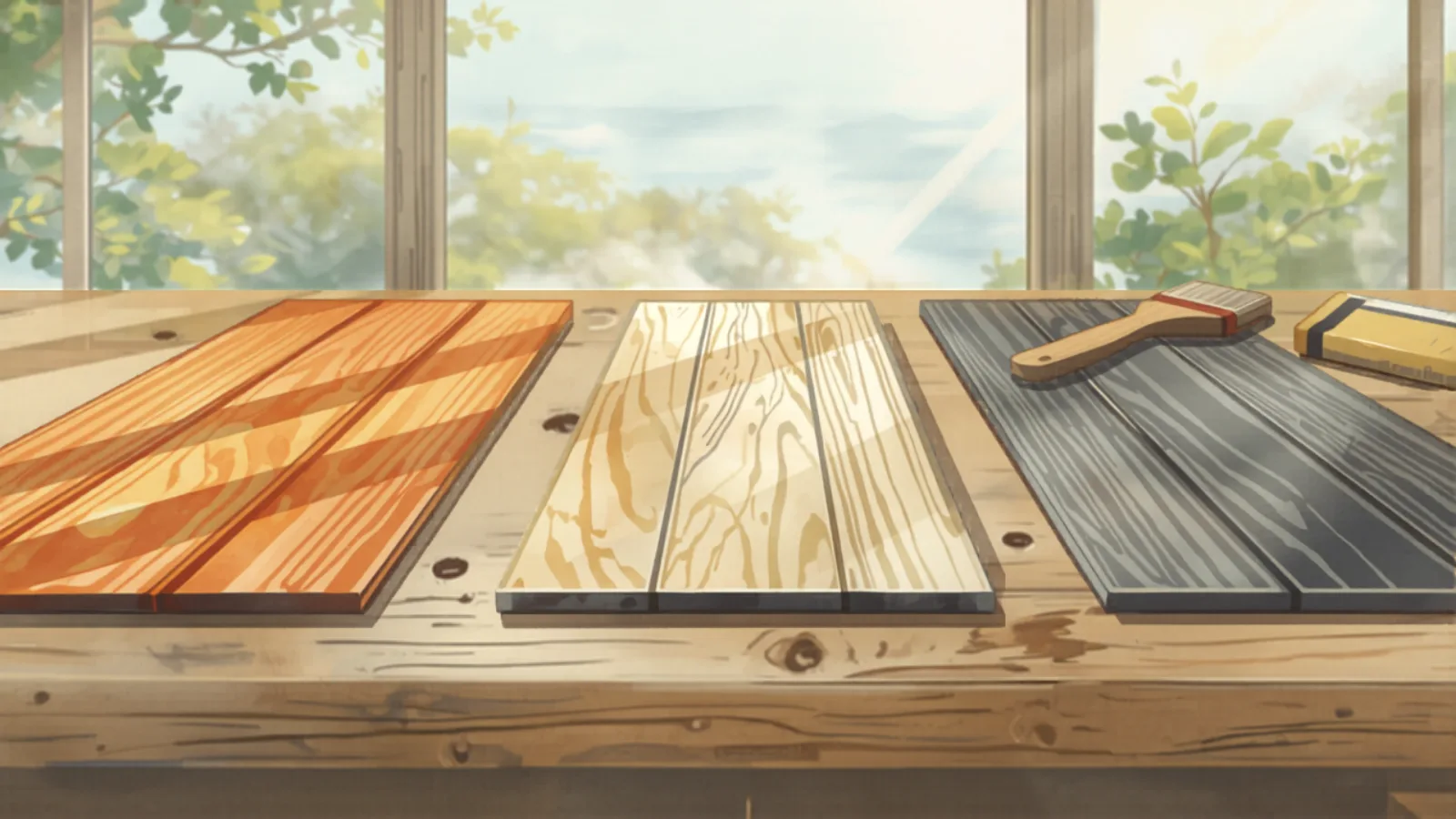
A Byron Bay deck quote usually comes back with three material options: treated pine, hardwood (merbau, spotted gum), or composite. The per-sqm rates look close enough on paper that most homeowners pick on upfront cost alone. The 10-year total tells a very different story — and Byron's salt, sun and termite pressure pushes that story further than most cities.
Quick answer — hardwood vs composite decking in Byron Bay
| Material | Supplied & installed | Lifespan in Byron |
|---|---|---|
| Treated pine | $205–$400/sqm | 10–15 years (annual oiling) |
| Merbau hardwood | $345–$630/sqm | 25–40 years |
| Spotted gum / blackbutt | $420–$700/sqm | 30–50 years |
| Composite (Modwood, Trex, Ekodeck) | $320–$630/sqm | 25–30 years |
You're in.
A local installer will be in touch about your job. No spam, no middleman.
The three options on every Byron Bay quote
Three quotes from local Byron Bay builders typically come back with the same shortlist: treated pine, a hardwood (merbau, sometimes spotted gum or blackbutt), and a composite (Modwood, Trex, Ekodeck). Each sits in a different price band and has a different relationship with Byron's climate.
The spread inside each band is wider than the gap between bands. A premium merbau install with stainless fixings, a hardwood subframe and complex level changes can land above a basic composite deck on a flat block. A budget treated-pine deck with rough finish on a small backyard can come in under a third of any composite quote.
The right call depends on three things: how long you plan to own the property, how much salt the deck will see, and how much maintenance you're willing to do.
1. Treated pine — cheapest day one, fastest to silver
Treated pine is the entry-level option. It's a softwood (typically radiata) pressure-treated with copper-based preservatives to H3 or H4 grade for outdoor use. In Byron Bay, expect $205–$400 per square metre supplied and installed for the basic spec.
A 25sqm backyard deck in Mullumbimby or Suffolk Park can land at $6,000–$10,000 in pine, against $13,000–$18,000 for the equivalent in merbau. That's meaningful, especially for a rental property or a deck you know you'll replace in a renovation cycle.
The catch is what Byron's climate does to it. Without annual oiling, treated pine silvers fast — within 18 months you're looking at a grey, dry, splintery surface. With oiling every 12–18 months ($200–$400 per session for a 25sqm deck), it holds up reasonably well for 10–15 years. After that, board cupping and rot at the fixing points usually force full board replacement.
2. Hardwood — the Byron Bay sweet spot
Merbau is the most common hardwood used for Byron decks — $345–$630 per sqm supplied and installed. It's naturally dense, oil-rich, and resistant to termites and rot. With basic upkeep (re-oil every 2–3 years) it lasts 25–40 years in Byron's climate.
Spotted gum and blackbutt sit one tier above at $420–$700/sqm. Both are Australian hardwoods rated Class 1 for durability. Spotted gum is naturally termite-resistant — the Byron shire sits in a high-termite-risk zone, and even with a treated subframe, having termite-resistant boards reduces ongoing inspection cost and stress.
Hardwood's real weakness in Byron is salt. Even merbau will check, split, and split fixings on a beachfront deck at Wategos or Belongil within 8–12 years if not specifically detailed for coastal use — stainless 316 fixings, end-grain sealing, regular salt-water washing. The coastal-salt-zone deep-dive covers this case in detail.
3. Composite — zero-maintenance, higher day-one cost
Composite decking has matured from the chalky early-2010s product to something that looks and behaves close to real timber. Current Byron rate: $320–$630/sqm supplied and installed. The mainstream brands are Modwood, Trex Transcend, Ekodeck and NewTechWood.
What you're paying for: a wood-and-recycled-plastic composite that doesn't need oiling, doesn't splinter, won't silver, and is immune to termites. In Byron's climate that's genuinely valuable — the salt-and-humidity combination that punishes timber simply doesn't affect composite. Lifespans are 25–30 years.
Real trade-offs: composite gets hotter underfoot than hardwood in direct sun (an issue for north-facing pool decks), the colour palette is limited and reads slightly flat next to real timber, and damaged boards usually need full-length replacement.
The 10-year total cost — not the per-sqm rate
Most homeowners read decking quotes on per-sqm rate, which makes pine look like the obvious winner. The way to actually read them is on 10-year total — install plus expected maintenance plus probability of replacement.
| Material (25sqm deck) | Install | 10-year maintenance | 10-year total |
|---|---|---|---|
| Treated pine (basic) | $7,500 | $2,500 | $10,000 |
| Treated pine (premium) | $10,000 | $2,500 | $12,500 |
| Merbau hardwood | $13,500 | $1,200 | $14,700 |
| Spotted gum | $16,500 | $1,200 | $17,700 |
| Composite (Modwood) | $13,500 | $0–$300 | $13,500–$13,800 |
On a 10-year horizon, premium pine and merbau and Modwood land within $4,000 of each other once maintenance is included. By year 12 the pine deck typically needs significant board replacement; merbau and composite have years left. Over 15 years the cost winners are merbau and composite. Over 30 years — the long-hold family home horizon — it's the hardwoods.
Frequently asked questions
Is composite decking worth the extra money in Byron Bay?
Yes on two specific use cases: beachfront coastal homes where salt would cripple timber, and rental or short-stay properties where the hardwood oiling cycle doesn't fit the management model. On a hinterland family home where the deck is lived on for decades, hardwood usually wins on look and resale value.
How long does a treated pine deck actually last in Byron Bay?
With regular oiling every 12–18 months: 10–15 years before board replacement is needed. Without oiling: 5–8 years before the surface becomes splintery and unpleasant. Byron's high humidity and salt-bearing breezes are harder on pine than most Australian cities.
Which hardwood is best for a coastal Byron Bay deck?
Spotted gum if budget allows — Class 1 durability, naturally termite-resistant, and handles salt better than merbau. Merbau is the workhorse choice and performs well if specified with 316 stainless fixings, end-grain sealing, and a freshwater rinse after heavy salt-spray days.
Will composite decking get too hot for bare feet in summer?
Direct full-sun composite can reach 60–70°C on a 35°C Byron afternoon — too hot for bare feet for several hours either side of midday. Hardwood typically reads 8–12°C cooler in identical conditions. If the deck is shaded by pergola or trees, it's not an issue.
Do I need a permit for a deck in Byron Shire?
Under the NSW exempt development rules that apply in Byron Shire, a deck needs approval (a CDC or DA) if its floor is more than 1m above existing ground level or it is larger than 25sqm, among other standards — being attached to a dwelling does not by itself rule out exempt development. Ballina and Tweed Shires have similar thresholds. Most decking specialists handle the application as part of the quote.
Can I mix materials — hardwood frame, composite boards?
Yes, common spec choice. Treated hardwood or merbau subframe (which never sees direct weather) plus composite boards combines structural longevity with low-maintenance surface. Expect to pay $20–$40/sqm more than a full composite system but save on board replacement over decades.
← Back to Byron Bay decking cost hub